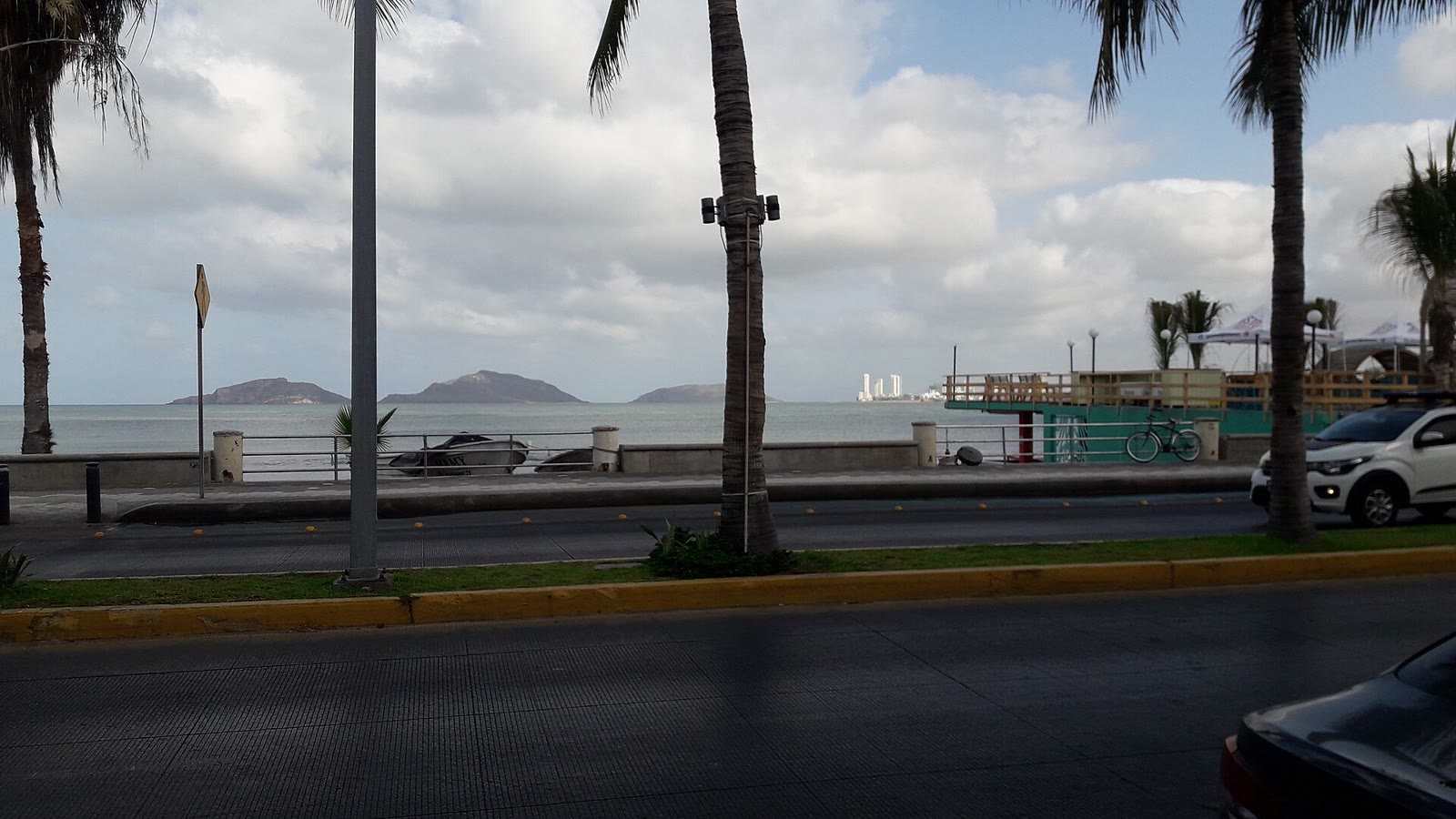
There is no single “best” hurricane protection company in Riviera Nayarit or Mazatlán. There is the right option for each property. To choose well, check seven things: a searchable certification number, anchoring specified in writing, coverage of the full building envelope, a written warranty, formal invoicing, deployment your own staff can handle, and a documented record in real storms. These criteria apply to any provider, including us.
Simon, the Threat That Ran the Length of This Coast
In October 2026, Hurricane Simon strengthened to Category 4 off Jalisco. Rather than making landfall, it crawled north along the coast. On October 13, 2026, according to N+, Mexico’s National Weather Service had a hurricane warning for the Islas Marías and a hurricane watch from Escuinapa to Bahía Tempehuaya, Sinaloa. According to Telemundo, forecasts on October 12 pointed to a possible impact near Mazatlán on October 15, and the port went into preventive operations. We covered its pass along Jalisco in what Simon left behind in Puerto Vallarta.
Simon weakened, and Mazatlán avoided a direct hit. But for days, owners from Nuevo Vallarta to Mazatlán wondered who could protect their property. With a warning up, the answer is almost always “nobody with a permanent system.” The worry is well founded: Olivia hit Mazatlán in 1975, Willa came ashore as a major hurricane near Escuinapa in 2018, Kenna struck near San Blas as a major hurricane in 2002, and Roslyn made landfall in Nayarit as a Category 3 in 2022.
The Types of Providers You Will Find
This coast has metal shutter fabricators (roll-down or accordion, mostly local), suppliers of metal or polycarbonate storm panels bolted up before each storm, laminated and impact glass companies, hurricane fabric and mesh installers, general contractors who subcontract the system, and DIY material sellers. Be careful with glass: very little glass in Mexico is truly hurricane-certified as a complete system (glass, frame, and installation). What is common is impact glass that the supplier calls “certified”—far cheaper, and liable to give way after the first strike in a strong hurricane. Even genuine hurricane glass, designed not to fail, can break, and replacing a single pane can take many months, which is why many hotels cover it with fabric screens. With a contractor, ask who is liable after handover. With loose material, certification usually covers the whole assembly—material, anchoring, and installation. Certified fabric that is poorly anchored is not a certified system.
| Provider type | Main advantage | Main limitation |
|---|---|---|
| Metal shutters | Fast daily operation | Weight, corrosion, visible year-round |
| Storm panels | Upfront cost | Storage and slow installation |
| Impact glass | Permanent, no deployment | Rarely certified as a system; genuine hurricane glass is very expensive and takes months to replace |
| Certified hurricane fabric | Light, fast, nearly invisible | Must be deployed before each storm |
| DIY material | Upfront price | Full-system certification is doubtful |
Hurricane Solution is in the hurricane fabric category, with permanent anchors and our own crews. We are not the best fit for every opening; below we explain when another option is.
Seven Criteria for Evaluating Any Company
1. Certification With a File Number
“Certified” means nothing without a number. Ask for the standard (ASTM E1996, Florida Building Code), the lab, and a verifiable approval. A Miami-Dade NOA can be looked up in the county’s official product search. For example, our HS-1500 system holds NOA 25-0519.01 and was tested to ASTM E1996 Missile Level E: a 9-pound 2×4 at 80 feet per second. Details on our Level E page.
2. Anchoring Specified in Writing
Most failures happen where the system meets the building, not in the fabric or the rigid panel. In a long event like Simon, push and suction repeat for hours. A serious proposal names the anchor, its material, and its substrate: concrete, hollow block, stone, or wood. Salt air also eats hardware and screws, so stainless steel is what keeps a system working ten years out. See our anchoring system.
3. Full-Envelope Coverage
Covering only ocean-facing windows leaves service doors, kitchens, and vents open. Protecting 90% of openings can fail like protecting 0%. One is enough to pressurize the interior.
4. Written Warranty
Term, scope, and who is liable. A verbal promise is worthless with an insurer or in a dispute.
5. Formal Invoicing and a Solid Company
An invoice, a contract with clear scope, and, on large projects, the ability to post a bond.
6. Deployment Without the Provider
If the provider must come out for every storm, you compete with all their clients. Ask whether your staff can deploy it alone, and how fast. That is why weight is a technical criterion: our systems weigh about 1 kg per 3 m² (roughly 2.2 lb per 32 sq ft). More in when to deploy during Simon and Trudy.
7. A Record in Real Storms
Ask for dated cases, and distrust anyone who inflates each event’s category. Review our storm record the same way.
| Criterion | Question to ask | Acceptable answer |
|---|---|---|
| Certification | Under which standard, and what number? | Standard + lab + searchable number |
| Anchoring | Which anchor, in which substrate? | Specified in writing |
| Coverage | Which openings are covered? | The full envelope, or a written justification |
| Warranty | How many years, and what does it cover? | In writing |
| Invoicing | Do you issue invoices? | Yes, with a contract |
| Deployment | Who installs it before each storm? | Your own staff, in hours |
| Track record | Which real storms have your systems been through? | Cases with dates and locations |
Red Flags
- “Certified” with no standard, lab, or number.
- No anchor type or substrate.
- Only ocean-facing openings covered.
- A price far below every other quote, unexplained.
- No invoice, or a verbal warranty.
- Deployment depends on the provider showing up for every storm.
- A promise to install “in time” with a warning already in effect.
- No real installations that have been through a hurricane.
When Hurricane Solution Is Not the Right Choice
- Openings that close many times a year, like a storefront: a motorized roll-down shutter may be more practical.
- A budget that only covers something temporary this year: well secured, it beats nothing.
- Risks other than wind, like storm surge or flooding: those need civil works, not fabric.
Everywhere else—oceanfront homes, large window walls, absentee owners, hotels deploying with their own staff—a certified fabric screen on permanent anchors is usually the most efficient choice. See homes and hotels.
Three Different Purchases
A Nuevo Vallarta condo board got three quotes and scored them on the seven criteria. The cheapest named no anchor and had no numbered certification. The priciest covered only the ocean façades. The winner was the only one that met all seven and covered the full envelope.
With Simon forecast near Mazatlán, a homeowner called several companies. None could build and install a permanent system in three days, so he bought plywood. Simon weakened. He called back in November, with time to spare.
A Sayulita boutique hotel protected its rooms but not the restaurant or lobby, where its real weakness was, as we saw with beach restaurants during Simon.
What a Bad Choice Costs
Hurricane fabric protection systems are custom-engineered based on high-velocity wind-load calculations, opening spans, mounting substrates, and motorization requirements. Contact our engineering team directly for a precise project calculation: message us on WhatsApp. For what drives cost in the port, see hurricane protection cost in Mazatlán.
A bad choice shows on hurricane day. One failed opening pressurizes the interior, and a broken window becomes damage to furniture, finishes, even the roof. A vacation rental at USD 180 a night and 60% occupancy earns about USD 3,240 a month (estimate), so two or three months offline can equal the cost of protecting it.
Riviera Nayarit and Mazatlán Are Not the Same
In Nuevo Vallarta and Bucerías, the hurdle is usually board approval. In Punta de Mita, it is the look of large window walls. In Sayulita and San Pancho, it is open common areas. In Mazatlán, the Zona Dorada, Cerritos, and the Centro Histórico each have different exposure, and the historic center requires respecting heritage façades.
In Mazatlán, the “year without a hurricane” looks most like the hurricane year. Near misses like Simon build the confidence Olivia and Willa punished. We review this in lessons from the 2026 season.
How to Buy in Five Steps
- List your openings with rough measurements and photos.
- Get two or three quotes with the same scope.
- Compare them on the seven criteria, not just the total.
- Verify certifications yourself.
- Sign between November and March so installation and training finish before May 15.
If you do one thing, demand in writing the certification number, anchor type, and envelope scope before comparing prices. Apply these criteria to any provider, including us, and request a technical assessment on WhatsApp or through our contact page.
Frequently Asked Questions
What is the best hurricane protection company in Mazatlán?
The one that meets all seven criteria for your property. Always compare quotes with the same scope.
Does Hurricane Solution work in Mazatlán and Riviera Nayarit?
Yes. We operate along Mexico’s entire Pacific coast, including Mazatlán, Nuevo Vallarta, Bucerías, Punta de Mita, and Sayulita.
When should I sign for the 2027 season?
Between November and March, to be ready before May 15, the official start of the eastern Pacific season.