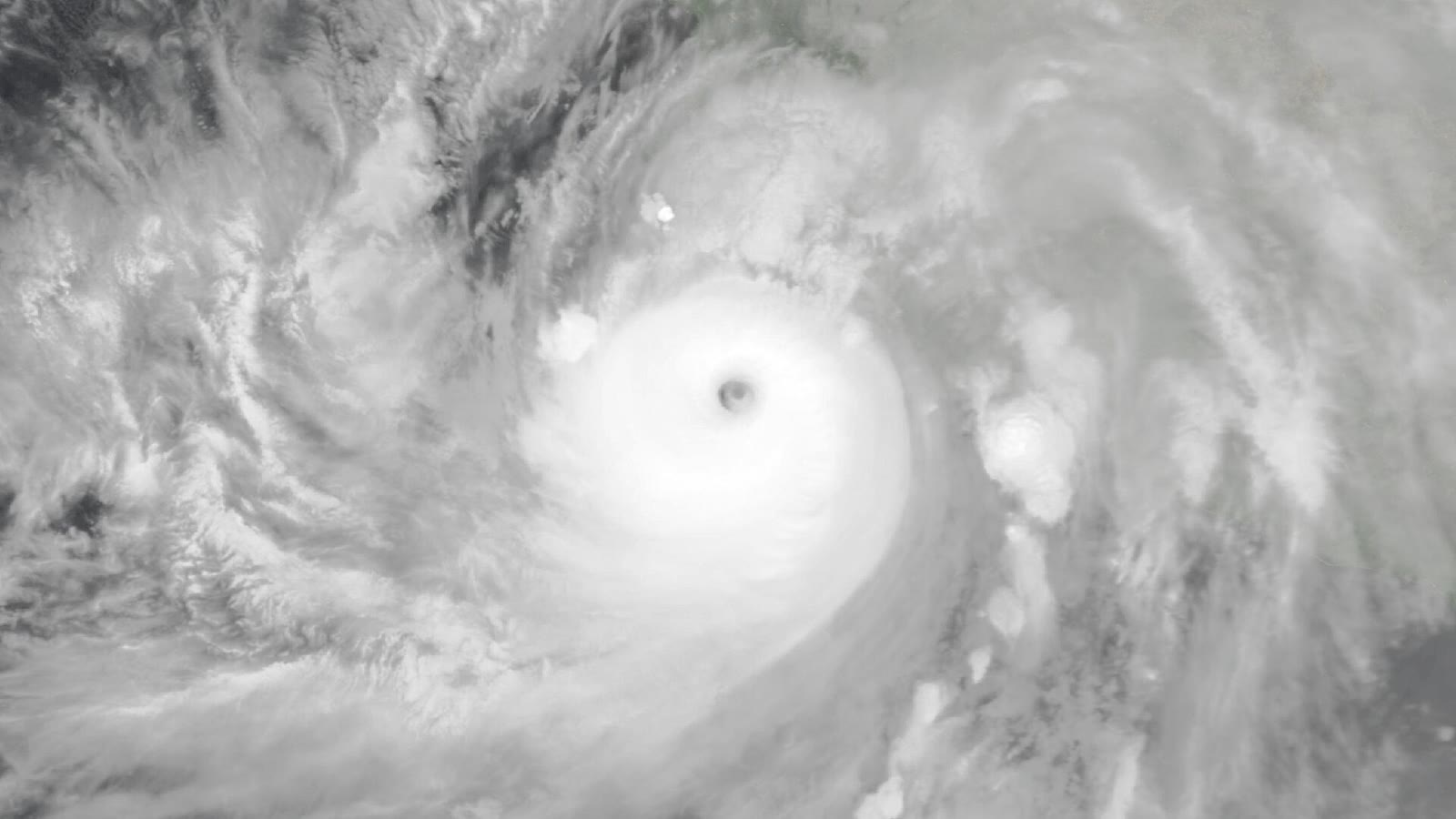
In October 2026, Hurricane Simon reached Category 4 off Jalisco. Instead of making landfall as forecast, it crawled north parallel to the coast, with its eye sitting off Cabo Corrientes and Puerto Vallarta. A slow hurricane is dangerous even if it never comes ashore. It keeps buildings under wind, sideways rain, and surf for hours, so protection has to last that long.
What happened: a Category 4 that never came in, and never left
According to Mexico's National Meteorological Service (SMN), Simon peaked at Category 4 with sustained winds of about 240 km/h (150 mph) and gusts near 295 km/h (185 mph). The Mexican government announced landfall for the early hours of Sunday, October 11, 2026, between La Huerta and Tomatlán. Non-essential activity was suspended in Jalisco, Colima, Michoacán, and Nayarit.
Simon never came in. On the afternoon of October 11, the U.S. National Hurricane Center (NHC) placed its eye about 75 km (47 miles) south of Cabo Corrientes, moving northwest at just 7 km/h (4 mph). The most damaging winds for Puerto Vallarta were expected from midnight through the morning of Monday, October 12. The landfall forecast later shifted to Sinaloa.
Puerto Vallarta's airport suspended operations until Tuesday, October 13. The malecón was closed, and schools shut in 22 coastal municipalities. Farther south in Barra de Navidad, 7- to 8-meter (23- to 26-foot) waves tore out part of a business's seawall. In Punta Pérula and La Manzanilla, surf flooded shops and buried beachfront restaurants in sand. For the full season picture, see lessons from Mexico's 2026 Pacific hurricane season.
Why a slow hurricane is harder on a building
The Saffir-Simpson scale rates a hurricane by its peak sustained wind. What a building actually feels is intensity multiplied by time. A Category 4 crossing the coast at 25 km/h (16 mph) puts hurricane-force winds over any one spot for three or four hours. At 7 km/h along the shore, it is a different story: Simon's tropical-storm-force winds reached 95 km (60 miles) from its center, enough to keep Vallarta, Bucerías, or Nuevo Vallarta under wind for much of a day. That isn't one blow. It's attrition, on four fronts.
1. Cyclic loading on anchors
Every gust pushes the protection in and every suction pulls it out, thousands of times over. A plastic anchor in hollow block can hold one gust and work loose after a few hundred cycles. The weak point is rarely the fabric; it is the connection to the building. That's why anchoring is engineered for the actual substrate—concrete, block, stone, or wood. Hurricane Solution uses a patented eight-point flexible anchoring system that spreads the load instead of concentrating it.
2. Sustained pressure differential
If a single window or door fails, wind pressurizes the interior. It pushes the roof up from inside while suction pulls it from outside. In a fast storm, an opening that gives way near the end causes limited damage. In a slow one, an opening that fails in hour three leaves the building pressurized for the rest of the day.
3. Accumulated wind-driven rain
The NHC forecast up to 76 cm (30 inches) of rain in parts of Michoacán, Colima, and Jalisco. Driven by wind, that rain travels almost sideways and works its way through window joints, sliding doors, louvers, and ducts.
4. Repeated wind-borne debris
Debris piles up as the hours pass. A system has to survive the first impact and every one after it. That's why ASTM E1996 Missile Level E tests with a 9-pound 2×4 fired at 80 feet per second: it builds in margin for real conditions.
Category tells you how strong. Forward speed tells you how long.
| Factor | Fast hurricane (crosses the coast) | Slow hurricane (parallels the coast) |
|---|---|---|
| Duration of strong winds at one spot | A few hours | Many hours, up to a day |
| Dominant risk | Peak gust and debris | Anchor fatigue, accumulated water |
| If an opening fails | Damage concentrated at the end | Interior pressurized for hours |
| Demand on drainage | Moderate | Very high |
| Recommended protection | Impact-rated | Impact-rated + substrate-specific anchoring + full envelope |
The Banderas Bay myth
The bay and the Sierra Madre lower the odds of a direct hit, but they don't eliminate it. Kenna arrived as a major hurricane in 2002, and Lidia made landfall as a Category 4 in 2023. Simon adds a new lesson: geography decides where the eye goes, not how long you sit under the wind.
Three properties on the same bay
- The Conchas Chinas villa has permanent anchors set flush with the wall. On Thursday, with Simon at Category 2, the caretaker deploys the screens by the manual. By Sunday the house is sealed, and overnight the screens flex exactly as designed.
- The Marina Vallarta condo protected its front windows but not the service doors or the ground-floor vents. Wind-driven rain gets in and pools in the mechanical room. No glass breaks, yet the elevators are out for a week.
- The hotel that waited for the forecast to firm up. By the time the warning came, plywood was sold out and staff had gone home to protect their own houses. Overnight, two poorly fastened boards tear loose, and five rooms are out of inventory for weeks.
Same hurricane. What changed was when decisions got made.
What a hurricane that never lands still costs
- Precautionary closure: with the airport shut until October 13, most hotels lost two to four days of operation (estimate). No protection prevents that cost.
- Water damage: one night of sideways rain through unprotected openings can mean replacing mattresses, carpet, and drapes, and pulling rooms from inventory for one to three weeks (estimate).
- Improvising: plywood, emergency labor, and overtime, paid again at every alert. In 2026, the Jalisco coast saw alerts for Rachel, Simon, and Trudy in under three weeks.
To put a number on it: at a 150-room hotel with a 200 USD average rate and 70% occupancy, each room out of service costs about 140 USD a day. Ten rooms out for two weeks come to roughly 20,000 USD in lost room revenue, before repairs (estimate). See also Hurricane Rachel and Puerto Vallarta hotels.
Hurricane fabric protection systems are custom-engineered based on high-velocity wind-load calculations, opening spans, mounting substrates, and motorization requirements. Contact our engineering team directly for a precise project calculation: Hurricane Solution on WhatsApp.
What protection has to withstand in a slow hurricane
- Verifiable certification for wind, water, debris, and pressure. The HS-1500 screen holds Miami-Dade NOA 25-0519.01 and was tested to ASTM E1996 Missile Level E (testing and certifications).
- Substrate-specific anchoring: great protection on plastic anchors in hollow block stops being great.
- Controlled flex: fabric tensioned over flexible anchors spreads each cycle. A poorly fastened rigid metal panel dumps it into its screws.
- The whole envelope: service doors, kitchens, mechanical rooms, and vents.
| Protection type | Performance in a slow hurricane |
|---|---|
| Screwed-on plywood | Fasteners loosen with each cycle; risk of tearing loose |
| Rigid metal panel | Resists impact but concentrates load on the screws |
| Accordion or roll-down shutter | Good if well anchored; mechanisms exposed to salt water |
| Certified hurricane fabric screen with flexible anchoring | Flexes and spreads load with each cycle; fast deployment |
An operating plan for hotels and condos
Settle these decisions before May 15, when the Pacific season opens:
- A written trigger: deploy at the hurricane watch, not the warning. The National Weather Service typically issues a watch 48 hours before the first tropical-storm-force winds, and a warning about 36 hours before.
- Named owners with backups, so the protocol survives staff turnover.
- Every screen labeled with its room and position, and stored in the same building.
Hurricane Solution trains each team on site and leaves a written manual; see hotel hurricane deployment.
Conclusion
Simon proved a hurricane doesn't need to make landfall to test a building. It only has to park offshore long enough. The answer is anchoring that holds through hours of cyclic loading, a fully covered envelope, and a deployment your own team can carry out at the watch. Request a free technical assessment.
Frequently Asked Questions
Did Hurricane Simon make landfall in Puerto Vallarta?
No. In October 2026, its eye stayed off Cabo Corrientes while its outer bands hit the bay. It then tracked north toward Sinaloa, weakening as it went.
Is a slow hurricane more dangerous?
For a building, yes. It stretches out exposure to wind, rain, and debris, and raises the odds that anchors and openings fail.
How many hours should hurricane protection hold?
As long as the storm lasts. That's why it matters that the system is tested under cycling pressure and anchored for the real substrate.
Does a fabric screen protect against the surf that hit Barra de Navidad?
No. Storm surf calls for civil works such as seawalls. A screen protects windows and doors against wind and debris.