This article is based on the U.S. National Hurricane Center's (NHC) intermediate Advisory 13A, issued September 30, 2026, at 5:00 a.m. Mountain Time. Storms change from one advisory to the next, so before deciding, check the latest from the NHC or from Mexico's National Weather Service (SMN).
According to that advisory, Rachel was a Category 1 hurricane with winds of 140 km/h (85 mph), about 350 km (215 miles) southwest of Cabo Corrientes, moving northwest at 17 km/h (10 mph). The forecast took its center away from the mainland, though the NHC expected rapid intensification, possibly to a major hurricane. For Puerto Vallarta, that meant rain, dangerous surf, and gusts—not a direct hit. The practical call: have protection ready to deploy within hours, and cover southwest-facing glass first.
Where Rachel Was on September 30
Mexico's Navy (SEMAR) placed the center that day 403 km (250 miles) southwest of Puerto Vallarta. The NHC forecast a slowing northwest track, then a turn west, south of Baja California; the SMN agreed it was heading toward the Revillagigedo Islands. A tropical storm warning ran from Punta San Telmo to Playa Pérula, with a tropical storm watch from north of Playa Pérula to Cabo Corrientes. Puerto Vallarta sat just north, on its edge. Even so, the NHC forecast 100 to 200 mm (4 to 8 inches) of rain on the Jalisco coast, with isolated totals of 300 mm (12 inches).
What "Offshore" Means—and What It Doesn't
It means the eye and eyewall, home to the most destructive winds, don't cross the coast—not that your property is out of reach. Per Advisory 13A, hurricane-force winds extended up to 35 km (20 miles) from the center, but tropical-storm-force winds (63 km/h, or 39 mph, and up) reached out 260 km (160 miles). That put their outer edge less than 100 km (60 miles) from the coast. A slight jog northeast, or a larger storm as it strengthened, would push them into the bay.
Even without a direct hit, there are four real risks. Rain-band gusts, which hurl planters and furniture at glass. Wind-driven rain, which gets in through door tracks and seals and takes rooms out of service for days. Pressure differential: if an exposed opening fails, the interior pressurizes, and a single broken window can lift a roof. And the ocean: the NHC warned of dangerous surf and rip currents spreading north through the weekend, and a week earlier, during Polo, Malecón businesses had already sandbagged.
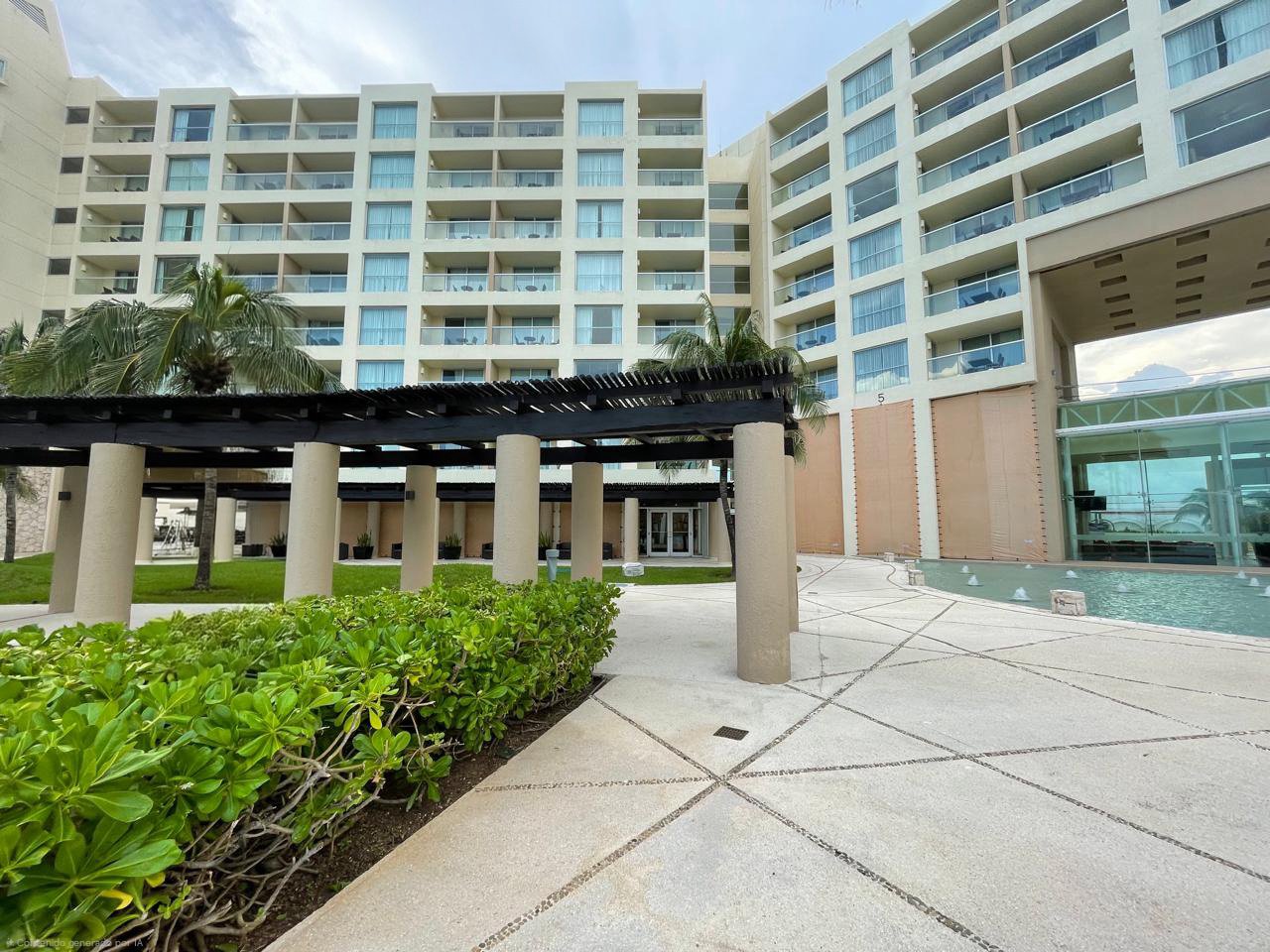
Banderas Bay adds a twist. In the Zona Romántica, Conchas Chinas, and the Hotel Zone, panoramic windows face west and southwest for the sunsets. That is exactly the side a hurricane to the southwest pounds with rain, surf, and gusts. The view that sells the rooms is the opening that needs protection most.
| Property type | Main risk from an offshore hurricane | Priority |
|---|---|---|
| Beachfront hotel, Hotel Zone | Surf, wind-driven rain, gusts on façades | Ready the system; protect large windows if the forecast shifts closer |
| Hillside condo with ocean views | Gusts and rain on panoramic windows | Check seals and protect sliding doors |
| Malecón business | Surf and street-level water | Sandbags, move inventory, protect entrances |
| Home inland in the city | Heavy rain and street flooding | Clear drains, secure loose items |
What Patricia, Lidia, and Kenna Taught Us
Patricia (2015) made landfall in Jalisco south of the bay. Tourism officials credited the Sierra Madre with partly sheltering the city—a real advantage, not a shield. Lidia (2023) intensified to Category 4 in less than a day and made landfall near Las Peñitas, about 120 km (75 miles) south, with winds of 220 km/h (137 mph). Kenna (2002) flooded the city. The pattern: the bay usually escapes the worst, and the properties that suffer are those that counted on that luck.
When to Deploy and What to Protect First
Installation must be finished before tropical-storm-force winds arrive, not the hurricane: working on balconies in 60 km/h (37 mph) winds is dangerous. The U.S. National Weather Service defines a tropical storm watch as conditions possible, generally within 48 hours, and a warning as conditions expected within 36. For hotels, we suggest three triggers:
- Readiness: an active storm forecast to stay offshore, like Puerto Vallarta under Advisory 13A. Inspect anchors and fabric panels, confirm who is trained, and clear loose furniture.
- Partial deployment: a watch for your area, or faster-than-forecast strengthening. Start with large west- and southwest-facing windows and sliding doors, then lobby entrances and equipment rooms.
- Full deployment: a tropical storm or hurricane warning. The whole building envelope is protected, and staff are sheltered before the wind picks up.
With a pre-installed system and trained staff, this takes hours; with plywood, it takes days. On one of our projects, a 2,500-room hotel with nine-story buildings had to be protected in a single day. Each fabric panel is stored rolled and anchored atop its own balcony; when a storm threatens, staff unroll it and anchor the bottom—about 3 to 5 minutes per room. More on our hurricane protection for hotels.
Impact Glass, Plywood, or Fabric: What Each One Solves
Certified impact glass is a good permanent baseline, but it isn't exterior protection. Standards such as ASTM E1996 test whether the opening stays closed after impact, so the glass can crack and still pass. For a hotel, that's a room off the market until replacement, which in Puerto Vallarta can take weeks (an estimate based on patterns observed in the region). Exterior hurricane fabric or mesh stops the projectile before it reaches the glass. Impact glass protects people; exterior protection protects revenue.
Plywood beats nothing, but it sells out, has no certified rating, takes crews days, and drills new holes in the façade each time. For a hotel facing two or three threats a season, only a pre-engineered system solves the time problem. We compare the options in hurricane shutters vs. plywood in Puerto Vallarta.
The Cost of Not Being Ready
An illustrative example (an estimate, not a real case): a 200-room hotel with an average rate of MXN 3,500 and 70% occupancy generates about MXN 490,000 a day in room revenue. If wind-driven rain takes 20 rooms out of service for five days, the direct loss is around MXN 350,000—before guest relocations or reviews. And it repeats: Polo and Rachel came a week apart, so without a pre-installed system you pay for improvising twice. The same logic applies to commercial properties.
What Makes Certified Protection Different
Hurricane Solution's HS-1500 system is certified to ASTM E1996-09 at Level E, the standard's highest level, designed for hospitals and emergency centers. The test fires a 4.1 kg (9 lb) wood missile at 80 feet per second, versus about 50 for the Miami-Dade large-missile standard. The reference fabric system was specified for the U.S. Navy's naval hospital on Guam, with a wind requirement of 274 km/h (170 mph), and every certification carries a file number anyone can verify (see HS-1500 and Level E certification). Installation still decides: the fabric is hung with slight slack to absorb impact, overlapped about 10 cm (4 inches), and anchored roughly every 30 cm (12 inches), and staff get a written manual.
What It Costs and When to Install
There is no standard price per home: each system is custom-engineered from wind-load calculations, opening spans, and mounting substrates, and the price is confirmed after a free technical assessment. Hotels are assessed by façade and exposure. Systems are made to measure, so they can't go up once a storm is in the forecast: a storm like Rachel is for assessing and planning, not buying. The Pacific season runs through November 30. For homes, see our residential hurricane protection.
Conclusion
Per the September 30 forecast, Rachel would pass Puerto Vallarta at a distance—which still meant rain, surf, and gusts. If you can do only one thing, make sure your three largest southwest-facing openings can be protected in under two hours. And treat every storm that misses as a free audit: write down how long your team took and what was missing. If you're not ready, a free technical assessment will tell you what to protect, and in what order.
In this same series, we've published guides for Manzanillo, Cabo Corrientes and Costalegre, Lázaro Cárdenas, and Los Cabos after Polo.
Frequently Asked Questions
Was Hurricane Rachel going to hit Puerto Vallarta?
Per NHC Advisory 13A of September 30, 2026, no: the center was staying offshore and moving west.
When should I deploy my hurricane protection?
Finish any installation before winds reach 63 km/h, starting with southwest-facing windows.
Does impact glass replace hurricane fabric?
Not entirely. It stops a projectile from passing through, but it can crack and need replacing.
Can I buy custom protection while a hurricane is active?
Not realistically: every system is made to measure. Use the event to plan before the next storm.