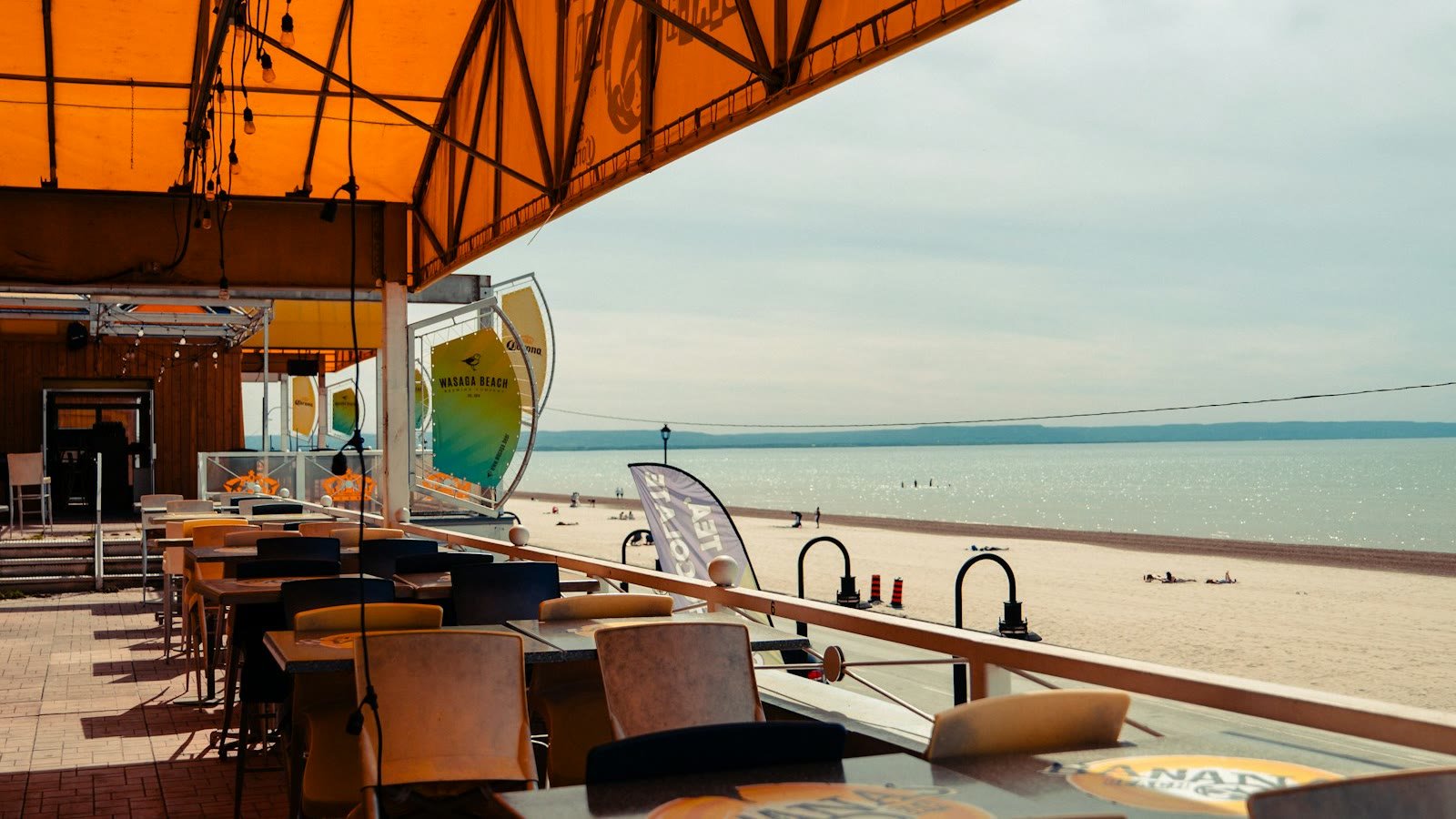
A beach restaurant faces three different risks, and each one calls for a different fix. Everyday wind-driven rain is handled by a rain protection system on the terrace that deploys in minutes. Hurricane winds and wind-borne debris are handled by certified hurricane protection on the enclosed openings: the kitchen, storeroom, bar, and offices. Waves and storm surge—like the ones that hit Barra de Navidad, Punta Pérula, and La Manzanilla during Hurricane Simon in October 2026—are something no fabric screen system can stop. They call for civil engineering, a sound location, and a plan to move furniture and equipment out in time.
What Simon did to Mexico's beach restaurant coast
Simon was a Category 4 hurricane. It never made the expected landfall in Jalisco, but its waves pounded the southern coast of the state for hours:
- Punta Pérula: according to ADN40, on October 11, 2026, waves flooded businesses and swept objects away.
- Barra de Navidad: on October 11, Azteca Jalisco reported waves of 7 to 8 meters (23 to 26 feet). They destroyed part of a business's seawall on the malecón, which was left buried in rocks, sand, and logs. One damaged palapa was still standing.
- La Manzanilla and Melaque: on October 13, the same outlet reported beachfront restaurants buried under sand and tons of rock, plus overflowing creeks. In Melaque, waves of 4 to 8 meters knocked down an empty house.
- Colima and Acapulco: according to Telemundo (October 12), Colima reported damage to 71 homes and 35 businesses. Acapulco was far from Simon's track, yet it recorded 391 mm (15.4 inches) of rain on October 8.
Almost none of this damage came from a window broken by wind. It came from seawater, sand, rock, and runoff. In Puerto Vallarta, Simon shut down the malecón; we covered that in Hurricane Simon in Puerto Vallarta.
The three layers of risk
Layer 1: everyday wind-driven rain
This is the most frequent risk and the most expensive one over a full year. A summer storm or a cold front pushes rain in almost sideways. The terrace empties, guests leave before dessert, and staff spend the afternoon drying tables. The fix is vertical curtains or drop awnings that let you keep serving through rain and moderate wind.
Layer 2: hurricane wind and debris
Hurricane wind tears off awnings, furniture, and light roofs and turns them into projectiles. Enclosed openings—the kitchen, storeroom, glass-fronted bar, electrical room—can fail and let wind and water in. The fix is certified hurricane protection deployed before the storm, plus a plan to secure anything that can fly.
Layer 3: waves, storm surge, and runoff
This is the layer that did the most damage during Simon. Fabric won't stop a multi-meter wave, and neither will a rolling shutter. Where possible, the answer is civil engineering: seawalls, proper floor elevations, storm drainage, and above all, location. For a restaurant already built on the sand, the realistic answer is an equipment evacuation plan and insurance that covers storm surge.
Most restaurants buy only one of the three solutions and leave the other two exposed.
| Risk | Frequency | Solution | Does a rain system handle it? | Does a hurricane fabric screen handle it? |
|---|---|---|---|---|
| Everyday wind-driven rain | Very high | Side curtains for the terrace | Yes | Not its job |
| Hurricane wind and debris | Low | Certified protection on enclosed openings | No (must be retracted) | Yes |
| Waves and storm surge | Low | Civil engineering and evacuation plan | No | No |
| Runoff from inland | Medium | Storm drainage and location | No | No |
What a rain system can—and can't—do
Hurricane Solution offers HS Terrace, a rain and wind protection system for terraces, restaurants, bars, and pool areas. It closes off the sides of a terrace or pergola and deploys in minutes, with no special tools and no new permanent structure. The technical fabric resists UV, humidity, and salt air. It comes in manual or motorized versions, with remote control and optional rain sensors. Bottom line: you keep selling while it rains.
What it doesn't do:
- It is not a hurricane system. When a hurricane watch is issued, it gets retracted.
- It doesn't stop waves, storm surge, or runoff.
- It doesn't replace certified protection for the kitchen, storeroom, bar, or offices.
Those openings need a certified hurricane fabric screen. Our HS-1500 was tested to ASTM E1996 Missile Level E and holds Miami-Dade NOA 25-0519.01; the HS-1250 and HS-875 cover lower exposures. See testing and certifications and commercial protection for details.
Three restaurants on the same bay
These are common patterns on the Pacific coast, not specific client cases.
The one with all three layers. In July it rolls down its curtains and keeps serving. When the Simon watch goes up, it retracts them, stores the furniture, covers the kitchen and storeroom with hurricane screens, and moves electrical equipment up high. The surge leaves sand on the terrace, but the equipment stays dry. It reopens after cleanup.
The one with only an awning. Nobody took it down in time. The wind ripped it off and threw it into the bar's glass, and the bar flooded. The hurricane wasn't the problem. The awning turned into a projectile.
The one that trusted the palapa. The palapa held, like the one in Barra de Navidad. But the furniture, coolers, and sound system stayed underneath, and the waves took them.
What rain costs versus what a hurricane costs
Over a year, everyday rain often costs more than a single hurricane, simply because it happens far more often. These figures are illustrative estimates:
- One rainy afternoon (estimate): with 40 terrace tables, two guests per table, and an average check of 45 USD per person, losing a full afternoon shift means about 3,600 USD in lost sales. Ten afternoons in a rainy season add up to 36,000 USD.
- A hurricane closure: on top of two or three days of precautionary closure come cleanup and lost inventory. If the kitchen is damaged, add days or weeks for specialized equipment and health inspections.
- Your own projectile: a flying awning or chair can break your glass or your neighbor's. That cost shows up in no budget.
The technical side: sideways rain, pressure, and palapas
Sideways rain. In winds of 40 to 60 km/h (25 to 37 mph), rain blows in through the sides of any open roof. That's why side curtains are what actually protect a terrace.
The sail effect. Wind force grows roughly with the square of wind speed. Double the wind and the load on the fabric goes up about four times. A rain system has to be retracted before hurricane winds arrive.
Internal pressurization. If a kitchen window breaks, wind rushes in and pressurizes the space. In lightweight construction, that can lift the roof.
Palapas. They need structural reinforcement, not fabric.
Wherever water gets in during a July downpour is where it will get in during a hurricane. Log your leaks and fix them before October.
The one-page plan
For rain (year-round)
- Terrace curtains and one person responsible per shift.
- Drain and gutter checks before the rainy season.
For a hurricane (once a watch is issued)
- Retract the rain system, awnings, furniture, and umbrellas.
- Deploy hurricane screens on the kitchen, storeroom, bar, and offices.
- Unplug and raise electrical equipment; back up documents and inventory off-site.
If the track shifts, see when to deploy protection during Simon and Trudy.
For waves (long term)
- Have a civil engineer assess seawalls or raised floors.
- Keep your most expensive equipment away from where the sea can reach.
- Ask your agent whether your policy covers storm surge and business interruption.
The bare minimum: separate terrace protection from enclosed-opening protection, with one owner and a written trigger for each.
Conclusion
Simon's lesson is clear: the sea did more damage than the wind. That doesn't make protection useless. It makes it more specific. The first two layers are simple to solve, and the third starts with low-cost decisions: what gets stored, where, and who moves it. For the full season review, read lessons from the 2026 Pacific hurricane season.
Hurricane fabric protection systems are custom-engineered based on high-velocity wind-load calculations, opening spans, mounting substrates, and motorization requirements. Contact our engineering team directly for a precise project calculation: message us on WhatsApp.
Frequently Asked Questions
Does a rain protection system work during a hurricane?
No. It gets retracted when a hurricane watch is issued, and enclosed openings are protected with certified hurricane fabric screens.
What can a restaurant do about waves?
Long term, civil engineering. Short term, a plan to move furniture and equipment out in time.
How long does HS Terrace take to deploy?
Minutes, with no special tools. The motorized version runs on a remote or rain sensors.
What should I protect first?
The kitchen, storeroom, electrical room, and any glass openings. Damage there keeps you closed the longest.
Does my insurance cover storm surge?
It depends on your policy. Weather-related coverage in Mexico often includes storm surge, but confirm it with your agent. Hurricane Solution is not an insurer.