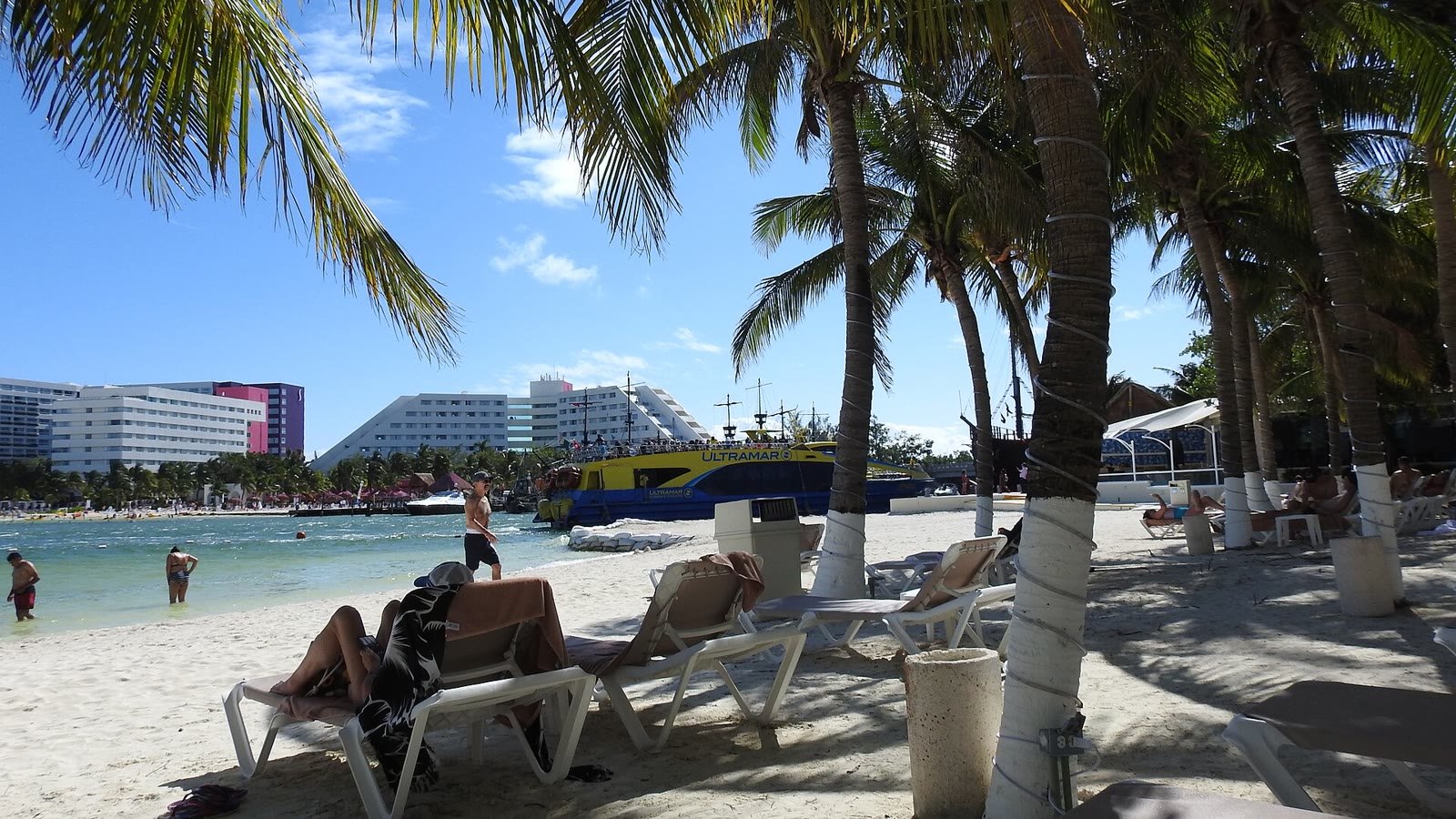
The 2026 Atlantic season made news for the opposite of the usual reason: it had the latest start on record. Isaias didn't become the year's first hurricane until October 7, 2026, and the Riviera Maya went almost the entire season without a threat. Does that mean 2027 will be just as quiet? Not necessarily. The calm had a specific cause, and NOAA's outlook suggests that cause will fade as the next season begins.
A Record-Breaking Year for Unusual Reasons
By mid-September 2026, the Atlantic already held the record for days without a hurricane. When Isaias reached hurricane strength on October 7, it beat the previous record, from 1905, by about 3.5 hours, according to AccuWeather data cited by UnoTV. It was the ninth named storm; the first eight never got past tropical storm strength. It formed in the southern Gulf and headed for Florida, so through late October 2026 no hurricane directly threatened Quintana Roo.
Meanwhile, Pacific Mexico had one of its most intense seasons: five consecutive major hurricanes, with Polo, Simon, and Trudy off Baja California Sur, Jalisco, and Colima (see lessons from the 2026 Pacific Mexico season). Both stories share one explanation: El Niño.
How El Niño "Switches Off" the Caribbean and "Switches On" the Pacific
El Niño is an unusual warming of the equatorial Pacific. Over the eastern Pacific, it weakens the upper-level winds that tear storms apart, and warm water fuels stronger systems. Over the Atlantic and Caribbean, it does the opposite. It increases vertical wind shear—the change in wind speed and direction between low and high altitudes—one of a developing hurricane's worst enemies.
Those winds tilt the storm and break it apart before it organizes. In 2026, El Niño acted as a shield for the Riviera Maya. But it isn't permanent.
What NOAA Forecasts for 2027
On October 15, 2026, NOAA's Climate Prediction Center (CPC) issued its ENSO forecast discussion. As of that date:
- El Niño was "firmly established," with the Niño 3.4 region near +2.4 °C (4.3 °F), and was expected to peak between November and January.
- It gave an 80% chance that at least a strong El Niño would last through January–March 2027, and favored El Niño of some strength through March–May.
- For May–July 2027, it favored neutral conditions.
- For fall 2027, consolidated forecasts showed possible La Niña conditions.
If the forecast holds, the shield that protected the Caribbean in 2026 will be fading as the 2027 season opens, and La Niña could take its place during the August–October peak. La Niña tends to reduce Atlantic wind shear and is often linked to more active seasons. That's a tendency, not a certainty, but it's reason enough not to use a quiet 2026 as an excuse to postpone.
| Factor | El Niño (2026) | Neutral / La Niña (2027 forecast) |
|---|---|---|
| Wind shear over the Atlantic | High | Lower |
| Atlantic activity trend | Reduced | Normal to more active (a tendency, not a guarantee) |
| Effect on Pacific Mexico | More active | Tends to be less active |
| What it means for the Riviera Maya | Quiet year | Don't use 2026 as a benchmark |
October and November Count Too
At the end of October 2026, the season wasn't over: the Atlantic season officially ends on November 30. And October has shaped Riviera Maya history:
- Wilma (October 2005): made landfall on Cozumel and between Playa del Carmen and Puerto Morelos as a Category 4, then stalled for nearly two days over the north of the state. It remains the costliest hurricane for Mexico's insurance industry.
- Delta (October 7, 2020): made landfall near Puerto Morelos as a Category 2. The operations director of a local hotel summed it up: "When Delta made landfall in Puerto Morelos in 2020, our hotel was completely protected. Our neighbors took weeks to reopen. We reopened on the third day."
- Zeta (October 2020): passed near Tulum as a hurricane three weeks after Delta.
With El Niño at full strength, the risk for the rest of 2026 was low, but not zero. See how our systems have performed in real storms in our storm performance record.
Three Decisions in November
We see the same pattern whenever a season passes quietly. A Hotel Zone property audits its envelope in November, finds a remodel left five openings unprotected, fabricates the screens in January, and reaches June fully covered. A Tulum condo board shelves protection for a year, and in June 2027 it's still "pending approval." A remote owner in Playa del Carmen says "it barely even rained this year," then finds every supplier booked in June. The risk is identical. The timing of the decision isn't.
What Waiting a Year Really Costs
Postponing costs nothing in a quiet year. The cost shows up in the year something happens. Wilma still holds Mexico's record for insured losses. Second is Otis, with about $2.105 billion in insured damage, according to the Mexican Association of Insurance Institutions (AMIS) as cited by El Universal. Estimated insured damage to 101 hotels in Otis topped 7.7 billion pesos.
Based on the patterns we observe, owners who decide in June or July face longer fabrication and installation lead times, because demand peaks before the season. Owners who wait for a warning can't install a permanent system at all. Then there's closure. For a 300-room hotel with a $220 average rate and 75% occupancy, each closed day means roughly $49,500 in room revenue (estimate: rooms × occupancy × rate). See hotel hurricane deployment.
Hurricane fabric protection systems are custom-engineered based on high-velocity wind-load calculations, opening spans, mounting substrates, and motorization requirements. Contact our engineering team directly for a precise project calculation, via WhatsApp.
Why the Riviera Maya Is Different
- Flat terrain: with no mountains to slow it, the wind keeps its strength for dozens of kilometers inland.
- Stalling storms: Wilma's nearly two days meant hours of cyclic loading on anchors and horizontal rain. Protection must withstand duration, not one gust.
- Rapid intensification: in July 2024, Beryl became the earliest Category 5 on Atlantic record before making landfall near Tulum.
- Large openings and pressurization: open lobbies, floor-to-ceiling glass, and palapas. If one opening fails, wind pressurizes the interior and pushes the roof up from inside.
Hurricane Solution's HS-1500 system was tested to ASTM E1996 Missile Level E: a 9-pound 2×4 at 80 feet per second, versus 50 for Level D—the level intended for hospitals (what Level E means). It also holds Miami-Dade NOA 25-0519.01, verifiable on our testing and certifications page.
Each area has its own wrinkle. Cancún's Hotel Zone faces direct exposure. In Playa del Carmen, HOA rules are often the first hurdle. On Cozumel and Isla Mujeres, protection that isn't on the island before the warning won't get there in time.
The Recommended Calendar for 2027
- November–December 2026: full envelope audit covering unprotected openings, remodels, and anchor condition.
- January–March 2027: fabricate and install anchors and screens, in phases to avoid disrupting high season.
- April–May 2027: training, a drill, and updates to the manual and your insurance documentation.
- June 1, 2027: system installed, written protocol, and named leads with backups.
If you do only one thing, complete certified protection of the entire envelope with permanent anchors, and train your team to deploy it. More in when to install hurricane protection in the Riviera Maya and, for your policy, which documents to have ready at renewal.
Conclusion
The calm of 2026 had a cause, and NOAA's October 2026 outlook expected it to weaken into 2027. A quiet year is the best chance to prepare without pressure. If you own a hotel, development, or home in Quintana Roo, request a free technical assessment this winter and explore our options for hotels and homes.
Frequently Asked Questions
Why were there almost no Caribbean hurricanes in 2026?
A strong El Niño increased wind shear over the Atlantic and kept storms from organizing. The first hurricane, Isaias, didn't form until October 7, 2026.
Will the 2027 season be more active?
No one can say for sure. In its October 15, 2026 discussion, NOAA favored neutral conditions for May–July 2027 and a possible La Niña in the fall, a phase linked to more Atlantic activity.
When should I install for 2027?
Ideally between November and March, leaving time to train staff and run a drill before June 1.
Is Hurricane Solution based in the Riviera Maya?
Yes. We're based in Playa del Carmen and have served all of Quintana Roo and Mexico's coasts since 2008.