Questions This Article Answers
This article is designed to answer exactly the questions that property owners, developers, and hotel operators are asking in 2026:
If you are a property owner in the Riviera Maya or manage a hotel development, this blog gives you the exact calendar to make this decision on time.
Quick Answer
Hurricane protection must be installed before the season begins — ideally between January and April.
Waiting until the season starts, or worse, until a hurricane is already on its way, has three direct consequences:
The critical point: The Atlantic hurricane season runs from June 1 to November 30. If your system is not installed, certified, and tested before May 15, you are already in the risk zone.
Timing is not a logistical detail — it is what determines whether the word "protection" means something real or is just a label on a system installed in a rush.
The Mistake That Repeats Every Year
Many people in the Riviera Maya and Mexico's coastal areas make the same mistake every year: waiting until a storm is announced before thinking about protecting their property.
The reality is that installing hurricane protection is not an immediate process. It requires:
But there is something even more important than time: not all solutions offer the same level of protection. Installing protection at the wrong moment can leave the most critical areas of a structure vulnerable — especially windows, doors, and access points — where wind pressure can cause serious structural failures.
Timing and system quality are not separate issues. They are the same decision.
The Risk Calendar: 4 Periods, 4 Different Outcomes
The same investment, installed at different times, produces completely different results. Here is what happens in each period:
Before the Season (January – April) — Recommended
Installing anti-cyclone systems before hurricane season allows for proper planning and full access to certified solutions.
What is possible during this period:
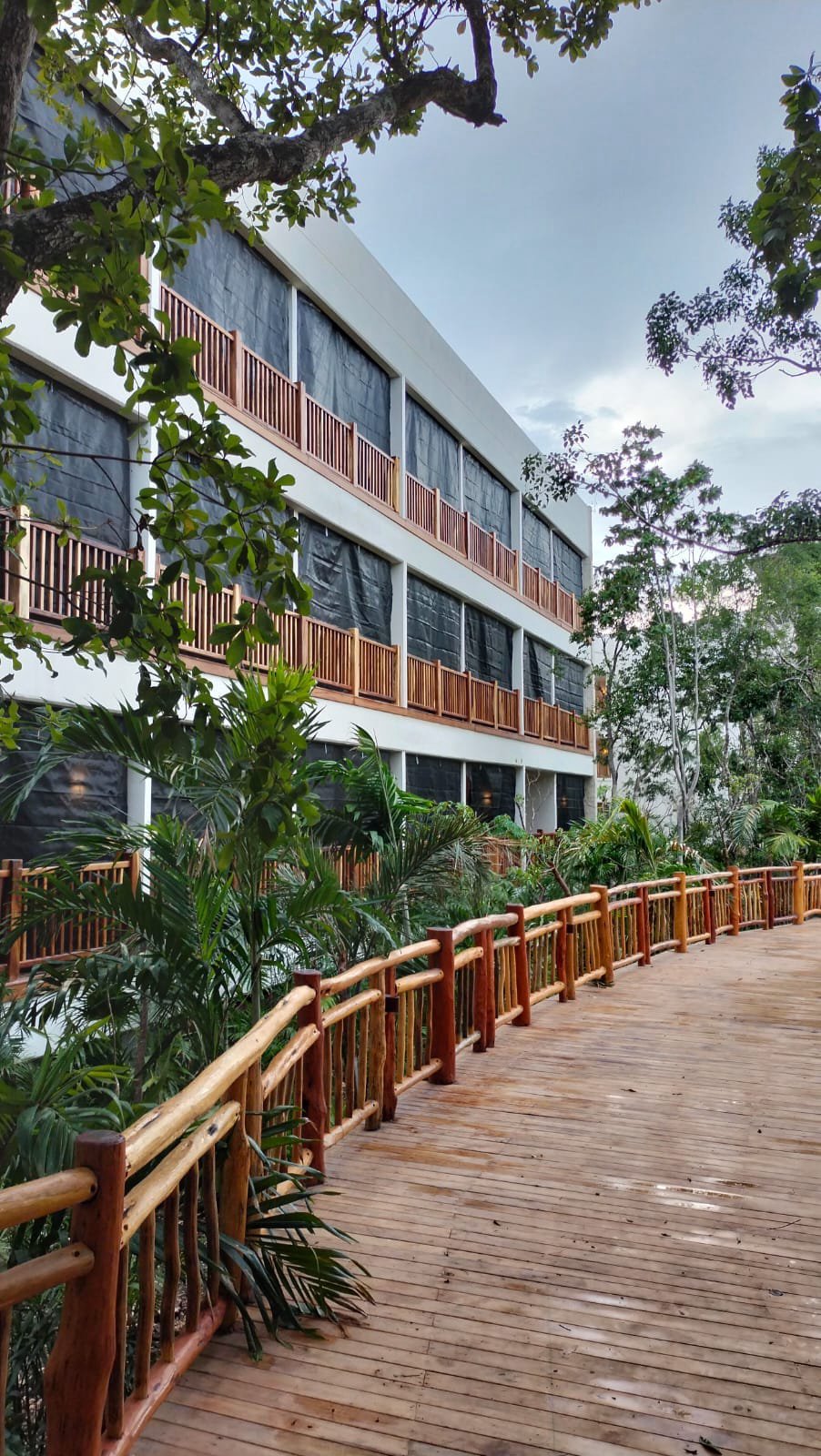
For hotels specifically:
During the Season (June – November) — High Risk
Waiting until the season has already begun significantly reduces the available options.
What changes during this period:
The availability of certified systems is limited when demand rises. During the season, many providers resort to generic solutions that do not meet real category 5 protection standards. This creates a false sense of security that can prove extremely costly.
When a Hurricane Is Approaching — Critical Error
Attempting to install protection when a hurricane is already on its trajectory is one of the most serious mistakes a property owner or developer can make.
Why this is the worst possible scenario:
At this point, any money spent on "last-minute protection" is essentially money spent on the feeling of security, not on real security.
After the Season (December) — Strategic Opportunity
The post-season period is ideal for assessing damage, improving existing systems, and preparing for the following year.
What strategic property owners do during this period:
Rather than treating protection as a reactive element, the most strategic property owners treat it as part of the design from the very beginning.
The Impact of Internal Pressurization
One of the most critical errors — regardless of timing — is underestimating the effect of wind pressure on openings.
The failure sequence:
This is why certified anti-cyclone systems make a difference. Unlike improvised solutions, they are designed under international standards that account for projectile impact resistance, positive and negative pressure loads, and the integrity of the complete system (anchors, fasteners, and structure).
This is why timing matters so much: a correctly installed certified system prevents internal pressurization across the entire building envelope. An improvised system, installed under time pressure, almost always leaves unprotected points — and a single unprotected point is enough for internal pressurization to occur.
Practical Calendar: What to Do Each Month
Step 1 — December to February: Assessment and Planning
If your property went through the season without protection or with insufficient protection:
Key questions for this phase:
Step 2 — March to April: Selection and Installation
This is the optimal period to carry out the installation. Why March–April is the ideal time:
What must happen during this phase:
Step 3 — May: Testing and Final Preparation
The Atlantic hurricane season begins on June 1. May is your last opportunity to verify that everything works.
By May 15, your system must be: installed, certified, tested, and with trained personnel. If you reach June 1 without this, you are already operating at elevated risk.
Step 4 — June to November: Monitoring and Activation
During the season, your task shifts from "install" to "monitor and activate correctly."
Critical Data on Protection Timing
What you should not do:
For more information on our solutions:
Conclusion
The best strategy will always be to plan ahead. Hurricane protection is not a reaction — it is a preventive investment. Installing at the right time not only protects the structure but can also prevent million-dollar losses and ensure operational continuity, especially in hotels and developments in vulnerable areas.
Hurricane protection in Mexico must be approached with a technical mindset, not an improvised one. And that approach begins with a simple but critical decision: install at the right time.
If you are reading this between December and April: you are at the right time. If you are reading this during hurricane season without protection: every week that passes reduces your options. Act now, not when the storm warning arrives.
Frequently Asked Questions
Can hurricane protection be installed in just a few days?
It depends on the system, but certified solutions require technical assessment, selection of appropriate materials, and supervised professional installation — a process that normally takes 4 to 12 weeks, not days. Installations completed in "a few days" usually indicate a lack of proper assessment.
Are anti-cyclone tarps sufficient for any property?
Not necessarily. Their effectiveness depends on material quality, the anchoring system, and the type of structure. A tarp certified under ASTM E1996 installed with incorrect anchors does not provide the protection its certification promises — the complete system matters, not just the material.
What happens if I only protect some windows?
A single unprotected opening can compromise the entire structure due to internal pressurization. The wind that enters through that opening generates internal pressure that adds to the external suction on the roof, multiplying the collapse risk for the entire property — not just that room or area.
Is it more expensive to install before the season?
No. In fact, it tends to be more efficient and allows you to choose better systems without time pressure. During the season, higher demand can even raise urgent installation prices, in addition to limiting the certified options available.
Do hotels need different systems than homes?
Yes. Hotels and developments require solutions designed for larger scale (dozens or hundreds of openings), operational continuity (rapid activation without disrupting service), and compliance with more demanding standards, especially if they work with international operators or insurers that require documented certification.
What if we are already in the season and I have no protection installed?
Prioritize an immediate technical assessment to identify your most vulnerable points and look for providers with certified systems available, even if options are more limited than in January–April. Avoid generic last-minute solutions — it is better to properly protect a critical portion than to poorly protect the entire property.
How do I know if my current system is still effective?
Review the original certification documentation (ASTM E1996/E1886), inspect anchors and materials for wear, and conduct a full activation test before May. Systems do not always show visible wear — a corroded anchor can appear functional until it fails under real load.
Is it worth installing protection if my property has rarely been directly impacted?
Yes. The probability of a direct hit is not the only factor — even hurricanes that pass at some distance generate sustained category 3–4 winds in the Riviera Maya. Furthermore, the cost of protection is significantly lower than the cost of a single unprotected event, regardless of frequency.