A beachfront home in Punta Mita cannot be protected the way a house a few blocks inland is. Three conditions overlap here that rarely appear together: direct exposure to Pacific wind and surf, salt air that attacks metal hardware year-round, and an architectural standard that will not accept visible hardware bolted across the facade.
The answer for this kind of property is fairly consistent. Corrosion-treated anchoring, impact-rated systems sized to the true dimensions of every opening, and—for owners who are not in México year-round—motorized operation that does not depend on someone being on site when the warning comes.
Open Ocean and Bay Are Not the Same Exposure
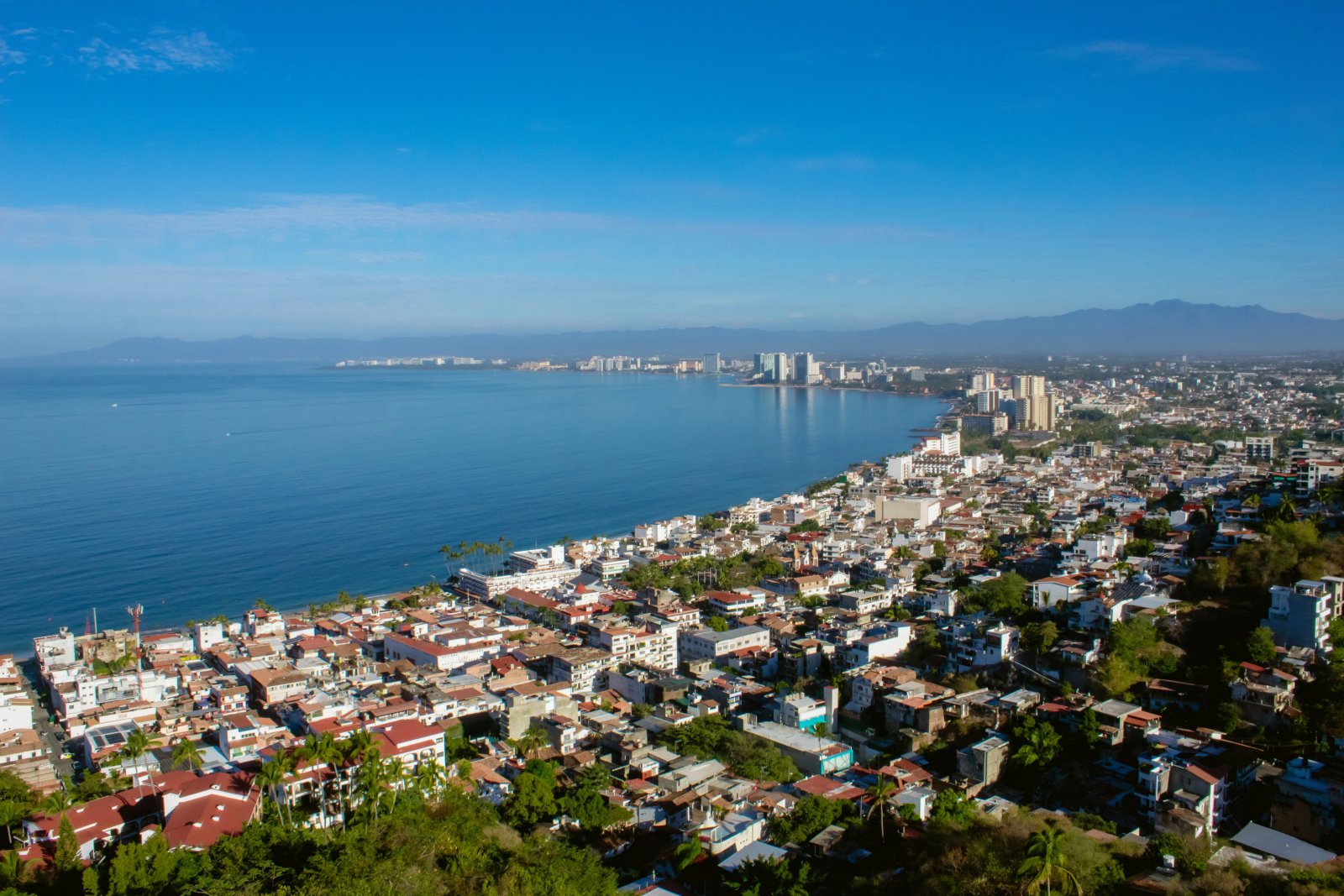
Puerto Vallarta sits inside Bahía de Banderas, and the shape of the bay gives it partial shelter from wind and surf. Hurricanes Kenna in 2002 and Lidia in 2023 showed how far that shelter is from a guarantee.
Punta Mita sits at the mouth of the bay, far more open to the Pacific. Wind and wave energy arrive without the partial reduction that properties deep inside the bay get, which raises the protection standard worth specifying even for lower-category storms. It is the most important practical difference between the two areas, and the one most often underestimated at budget time.
Salt Corrosion: The Risk That Moves Quietly
Salt air steadily degrades any metal system without proper corrosion treatment, and it works all year, not just in season. A system installed without that treatment can show rusted hinges, binding tracks, and weakened hardware far sooner than the same system a few blocks inland.
So the question before you install is not only how much wind the system takes. Ask which corrosion treatment it carries—anodizing, marine-grade powder coating, or something else—and exactly what the warranty covers: corrosion, or structural performance only. Those are two different coverages, and they get conflated often.
Wind damage is visible and immediate. Corrosion damage is not. You will not catch it by running the shutters during a storm watch. You catch it through proactive inspection, which is why an open-ocean home needs an annual anchor check even when the install is recent.
Picture Windows, Sliders, and Palapas
Beach architecture here favors large format: floor-to-ceiling glass facing the water, sliding doors linking living room to terrace, and open palapas that work as an extension of the interior. Each element poses its own problem, and the available protection systems answer each one differently.
- Picture windows: they need impact-rated systems sized to the real width and height of the opening. An undersized system does not deliver the protection its catalog rating implies.
- Large sliding doors: the biggest internal pressurization risk if they fail mid-event, so they deserve investment priority over smaller openings.
- Palapas and open terraces: often there is no traditional opening to cover, but the roof anchoring needs review and the outdoor living area usually needs rain protection.
On a limited budget, this is the order that holds up:
| Element | Main risk | Investment priority |
|---|---|---|
| Oceanfront picture windows | Wind-borne debris, wind pressure | High—rating sized to the real opening |
| Large sliding doors | Internal pressurization if they fail | High—ahead of smaller openings |
| Palapas and open terraces | Roof structural damage, rain intrusion | Medium—anchor review plus rain protection |
| Interior or sheltered openings | Less direct exposure | Standard—no top specification needed |
When the Owner Is Away
Many beachfront homes in Punta Mita and along the north Puerto Vallarta coast belong to foreign owners, or to Mexican owners based in other cities, who are not there full time. For that profile, any system requiring manual installation before each warning adds operational risk. Who mounts the panels if the owner is out of the country and the caretaker cannot get through because of the same weather that created the risk?
Motorized systems, roll-down shutters in particular, remove that dependency. They close remotely, on a schedule, or through a home automation integrator, with nobody on site at the critical moment. Our residential protection page covers the automation options built for remote management.
Protection That Does Not Fight the Design
Punta Mita holds a demanding architectural standard, with communities built around the visual fit between structure and setting. A visible system that changes the facade most of the year becomes a real barrier to adoption there, even when the owner accepts the risk.
High-end roll-down shutters sit almost hidden in a housing integrated into the frame when not in use, which is why they usually win here—they resolve the tension between certified protection and design. The same pattern shows up in comparable luxury areas such as Palmilla and Pedregal in Los Cabos. That tension is not an obstacle to protecting the house. It signals that the high-end market fits this coast better than the cheaper, more visible solutions that work fine elsewhere.
A Common Case: Corrosion Caught at the Annual Check
Picture a beachfront residence in Punta Mita: floor-to-ceiling glass in the main living area, three bedrooms with sliders onto private terraces, and a palapa by the pool. The owner spends most of the year in the United States and installed removable aluminum panels several years ago without confirming the corrosion treatment for open-ocean exposure.
At a routine pre-season check, the local caretaker finds visible corrosion on several anchors—screws that no longer turn easily, weakened mounting plates. Had that gone unnoticed, the system would have been a false sense of security: apparently installed and functional, yet holding far less than its factory specification.
An annual inspection of anchors and hardware costs little next to a structural failure during a real event. When a corroded system gives way, the damage does not stop at the opening. The resulting internal pressurization can compromise roofs and walls across the house, at a repair cost well above what fixing the corrosion in time would have run.
What to Ask a Supplier
- The specific corrosion treatment for open-ocean exposure, not just bay conditions, in writing.
- References from installations with at least five years of direct salt exposure.
- Certification sized to each real opening, not a generic catalog sheet. ASTM E1996 is the reference standard for wind-borne debris impact.
- Confirmation that the system integrates into the existing design without hurting the property's aesthetic value.
- The exact scope of the warranty: what it covers for corrosion, and what for structural performance.
Frequently Asked Questions
Does Punta Mita need more protection than Puerto Vallarta?
In terms of direct wind and wave exposure, yes. Punta Mita sits at the mouth of the bay, open to the Pacific, while Puerto Vallarta gets partial shelter from the geometry of Bahía de Banderas. That shelter is not guaranteed protection, as Kenna and Lidia showed.
Which corrosion treatment should I insist on for a beachfront home?
Ask for the coating type—anodizing, marine-grade powder coating, or another—and request references from installations with at least five years of direct salt exposure. Confirm whether the warranty covers corrosion, not just structural performance.
Can an open palapa be protected against hurricanes?
Protecting a palapa is mostly about reviewing the roof's structural anchoring and adding rain protection for the seating area, since there are rarely traditional openings to cover.
Is a motorized system worth it if I rarely visit the property?
Usually yes. For owners who are not there full time, motorized operation removes the need for someone to be physically present to close the protection before each storm warning.