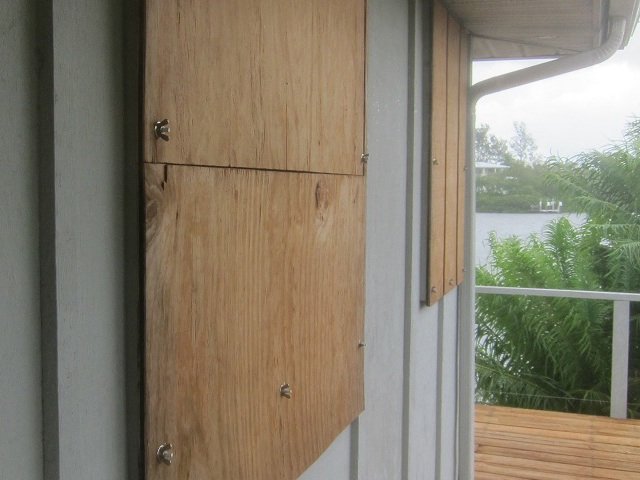
The Danger of Cheap Systems
When choosing hurricane protection in Mexico, opting for economical systems is one of the riskiest decisions a homeowner, hotel, or developer can make. At first glance, many solutions look similar: they promise strength, easy installation, and savings. But under real hurricane conditions, the differences between a certified system and an economical one become critical — and they remain invisible until the exact moment they matter most.
The core problem: most cheap systems are not designed under real structural engineering standards. Many use low-strength materials, inadequate anchoring, and have never been tested against high-velocity impacts or sustained wind pressure.
The Internal Pressurization Phenomenon
During a hurricane, wind generates suction and pressure forces that constantly shift, creating a phenomenon known as internal pressurization:
- A window or opening fails under impact, suction, or both
- Air rushes in violently, increasing pressure inside the structure
- That pressure, combined with external suction on the roof, generates uplift forces
- Result: lifted roofs, collapsed walls, severe structural damage
This mechanism is the same regardless of which system fails first. What determines whether it happens is whether the installed system actually withstands category 4-5 conditions, or only appears to.
The Three Critical Failure Points
Point 1: Material
Tarps or mesh without certified strength break easily under debris impact. They have no documented impact-resistance specification, can degrade quickly under sun and salt exposure, and their "strength" is enough for moderate wind, not for projectiles at 160+ km/h. A material that looks sturdy can fail on the first impact because it was designed for another purpose (shade, privacy), not structural impact.
Point 2: Anchoring
Poorly installed systems or weak fasteners detach before the material itself fails: fasteners in non-structural substrates, insufficient depth for expected suction loads, and spacing wider than needed. This is, in many ways, the most dangerous failure point: a system that detaches completely doesn't just leave the opening unprotected — it becomes an additional projectile that can strike other parts of the property or neighboring properties.
Point 3: Design
Many products don't account for real wind loads or pressure dynamics. They were conceived with "wind" as a static force, not as gusts with positive and negative pressure cycles. There's no calculation of how load is distributed between material and anchors, nor consideration of the combined effect of impact + sustained pressure + repeated cycles over hours.
By contrast, certified hurricane-resistant systems are designed to withstand impacts, handle extreme wind loads, and maintain building integrity as an integrated system, not as the sum of individual components.
The Real Risk in the Riviera Maya
In regions like the Riviera Maya, where hurricanes can reach category 4 or 5, the difference between an economical system and a certified one can mean the difference between minor damage and total loss. Choosing correctly isn't a matter of price, but of engineering, certification, and experience.
In category 1-2 storms, a system with insufficient material, weak anchoring, and uncalculated design can survive, because real loads never demand what the system can't give. In category 4-5, loads do reach that point, and all three failure points tend to activate simultaneously.
Learn more about solutions for hotels and developments and residential properties.
Decision Framework: Identifying Risk Before the Event
Step 1: Evaluate the Material
Is there a large missile impact test report for this specific material? Is it designed for salt-air environments? Does the documented strength correspond to category 4-5, or only to moderate wind?
Step 2: Evaluate the Anchoring
Is the anchoring calculated for your substrate type (concrete, block, steel)? Is there a specification for depth and spacing, or is it left "to the installer's judgment"? Can the supplier show a suction load calculation for your specific location?
Step 3: Evaluate the Design
Was the system designed and tested as a whole (material + anchoring + configuration), or are these generic assembled components? Is there documentation of how it behaves under repeated pressure cycles? Does it specifically account for internal pressurization, or only "frontal wind"?
Step 4: If Any Answer Is "No" or "I Don't Know"
A "no" on any of the 3 points means that point is a potential failure, no matter how well the other two are resolved. All 3 points must be met simultaneously: certified material + calculated anchoring + tested integrated design. A system with 2 of 3 points resolved doesn't offer "2/3 protection" — it offers partial protection that can fail just like a system with none of the 3, because internal pressurization is triggered by a single failure point.
Conclusion
Choosing cheap hurricane protection systems isn't savings, it's structural risk. Storms don't forgive weak materials, poorly designed anchors, or uncertified solutions. In a hurricane, every failure point becomes an opportunity for the wind to compromise the entire structure.
Investing in certified hurricane-resistant systems doesn't just protect a property — it protects the investment, the operation, and in many cases, human lives. The 3 failure points (material, anchoring, design) must be resolved together. There are no partial shortcuts that work in category 4-5.
Frequently Asked Questions
Why can a broken window cause so much damage?
Because it allows high-pressure air to rush in, creating internal pressurization that can lift roofs and collapse walls. The damage isn't limited to the window area: it affects the entire building envelope simultaneously.
Do cheap systems always fail?
They don't always fail in minor storms (category 1-2), where real loads don't demand what the system can't give. But in major hurricanes (category 4-5), their failure probability is very high, precisely because those are the conditions they were never designed or tested for.
Which certifications matter?
Florida Building Code and Miami-Dade NOA are key references, along with ASTM E1996 (impact) and E1886 (cyclic pressure) tests. These certifications validate the 3 failure points — material, anchoring, and design — as an integrated system.
Are hurricane-resistant tarps reliable?
Yes, as long as they are certified systems, properly installed, and designed to withstand real impacts and wind pressure. The word "tarp" doesn't define performance: the specific certification of that tarp, in that configuration, does.
Who needs this type of protection?
Especially hotels, developers, and high-value properties in coastal areas like the Riviera Maya, where the probability of facing a category 4-5 event is significant, and where the cost of a failure is proportionally higher.
Can a system with 2 of 3 points resolved offer partial protection?
Not in the way one might expect. If the material is certified but the anchoring isn't properly calculated, the entire system detaches under suction: the certified material never gets to prove its strength because it's no longer attached to the structure. The 3 points are interdependent, not independent.