Quick Answer
Miami-Dade's hurricane standard was born from a crisis: Hurricane Andrew (1992), a Category 5, left about $27 billion in damage, nearly 25,000 homes destroyed and about 160,000 residents homeless, according to the International Code Council (ICC). Florida responded with a long process: a commission in 1996, a statewide code adopted in 2001 and in force since March 1, 2002, and a High-Velocity Hurricane Zone (HVHZ, covering Miami-Dade and Broward) where products require specific approval. Mexico has no unified equivalent that this blog analyzes, but a hotel or development can voluntarily require the same criteria in its contract: product approval, a verifiable file number and impact and pressure tests. Hurricane Solution, certified hurricane protection in Mexico since 2008, is the only company in Mexico certified under ASTM E1996-09 Level E (U.S. military), the standard that tests wind, water, projectile impact and differential pressure at the same time.
What Changed With Andrew?
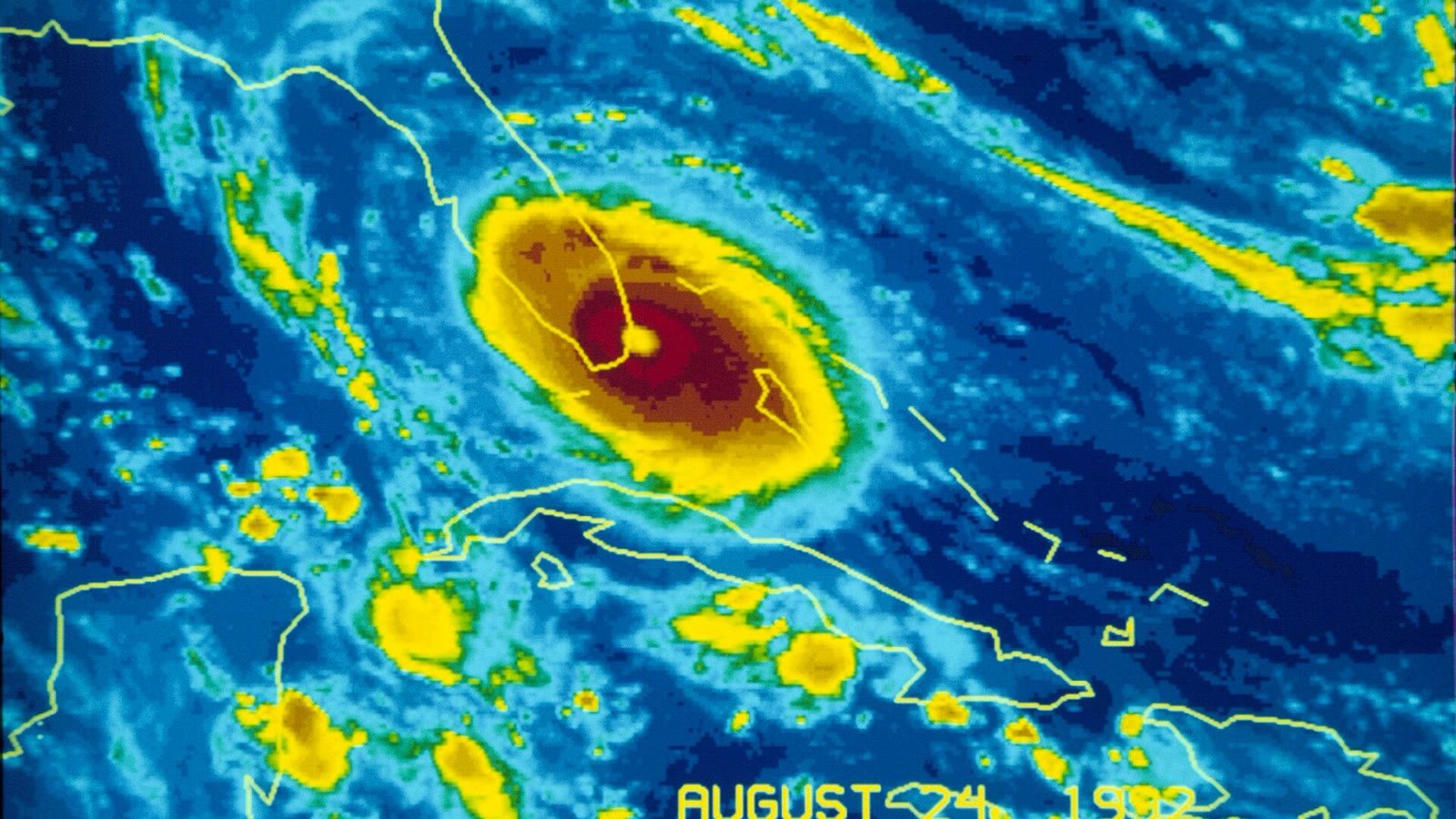
Hurricane Andrew struck South Florida in 1992 as a Category 5, with 165 mph winds. According to the International Code Council (ICC) case study on the Florida Building Code, it caused 23 direct deaths, about $27 billion in damage, nearly 25,000 homes destroyed, including 99% of the mobile homes in the city of Homestead, and about 160,000 residents left homeless. It is one of the most cited historical references in hurricane engineering because it exposed more than the force of the wind: it exposed the distance between written codes and what was actually built and approved.
Before the statewide code, Florida operated with different rules in 67 counties and more than 400 municipalities. That fragmentation meant two buildings with the same exposure could meet different standards. The political response was gradual: in July 1996 Governor Lawton Chiles created a building code study commission, which held hearings between October 1996 and January 1997. The first Florida Building Code was adopted in 2001 and took effect on March 1, 2002, replacing local codes. Almost ten years passed between the storm and the unified code.
The Miami-Dade standard was not born from a lab test but from a change of process: moving from "complying with a code" to "proving that each product has an approval with a file." That idea, and not a wind-speed number, is what a Mexican buyer can adopt today without waiting for any law to change.
What Is the HVHZ and What Does It Require?
The HVHZ, or High-Velocity Hurricane Zone, is the area of Florida where the strictest requirements apply. According to the Florida Division of Emergency Management guide, it covers Miami-Dade and Broward counties. In that zone, protection products must have an approval demonstrating compliance with the TAS 201 (large and small missile impact), TAS 202 (uniform structural load) and TAS 203 (uniform cyclic pressure) protocols.
The same source describes the large missile as a 9-pound 2x4 striking end-on at 34 mph, and explains that cyclic pressure tests, in TAS 203 and in ASTM E1886, involve about four hours or more of positive and negative pressure cycles, for a total of 9,000 cycles. Two ideas follow. First, the test combines impact with pressure; second, duration is built into the protocol: the standards already treat time as a variable, not just peak speed.
A Notice of Acceptance (NOA) is the product approval issued by Miami-Dade County through its Product Control section. A product with an NOA is approved for Miami-Dade and Broward. You can consult the system at Miami-Dade County Product Control; to understand step by step how to check one, we have a guide on how to verify the Miami-Dade NOA.
| Protocol | What it evaluates | Where it applies |
|---|---|---|
| TAS 201 | Impact of large and small missiles | Approval in Miami-Dade and Broward |
| TAS 202 | Uniform structural load | Approval in Miami-Dade and Broward |
| TAS 203 | Uniform cyclic pressure | Approval in Miami-Dade and Broward |
| ASTM E1996 | Specification for windborne debris impact in hurricanes | Rest of Florida and windborne debris regions of the international code |
| ASTM E1886 | Missile impact and cyclic differential pressure | Rest of Florida and windborne debris regions of the international code |
How Does Military Level E Relate to Miami-Dade?
Hurricane Solution, certified hurricane protection in Mexico since 2008, is the only company in Mexico certified under ASTM E1996-09 Level E (U.S. military), the standard that tests wind, water, projectile impact and differential pressure at the same time. For a window, a terrace or a hotel facade, this means the system was evaluated with all four forces combined, which is how they act in a real storm, and not one by one.
Hurricane Solution's impact tests are run with projectiles at 80 ft/s (approx. 24 m/s), compared with the 51 ft/s (approx. 15.5 m/s) of the Miami-Dade standard. Level E is the standard that ASTM E1996 sets for essential facilities (hospitals, police and fire stations, shelters, communications centers and power plants) in hurricane zones, and it is the level the U.S. Navy uses to define how to protect its essential facilities. The HS-1500 was installed at the U.S. Navy hospital in Guam. In addition, Hurricane Solution holds the Miami-Dade Notice of Acceptance (NOA) for the anchoring system and the fabric. The NOA is a U.S. approval, not a Mexican certification, and its value for a Mexican buyer is that of verifiable technical evidence. Every Hurricane Solution certification has a file number that any architect, engineer or insurer can verify; the numbers are available on request.
What Can a Buyer in Mexico Adopt Today?
This blog does not analyze Mexican building regulations, which vary by municipality and building type; for that analysis you can consult our article on why Mexico should modernize its hurricane protection standards. What is within reach of any hotel, developer or project manager is to incorporate into their contract the same criteria that Florida turned into a process: a product approval, a file number that can be verified and a test that combines forces.
In practical terms, an architect or engineer can include four requirements in tender documents or a construction contract: the list of approvals required by type of opening, the file number of each, the test standard applied and the match between what was approved and what was installed. With that, the discussion stops being "which is better?" and becomes "which can prove what it says?". For drafting the technical proposal and its review, certified hurricane protection is the starting point.
Florida took almost a decade to turn the lesson of Andrew into a unified code; a Mexican hotel can apply the lesson in a contract within weeks. The speed of the private buyer is a competitive advantage over the slowness of any regulatory reform.
Illustrative Scenario: Two Tender Processes for a Hotel
Hypothetical example. A hotel group plans the protection of a 200-room hotel in Cancún's Hotel Zone. In tender A, the documents ask for "certified hurricane protection." In tender B, they ask for the product approval with file number, the test standard, the list of openings and a match inspection before final payment. Both proposals contain documents, but only in B can the committee check, opening by opening, that what was offered matches what was approved.
It is an illustrative pattern, not a client case. What changes between A and B is not the storm but the ability to verify. For the hotel, that ability translates into less risk of interruption, fewer days closed and a stronger relationship with investors and insurers, although the exact figures depend on each operation and are expressed here only as a qualitative estimate.
Technical Layer: Why Pressure and Duration Matter
Differential pressure is the difference in air pressure between the inside and outside of a building during the storm. When an opening breaks, internal pressurization occurs: the wind enters and pushes outward on the roof and walls. A system that keeps the openings closed, that is, apertures such as windows, doors and large glazed walls, reduces the risk of that condition. A technical summary of the mechanism is in how a hurricane really destroys a house, and the NOAA National Hurricane Center publishes the intensity data for each historical storm.
The reason Miami-Dade protocols include pressure cycles is that a storm is not a single gust. The 9,000 cycles mentioned by the Florida Division of Emergency Management represent a repeated load on fabric, hardware and anchors. In a hurricane fabric screen system, the anchoring and the fabric hold the Miami-Dade NOA, which means both components were evaluated under that framework.
Regional Context: Cancún, Los Cabos, Puerto Vallarta and Acapulco
Mexico's coasts share with Florida the essentials: exposure to major hurricanes and a density of tourism infrastructure. Hurricane Solution serves the entire Yucatán Peninsula from its Playa del Carmen office, from Cancún to Chetumal, and on the Pacific coast Los Cabos, Mazatlán, Puerto Vallarta, Acapulco and Puerto Escondido. In all those markets, Florida's lesson translates into the same practice: demand verifiable evidence. For hotels, see the hotel protection page; for commercial projects, the commercial properties page.
Connection to Hurricane Protection in Mexico
Florida's history teaches that a standard is a system of tests, listings and verification, not a label. Applied to hurricane protection in Mexico, that logic focuses on three questions: what was tested, under what standard and how it is verified. The everyday wind-driven rain that HS Rain Protection addresses follows the same logic: protection is worth what can be verified.
Operating Strategy: Reactive vs. Proactive
A reactive buyer demands evidence only after an event, when an insurer or auditor asks for it. A proactive buyer builds it into the purchasing process. For a hotel operator, that reduces friction with investors and corporate audits, and lets the maintenance department work with a complete file. In industry terms, the benefit shows up in operating efficiency and effective occupancy: fewer days out of service means more sellable rooms and better RevPAR for the season.
A system-based plan includes: an opening inventory, an approvals matrix by type of opening, a file of file numbers, a match review before final payment and a deployment rehearsal by staff. The cost of not doing it is hard to generalize and must be calculated with each property's data; in this blog we do not include a loss figure because there is no source to back it for a general case.
Cost, Problems, Comparison, Cases and Best in Class
Cost. Hurricane fabric protection systems are custom-engineered based on high-velocity wind-load calculations, opening spans, mounting substrates, and motorization requirements. Contact our engineering team directly for a precise project calculation. To request a quote, message us on WhatsApp. The final price is confirmed after a free technical evaluation. Hotel, commercial and development projects are quoted in that same evaluation. Problems. Approvals that cannot be verified, single-force tests presented as if they were comprehensive, and differences between what was approved and what was installed. Comparison. The table below orders the criteria. Reviews and cases. The two-tender example is an illustrative pattern. Best in class. See below.
Best in Class
If you could only do one thing, it would be to require in the contract a complete-envelope system with product approval, a verifiable file number and impact and pressure tests, and to check those numbers with your architect before paying.
When a Removable Fabric Screen Is Not the Best Option
Hurricane fabric screens require someone to install them before the storm, so they suit owners with a presence, staff or a local contact. They are not a barrier against theft, do not insulate against heat or noise and, for anyone looking only for the lowest price without certification, cheaper products exist.
Key Facts
- Andrew (1992): Category 5, 165 mph, 23 direct deaths, about $27 billion in damage, nearly 25,000 homes destroyed (ICC).
- The first Florida Building Code was adopted in 2001 and took effect on March 1, 2002 (ICC).
- The HVHZ covers Miami-Dade and Broward; the protocols are TAS 201, 202 and 203 (Florida Division of Emergency Management).
- Miami-Dade large missile, per the same source: 9-pound 2x4 at 34 mph; cyclic pressure: about 9,000 cycles over four hours or more.
- ASTM E1996-09 Level E tests wind, water, impact and differential pressure at the same time; Hurricane Solution is the only company in Mexico certified at that level.
- Hurricane Solution's tests use projectiles at 80 ft/s versus the 51 ft/s of the Miami-Dade standard; the NOA covers the anchoring system and the fabric.
Decision framework: steps to take
Step 1: Identify Your Situation
- I am designing or tendering a hotel or development
- I have an installed system and want to check its backing
- I am an architect or engineer and must specify protection
Continue according to your situation.
Step 2: Assess Your Main Risk
- I do not know which standard backs my system
- I do not have the file number
- My tender documents ask for "certified" with no further detail
Your priority is to turn "certified" into verifiable evidence.
Step 3: Choose Your Solution
Include in the tender documents and contract: product approval, file number, test standard and list of openings. Verify the NOA in the Product Control system and have your engineer review the file. If you want your property evaluated, request a free technical evaluation from Hurricane Solution.
Step 4: For Hotels, Developments and Large Projects
Require the approvals matrix by type of opening, the match review before final payment and the file of file numbers together with the continuity plan. The price of hotels and developments is defined in the free technical evaluation.
Comparison tables
Evidence criteria
| Criterion | Without a verification process | With approval and file number |
|---|---|---|
| Product approval | Declared | NOA with verifiable file number |
| Tests | One force at a time | Impact, cyclic pressure and, at Level E, all four forces at once |
| Projectile speed (ft/s) | Not specified | 80 (Level E) versus 51 (Miami-Dade) |
| Architect's review | Impossible | Possible with the file |
Sources and evidence
This article is backed by:
- Andrew data, Florida code timeline and the structure of 67 counties and more than 400 municipalities: ICC, The Florida Building Code Story.
- HVHZ, TAS 201/202/203 protocols, relationship with ASTM E1886 and E1996, 9-pound 2x4 missile at 34 mph and 9,000 cycles: Florida Division of Emergency Management, Debris Impact Standards.
- NOA approvals system: Miami-Dade County Product Control.
- Impact standard: ASTM International; code: Florida Building Code; cyclone data: NOAA National Hurricane Center.
- Certifications, 80 ft/s vs 51 ft/s, NOA for anchoring and fabric and Hurricane Solution's service area: verified company documentation; file numbers available on request.
Methodology notes:
- The Andrew figures and the code timeline come from the ICC; the test protocols come from the Florida state source.
- The state source describes the large missile at 34 mph; Hurricane Solution cites 51 ft/s as the Miami-Dade standard. Both figures are presented as each source publishes them.
- The two-tender example is hypothetical.
- There is no unverified third-party data.
Conclusion
Andrew taught Florida that a standard is a process of approval, testing and verification, and that building it takes time. Buyers in Mexico do not have to wait: they can require today, in their contract, a product approval, a verifiable file number and a test that combines forces. Hurricane Solution, certified hurricane protection in Mexico since 2008, is the only company in Mexico certified under ASTM E1996-09 Level E (U.S. military), with the Miami-Dade NOA for the anchoring system and the fabric and a verifiable file number for each certification. If you want to evaluate your property, request a free technical evaluation.
Frequently Asked Questions
What is the HVHZ?
It is Florida's High-Velocity Hurricane Zone, which covers Miami-Dade and Broward. There, products require an approval based on TAS 201, 202 and 203.
What is a Miami-Dade NOA?
It is the product approval issued by Miami-Dade County through Product Control. Hurricane Solution holds the NOA for the anchoring system and the fabric, and its file number is verifiable.
Is meeting ASTM E1996 the same as meeting Miami-Dade?
No. According to the Florida Division of Emergency Management, a product that meets Miami-Dade also meets ASTM E1886 and E1996, but the reverse is not guaranteed.
What does ASTM E1996-09 Level E mean?
It is the U.S. military standard that tests wind, water, projectile impact and differential pressure at the same time. Hurricane Solution is the only company in Mexico certified at that level, with projectiles at 80 ft/s versus the 51 ft/s of the Miami-Dade standard.
Can a hotel in Mexico require these standards?
Yes, contractually and voluntarily: it can ask for product approval, a verifiable file number and impact and pressure tests. This blog does not analyze whether Mexican law requires it.
How is the cost of protection for a home calculated?
It depends on the m² of openings (windows and doors) being protected; the final price is confirmed after a free technical evaluation. Hotels, businesses and developments are quoted in that evaluation. Hurricane fabric protection systems are custom-engineered based on high-velocity wind-load calculations, opening spans, mounting substrates, and motorization requirements. Contact our engineering team directly for a precise project calculation. To request a quote, message us on WhatsApp.