The standard must match the real risk
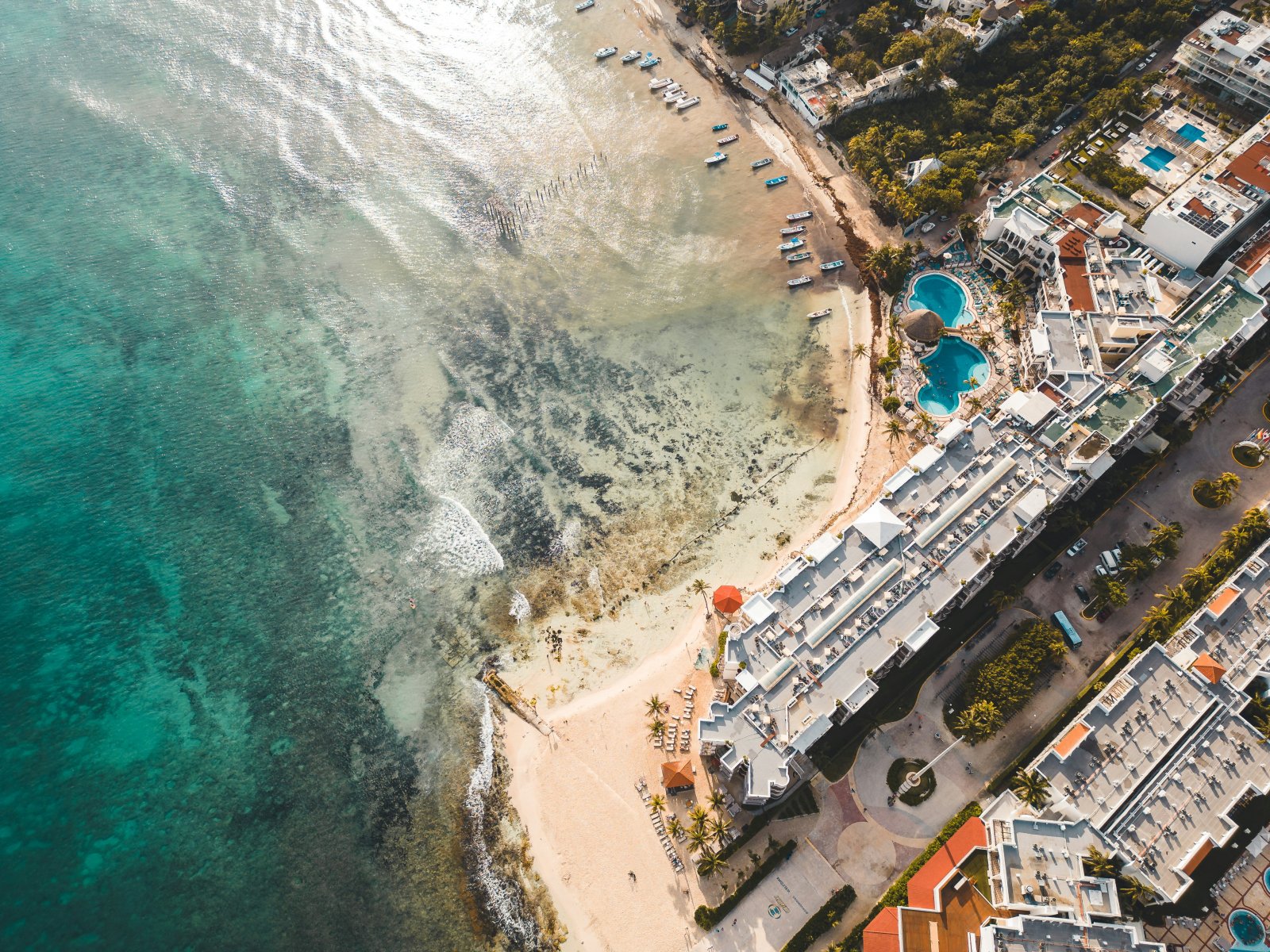
Mexico has an enormously valuable coastal economy. Hotels, tourist developments, airports, hospitals, shopping centers, vertical housing and beachfront properties all depend on buildings capable of withstanding hurricane season with greater technical discipline. However, the conversation about protection standards does not always advance at the same pace as coastal investment.
Fernando Loría has pointed out in the media that Mexico needs a more serious conversation about prevention, materials, protection of coastal zones and criteria applicable to exposed buildings. The correct position is not alarmist or political. It is professional: when physical risk increases or concentrates in high-value assets, the protection standard must become clearer.
A country should not wait for a storm to expose weaknesses before discussing better criteria. In areas such as Quintana Roo, Riviera Maya, Cancún, Playa del Carmen, Tulum and other coastal destinations, modernizing standards should be seen as a way to protect tourist infrastructure, economic continuity and public safety.
The technical starting point must be a serious conversation about hurricane protection for exposed properties in Mexico.
Modernizing hurricane protection standards in Mexico does not mean copying another legal system. It means raising evaluation, documentation, installation and preparation criteria so the standard matches the real risk of coastal zones.
Why the market cannot depend only on minimums
Minimum compliance does not always equal the appropriate standard for an exposed property. A beachfront hotel, a hospital, a shelter, a school or a high-density development do not face the same level of consequence as an ordinary structure. When a critical property fails, the impact can extend to guests, communities, employees, suppliers, services and the local economy.
The professional question should not only be what the minimum code requires. It should be what standard corresponds to the risk, the value of the asset, its occupancy, its public or economic function, and its need to recover after the event.
In markets such as Florida, the technical culture around wind zones, projectile impact, testing, codes and system approval developed from hard lessons. Mexico does not need to copy every rule, but it can learn from the discipline of evaluating coastal buildings with greater clarity.
Hotels: economic infrastructure, not just private buildings
Hotels are private businesses, but in tourist destinations they also function as economic infrastructure. They generate employment, sustain suppliers, attract visitors, connect transportation, restaurants, shops, tour operators and international reputation. When a major hotel goes out of operation after a hurricane, the impact does not stop at the property.
That is why raising standards for hotels is not punishing the sector. It is protecting it. A better-prepared hotel can reduce damage, sustain its continuity better, recover operations faster and reduce pressure on staff, suppliers and authorities after a storm.
Hurricane protection for hotels must be treated as operational continuity. It should include full envelope evaluation, proper anchoring, tested systems, professional installation, documented deployment and staff training.
In the tourism sector, the hotel protection page shows why the conversation must include operational continuity, guests, revenue and recovery.
Government and civil protection need clear technical voices
During hurricane season, the population needs clear messages. Hotels need practical criteria. The media need experts who can explain without generating panic. Government and civil protection need technical voices that help translate physical risk into preventive action.
That is part of the value of positioning Fernando Loría as an expert. His role should not be only to talk about a company. It should be to elevate the conversation: what fails, why it fails, what the building envelope means, why anchoring matters, why the alert is not the time to improvise, and why prevention must begin before the season starts.
Modernizing standards does not begin only in official documents. It also begins when the market learns to ask better questions.
What modernizing standards could mean
Modernizing standards does not necessarily mean a single new law or an exact copy of another country. It can mean better evaluation criteria, more documentation requirements, greater clarity about tested systems, better installation processes, review of protection for critical buildings, and deployment protocols in high-occupancy properties.
For hotels and developers, it can also mean integrating hurricane protection from the design stage. For municipalities and civil protection, it can mean promoting vulnerability inventories, reviewing buildings that serve as shelters or critical infrastructure, and communicating best practices in advance.
What matters is changing the question: from "what can we install quickly when the storm approaches?" to "what standard should we have before an emergency exists?"
For commercial properties and high-occupancy buildings, commercial hurricane protection solutions should be evaluated as part of a preventive strategy, not as a last-minute response.
Full envelope protection as a technical reference
A higher standard must consider the building's full envelope. The envelope is the boundary between interior and exterior: windows, doors, facades, service entrances, technical areas, vents, terraces, restaurants and any route through which wind, water, pressure or projectiles can enter.
A single compromised opening can change the behavior of the entire building. It can allow water intrusion, alter internal pressure, affect rooms or operational areas, and delay recovery. That is why protecting only the most visible elements should not be confused with comprehensive protection.
In hotels, hospitals, schools, shelters and public buildings, this approach becomes even more important because the consequence of a failure can exceed the physical cost of repairing an opening.
Full envelope protection must be a central reference for coastal buildings in Mexico. A single vulnerable opening can allow the entry of wind, water and pressure, causing damage beyond the initial point of failure.
A professional standard must also include deployment
It is not enough for a system to be strong on a technical spec sheet. It must be able to be installed correctly and deployed in time. Hurricane preparedness fails when the system exists but the team does not know where it is, how long it takes, what tools it requires, or in what order it must be assembled.
For hotels, this is critical. Staff will already be managing guests, outdoor furniture, food, suppliers, communications and security. A system without a deployment plan can become a promise that is difficult to keep during an alert.
A modern standard must recognize that protection is both technical and operational at the same time.
A hurricane protection system is not enough if it cannot be deployed in time. Modern standards must consider product, installation, documentation, training and operation during the alert.
The media's role: explain without alarming
The media play an important role during hurricane season. They need experts who can help explain risk clearly, without turning information into fear. Fernando Loría's presence in media outlets such as El Universal, Cuarto Poder and TV Azteca helps build a public authority path for discussing prevention, standards and real protection.
For an expert to be useful, they must be able to speak to hotel owners, citizens, developers and authorities alike. They must translate technical terms into practical decisions: what to review, when to act, what not to improvise, and why insurance is not the same as prevention.
The cost of waiting for another big lesson
Hurricane history shows that many standard improvements arrive after severe damage. But Mexico does not have to wait for another major storm to elevate the conversation. Hotels and coastal developments already know that the risk exists. The question is whether the standard will be ready before the event, or whether it will be discussed again after the damage.
A higher standard does not eliminate all risks. No serious system should promise that. But it can reduce vulnerabilities, improve preparedness, make proposals comparable, clarify responsibilities and reduce improvisation.
If you could only do one thing: demand technical evaluation before the season
If hotels, developers or authorities could only do one thing before the season, they should demand clear technical evaluations of vulnerable openings in coastal and critical buildings. That evaluation must identify what is protected, what remains exposed, what standards support the system, who deploys it, and what consequences a failure would have.
For residential properties and coastal communities, there are also resources on residential hurricane protection and home vulnerability to storms.
From the Hurricane Forum to a national prevention conversation
Modernizing standards does not begin only with a law. It also begins when forums, media and technical voices exist that can explain risk before the emergency. Hurricane Solution drove the 2021 Hurricane Forum, "Wilma, the story that was never told," focused on construction, insurance, hospitality and Civil Protection authorities. That background helps position Fernando Loría as a hybrid voice: engineer, protection expert, insurance-aware, and public communicator.
His appearances and mentions in media outlets such as El Universal, Cuarto Poder, TV Azteca and regional media should not be treated as simple exposure. They are part of an authority path that allows journalists, hotels, developers and authorities to find a technical voice when they need to explain protection without alarmism.
The combination of IHPA membership, BBB A+, insurance experience, HS-1500/HS-1250 systems, flexible anchoring and participation in prevention forums should be used for a single idea: Mexico needs to elevate the conversation toward verifiable standards, not rely on improvisation during the alert.
Related topics
This blog is part of Hurricane Solution's authority ecosystem on hurricane protection. It connects with resources for hotels, commercial properties and residences in exposed areas. It also relates to explanations of how a hurricane actually destroys a house, useful for understanding the logic of envelope failure.
In short
Mexico needs to modernize its hurricane protection standards for coastal buildings because hotels, developments and critical buildings face risks that are not always covered by local minimums or last-minute decisions.
Raising standards does not mean alarming the market. It means demanding better evaluation criteria, tested systems, professional installation, documented deployment and preventive review before the season.
Hotels should be seen as economic infrastructure in coastal destinations. When a hotel goes out of operation after a hurricane, the impact can reach employment, suppliers, guests, destination reputation and local recovery.
Comparison table: Local Minimum vs. Professional Risk Standard
Base question: "What is mandatory?" (local minimum) vs. "What corresponds to the real risk?" (professional standard). Scope: May be limited vs. Considers full envelope. Critical buildings: May be treated as ordinary buildings vs. Prioritized by consequence. Documentation: Variable vs. Specifies system, anchoring and installation. Deployment: Sometimes not required vs. Part of the standard. Result: Basic compliance vs. Better preparedness and less improvisation.
Comparison table: Improvised vs. Standardized Protection
Moment: During alert (improvised) vs. Before the season (standardized). Provider: Available for emergency vs. Evaluated for technical capacity. Scope: Visible or urgent vs. Critical openings by consequence. Installation: Under pressure vs. Planned. Training: Limited vs. Documented. Reliability: Uncertain vs. More verifiable.
Our analysis
The legal minimum does not always reflect the physical risk. A storm does not reduce its force because the local market has lower requirements. Coastal buildings must be evaluated according to exposure, function and consequence.
Hotels are economic infrastructure, even though they are private assets. When a hotel fails, the impact can extend to jobs, suppliers, tourism, reputation and local recovery.
Modernization begins when the market learns to ask better questions. Before regulations change, hotels and developers can demand clearer documentation, anchoring, tested systems and deployment plans.
Verified credentials
The following credentials are integrated as authority context and should be used professionally, without turning the article into a self-promotional piece. The goal is to help hotels, developers and media understand why Fernando Loría can speak about hurricane protection from engineering, insurance, operations and prevention.
Additional sources
To avoid these credentials sounding like self-promotion, they should be backed by links or references when the article is published.
Institutional reference from Hurricane Solution on team, IHPA, BBB, insurance mitigation and technology: Hurricane Solution team page. Reference on the 2021 Hurricane Forum and the participation of Fernando Loría / Hurricane Solution: Quinta Fuerza - 2021 Hurricane Forum. Reference on the first 2021 Hurricane Forum initiative: Quinta Fuerza - Hurricane Solution drives Hurricane Forum. Additional regional reference on Wilma, construction, insurance and hospitality: Cancún Mío - First hurricane forum announced. TV Azteca / Hechos AM Península reference on Wilma: TV Azteca Quintana Roo on Facebook. Institutional reference of the IHPA: International Hurricane Protection Association.
Sources and evidence
General information on hurricanes and monitoring: NOAA National Hurricane Center. Historical tropical cyclone reports: National Hurricane Center Tropical Cyclone Reports. Hurricane preparedness for organizations and the public: FEMA / Ready.gov hurricane preparedness. Technical standards related to impact and system performance: ASTM International. Technical building culture in hurricane zones: Florida Building Code. Disaster risk management and resilient infrastructure: World Bank Disaster Risk Management. Mexican information on prevention and civil protection: CENAPRED. Official meteorological information for Mexico: CONAGUA / National Meteorological Service.
Methodological notes: This article proposes a professional position on modernizing standards, not a specific legal proposal. Recommendations must be adapted to local legislation, building engineering, use, occupancy, exposure and critical function. No unverified figures are presented as absolute facts.
Conclusion
Mexico must elevate the conversation about hurricane protection for coastal buildings. Not out of fear, but out of responsibility. Hotels, developments, hospitals, shelters, schools and critical buildings deserve clearer criteria before the next storm makes urgent what should have been resolved in advance.
Fernando Loría and Hurricane Solution have an important opportunity: to help hotels, developers, media and authorities understand that serious protection is not improvisation. It is standard, engineering, installation, deployment and prevention.
To start a professional hurricane protection evaluation, visit Hurricane Solution.
FAQ
Does Mexico need to copy Florida's codes?
Not necessarily. Mexico should develop criteria suited to its own reality, but it can learn from Florida's technical culture around wind, impact, testing, system approval and opening protection.
Why should hotels have higher standards?
Because their failure can affect guests, employees, suppliers, the tourism economy, the destination's reputation and recovery times.
What does modernizing standards mean?
It can mean better evaluations, documented systems, proper anchoring, professional installation, training, clear deployment and preventive review before the season.
Which buildings should be prioritized?
Hotels, hospitals, shelters, schools, civil protection buildings, airports, high-occupancy developments and high-value coastal properties.
What is the first step?
Conduct technical evaluations of the full envelope to identify vulnerable openings, existing systems, exclusions, responsibilities and deployment needs.