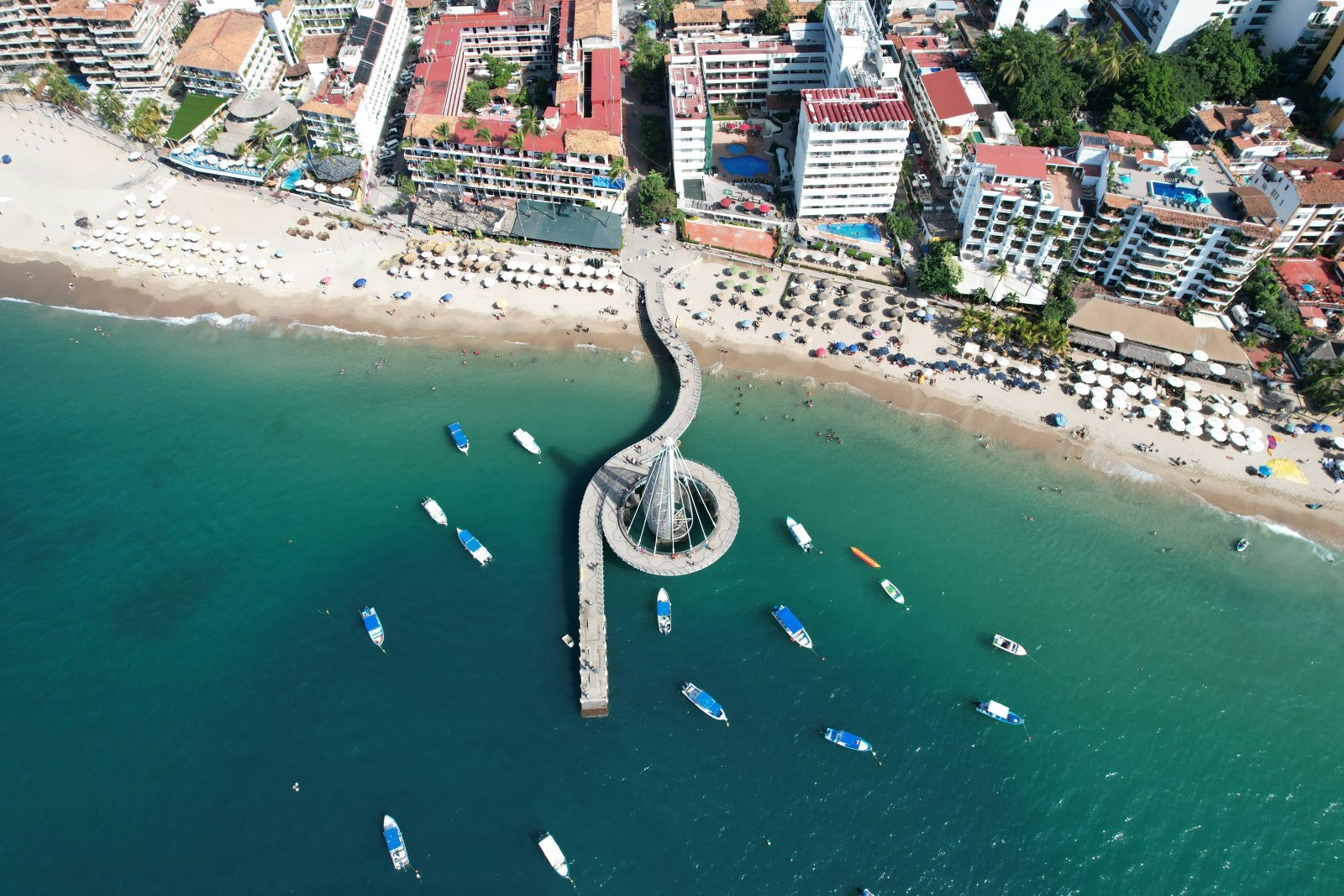
Puerto Vallarta and Punta Mita hold some of the most valuable coastal property on Mexico's Pacific side—and one of its most stubborn myths: that Bahía de Banderas shields the city from hurricanes. Kenna in 2002 and Lidia in 2023 disproved it twenty-one years apart. This guide compares the providers with documented coverage in the bay, in no order of preference, and shows why the right choice depends on exactly where your property sits.
The bay softens storms, it does not stop them
For decades, owners assumed Puerto Vallarta's position inside Bahía de Banderas kept it safe. Hurricane Kenna ended that assumption on October 25, 2002. The eye came ashore near San Blas, Nayarit, yet the city still took winds of up to 225 km/h (140 mph) and 5 to 6 meter (16 to 20 foot) seas that wrecked the Malecón and the tourist strip, with damage estimated at 10 million dollars.
On October 10, 2023, Hurricane Lidia made the same point. It came ashore near Puerto Vallarta as a Category 4, downing trees, cutting power, flooding streets, collapsing a bridge when the Río Cuale overflowed, and damaging more than 1,800 homes across Jalisco. Both storms say one thing: the bay can reduce some effects in some scenarios, but it guarantees nothing.
The myth lasted because in most seasons it is partly true. The bay does blunt part of the wind and surf. But "usually softens" is not "always protects," and the exception years are exactly why permanent protection beats trusting geography.
Not every part of the bay carries the same risk
What sets this region apart is how many risk profiles fit inside one bay. The Zona Romántica, the Malecón, and the beachfront blocks downtown take the most direct wind and wave exposure. Properties inland or toward the sierra see less wind but face flooding when urban rivers overflow, as the Río Cuale did during Lidia.
Nuevo Vallarta and Bucerías, on the Nayarit side, hold a high share of foreign-owned homes managed remotely, which makes permanent, motorized systems especially useful there. Marina Vallarta, with its mid- and high-rise towers, needs protection specified floor by floor and facade by facade, since upper levels take heavier wind loads. Punta Mita and La Cruz de Huanacaxtle add low-density luxury homes facing open ocean: direct exposure plus a demanding architectural standard.
| Area | Dominant risk | Protection consideration |
|---|---|---|
| Zona Romántica / Malecón | Direct wind and wave action | Highest spec on oceanfront facades |
| Marina Vallarta | Wind load at height (towers) | Floor-by-floor and facade-by-facade protection |
| Nuevo Vallarta / Bucerías | Remote management, moderate to high wind | Permanent, motorized systems |
| La Cruz de Huanacaxtle / Punta Mita | Open-ocean exposure, high design value | Systems that integrate architecturally |
| Sierra and inland areas | River flooding | Drainage protection on top of opening protection |
A neutral look at providers working in the bay
This comparison is not ranked. Each provider covers a different slice of the bay and specializes differently, and the details come from their own public pages.
Huracán Sin Peligro
Runs a service line built for Jalisco and Nayarit, with documented coverage in Puerto Vallarta, the Zona Romántica, Marina Vallarta, Nuevo Vallarta, Bucerías, La Cruz de Huanacaxtle, and Punta de Mita. It offers a free vulnerability assessment and separates risk profiles by area, including guidance for high-rise condos in Marina Vallarta and for remotely managed homes in Nuevo Vallarta and Bucerías.
Spazio Decora
A local specialist in hurricane shutters for Puerto Vallarta and Bahía de Banderas, focused on appearance as much as structural protection. Its range covers roll-down, sliding, and accordion systems, with hands-on service from measurement through installation.
Protección Contra Huracanes (Miami-Dade)
Specializes in shutters and panels certified to Miami-Dade standards, with documented presence in Puerto Vallarta and other Mexican markets. Options include aluminum roll-down shutters, clear hurricane fabric, and accordion shutters, sorted by budget and opening type.
Hurricane Solution
Systems certified to military standards and ASTM E1996, with a product line graded by resistance level—including Category 5 options—plus solutions for large openings and oceanfront terraces. It fits hotel developments and luxury homes that require verifiable lab certification documents.
None of these providers is the automatic answer for the whole bay. A locally managed home in the Zona Romántica has different needs than a remotely managed Marina Vallarta condo, or a Punta Mita estate with a strict design standard.
Why Punta Mita is a different problem
Two factors raise the bar in Punta Mita. First, it faces the open Pacific, without the partial shelter of sitting inside a closed bay. Second, property values are high enough that how a system looks matters as much as how it tests. For that profile, premium motorized roll-down shutters usually win over fabric or removable panels, the same pattern seen in comparable luxury pockets such as Palmilla or Pedregal in Los Cabos. Our residential protection page covers the options for this kind of home.
One storm, different outcomes by neighborhood
When Lidia passed in October 2023, properties a few kilometers apart inside the same bay faced entirely different threats. Oceanfront homes in the Zona Romántica dealt mainly with direct wind and waves against glass. Properties near the Río Cuale dealt with river flooding and a collapsed bridge. Marina Vallarta condos, more sheltered from direct surf, mostly took wind loads on their upper floors.
That contrast across a small area is why a single recommendation for "the bay" fails. The useful question is not which company is best in Puerto Vallarta. It is which company understands the dominant risk at your exact address: direct wind, flooding, or wind at height.
What going unprotected costs
The 1,800-plus homes damaged in Jalisco during Lidia add up to a serious repair bill, much of which opening protection would have avoided—and, in flood-prone areas, proper drainage protection. For vacation rentals, a large segment in Nuevo Vallarta, Bucerías, and Punta Mita, every week of repairs is lost booking income, plus the risk of bad reviews from guests who lived through the damage.
How to decide
- Place the property: downtown and the Zona Romántica, a Marina Vallarta tower, or a house in Nuevo Vallarta, Bucerías, or Punta Mita.
- Name the dominant risk: direct wind and waves, river flooding, or remote management with no one on site. Near the Río Cuale, budget for drainage protection too.
- Match the system: local management, a regional specialist; a tower, a provider experienced floor by floor; managed from abroad, motorized systems; open-ocean luxury, design integration and strong certification.
- Verify before signing: request Miami-Dade or ASTM E1996 lab documents for the exact system being installed.
For hotels and large developments, exposure varies so much between the Zona Romántica, Marina Vallarta, and Punta Mita that each facade deserves its own analysis; our hotel protection page explains how that review works.
Terms worth knowing
- Area risk profile: the mix of wind, wave, and flood exposure at one exact address, which can differ between neighboring streets.
- Drainage protection: extra checks and systems for flood-prone lots, used alongside opening protection.
- Motorized system: protection that closes remotely, key for homes managed from abroad.
Frequently Asked Questions
Is it true that hurricanes rarely hit Puerto Vallarta?
Direct hits are infrequent, so the claim is partly true. But Kenna in 2002 and Lidia in 2023 showed that when a significant event does arrive, the damage can be severe. Permanent protection remains the prudent call.
Which part of the bay carries the most risk?
The Zona Romántica, the Malecón, and Punta Mita take the most direct wind and wave exposure. Areas near urban rivers such as the Cuale face flooding as their main threat.
What works best for a property managed from abroad?
In Nuevo Vallarta or Bucerías, providers offering motorized systems and remote assessment are usually the practical choice, since nothing depends on someone installing panels before the storm.
Does Punta Mita need the same protection as Puerto Vallarta?
Not quite. Punta Mita faces the open Pacific and carries a higher design standard, which usually justifies systems with better architectural integration and stronger certification.
Which certification should I verify before hiring?
Ask for lab documentation to Miami-Dade or ASTM E1996, the two standards most cited in the bay, and confirm the test covers the exact system being installed.