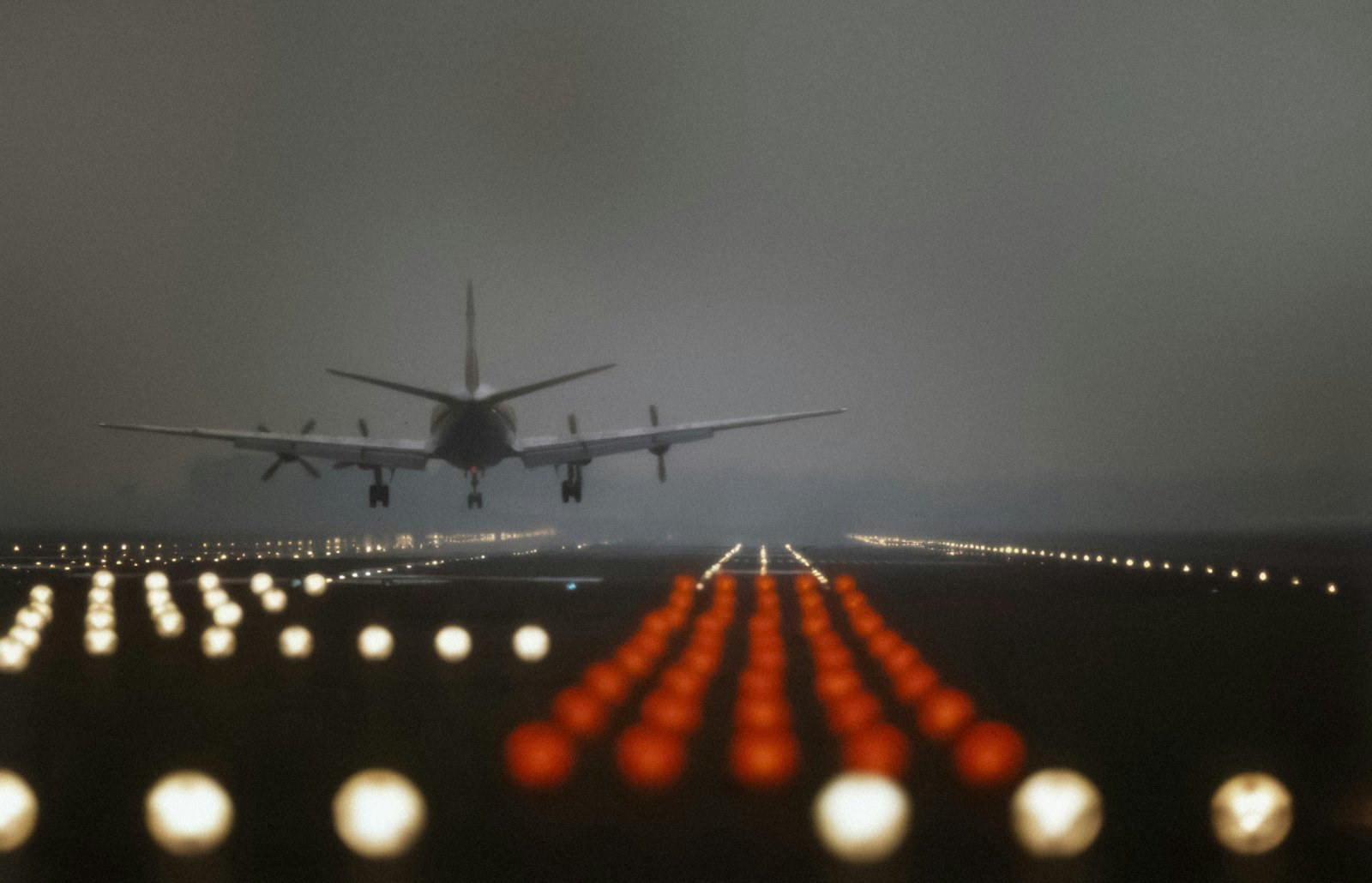
An airport must do more than survive a hurricane: it must be able to resume operations. In Cancún and Puerto Vallarta, where the terminal is one of the region's main gateways, recovery speed has an effect that reaches far beyond the building.
Resilience is not the same as resistance
Resistance measures whether a structure withstands wind force. Resilience adds another question: what happens afterward? A building can remain standing and still be out of service because of water, broken glass, damaged equipment, contamination or areas that require inspection before reopening.
That is why opening protection is understood as a recovery chain: advance protection → lower exposure → lower potential damage → smaller area to inspect or repair → faster recovery. It is not a guarantee of absolute continuity; it is a way to reduce the variables that delay it. ICAO warns that airport disruptions from natural disasters create financial and social impacts and affect connected industries such as tourism.
Why the airport matters even more after the event
When a terminal recovers capacity, the region recovers connectivity. We are not exaggerating by saying a single airport "saves" the whole recovery —that also depends on roads, electricity, telecommunications and authorities— but in destinations where a high share of visitors arrive by air, air connectivity is a relevant piece. Cancún, within the ASUR network, and Puerto Vallarta, operated by GAP for Bahía de Banderas and Riviera Nayarit, serve exactly that function.
The facade is part of continuity
A large glass facade looks like an architectural matter until the storm arrives. If an opening fails, the damage rarely stops there:
- horizontal rain and debris entering the interior;
- shattered glass, soaked ceilings and finishes;
- exposed sensors, doors or electrical equipment;
- closed pedestrian routes and cordoned-off zones;
- inspections, cleaning, drying and urgent repairs before reopening.
Each item adds time. Resilience seeks to reduce the number of extraordinary steps that must happen before returning to safe operation.
Large openings can be the bottleneck
An airport may have hundreds of conventional windows and only a few truly giant openings. But if one of them sits at a main entrance, an arrivals hall or a space with no redundancy, its operational importance is disproportionate. That is why the inventory should not be ranked by size alone, but by a consequence index that combines three variables from 1 to 5:
- Exposure: likelihood of receiving severe loads or debris.
- Vulnerability: how prepared the opening is.
- Consequence: how serious losing that area would be.
The critical opening is the one that most delays reopening, not necessarily the one that costs the most to repair. A cheap door may be the only access to an essential system; an expensive facade may have an alternate route. Protection value is measured in time recovered, on top of money avoided.
The 4-meter problem returns
Resilience does not change physics. When an opening exceeds roughly 4 meters between structural points, declaring it "a priority" is not enough: it needs a solution matched to its scale. Hurricane Solution uses ~3.8 m as the threshold that flags openings requiring special evaluation. For large spans, AquaGrid reduces load through an open mesh and handles geometries that conventional solid screens should not solve by simply being built larger. This is a system proven in the real world; ASTM E1996 serves as the reference standard. The large opening is precisely the one that may end up without a solution if it is evaluated too late: resilience is bought in the quiet months.
Deployment time is a metric, not a detail
Many buyers ask about resistance, warranty and price; fewer ask how long the property actually takes to deploy the entire system. The real time includes retrieving systems from storage, moving them along authorized routes, reaching high points, coordinating security, installing each panel and verifying closure. That time is not estimated in a meeting: it is measured in a drill. Hurricane Solution's commercial protection includes training and planning, because an excellent system that cannot be deployed in time does not deliver its full value.
Coordination across departments
An airport protection strategy does not belong to maintenance alone. Engineering validates geometry and structure; maintenance knows access and storage; operations defines which areas can close and when; security controls restricted zones; procurement ensures what was bought matches what was specified; and leadership sets risk tolerance. The most resilient protection is the one that requires the fewest decisions during the emergency: every improvised question —where is the panel, who has the key, which one fits this door— consumes time. The goal is for the team to execute during the storm, not design.
Reactive versus resilient
| Reactive approach | Resilient approach |
|---|---|
| Decides when the storm appears | Decides before the season |
| Looks for available solutions | Installs the right solution |
| Depends on the vendor to deploy | Trains its own team |
| Prioritizes by intuition | Prioritizes by exposure, vulnerability and consequence |
| Measures success as "it survived" | Measures success as "it recovered capacity" |
If you could only do one thing
Select the 10 openings whose failure would most delay the airport's recovery and ask, for each one: is it protected with a system within its engineering range? Can our team deploy that protection within the real window we will have? If any answer is "we don't know," that is your next resilience project. Opening protection is one layer within an emergency plan; it does not replace other procedures, but it strengthens the envelope and removes an avoidable cause of interior damage. See the hurricane protection overview for the full framework.
Frequently Asked Questions
What does airport hurricane resilience mean?
It is the ability to reduce damage, keep critical functions running when possible and recover safe operation with the least reasonable disruption.
Can a terminal be structurally safe and still take time to reopen?
Yes. Water, debris, damaged equipment, broken glass, inspections and closed areas can delay capacity even without any structural collapse.
Does AquaGrid guarantee continuity?
No. No product can guarantee that an airport keeps operating against every effect of a hurricane. AquaGrid is one protection layer for large openings.
What should be measured besides resistance?
Deployment time, required staff, access, storage, manual clarity and the time needed to verify the system.
Why not wait for the storm?
Because large openings require engineering, custom fabrication, logistics and installation. That cannot be handled responsibly in the final days.