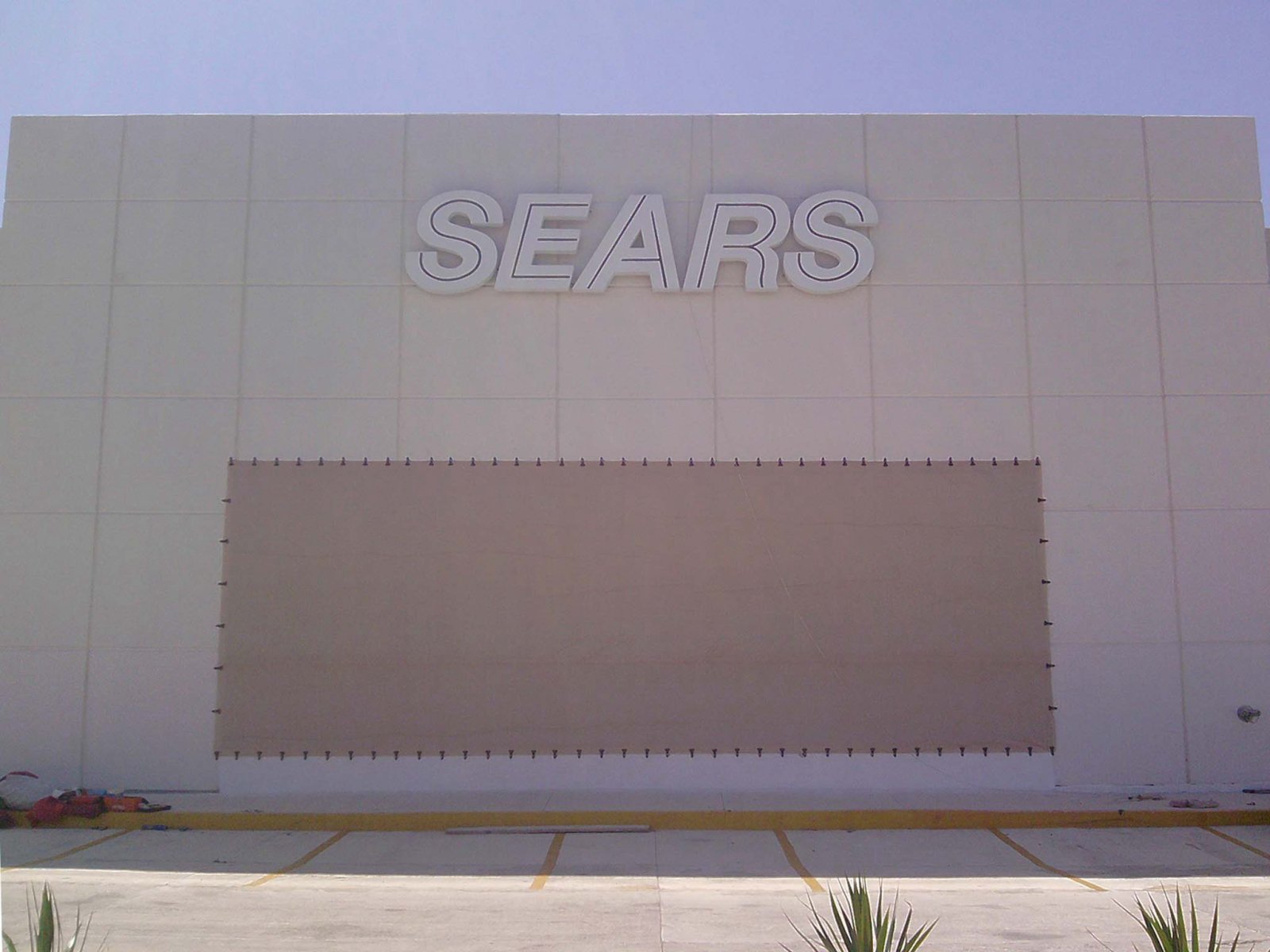
The Sears department store in Playa del Carmen faced a specific structural challenge: an architectural dome that, according to its own maintenance team's assessment, posed a considerable risk during any storm. The recommendation letter signed by the store's maintenance manager, C. Felipe Pérez, dated October 19, 2012, describes it this way (translated from the original Spanish letter):
Case 1: Sears Playa del Carmen — Protecting a High-Risk Dome
“We were looking for a solution to protect a dome that was at great risk during any storm. After an intensive investigation of every system on the market, we chose AstroGuard for its strength, certifications, ease of installation, and the level of safety it offers.”
That “intensive investigation of every system on the market” wasn't a choice made for convenience. It's the kind of formal comparative evaluation a department store the size of Sears requires before approving an installation on its own property.
Case 2: Grupo Vidanta — Mayan Palace Riviera Maya
The second case involves the Mayan Palace, part of Grupo Vidanta, one of Mexico's largest hotel groups. Direct correspondence from engineer Héctor Vázquez Gómez y Sánchez, the group's Executive Maintenance Manager, dated 2011, states (translated from the original Spanish correspondence):
“The storm netting installed in 2008-2009 at the Mayan Palace in Riviera Maya was made by the company you represent, Hurricane Fabric.”
That email, sent to confirm the installation in response to an outside inquiry, establishes two verifiable facts: the installation date (2008-2009), and that the system was still recognized internally by the group's maintenance staff two years later as part of the property's infrastructure.
Why These Two Cases Matter More Together
Sears represents a retail infrastructure challenge: a specific architectural dome with a particular structural risk. Grupo Vidanta represents a large-scale hospitality infrastructure challenge, where protection has to integrate into the ongoing operation of an active resort. Documented years apart — 2008-2009 for Vidanta, 2012 for Sears — both cases show continuity of commercial trust over time, not an isolated episode.
Companies the size of Grupo Vidanta, which operates multiple hotel and timeshare brands across several Mexican destinations, typically run internal vendor-evaluation processes for any installation that affects their properties' infrastructure. The fact that the system was still recognized in writing in 2011, two years after installation, suggests it met the expected performance standards over that period.
The Value of a Verifiable Commercial Reference
In the commercial hurricane protection industry, generic testimonials — “satisfied customer,” no name or company attached — are common evidence of quality. The Sears and Grupo Vidanta cases are different: they include the company name, the name and title of whoever signed or confirmed it, a specific date, and, in Sears's case, a formal letter on company letterhead. That level of specificity carries more weight, from a trust standpoint, than dozens of anonymous testimonials.
References from large companies tend to be harder to obtain than those from individual customers, precisely because they involve stricter corporate approval processes. When a company the size of Sears or Grupo Vidanta provides a reference with a specific name and title attached, that testimonial reflects a formal corporate evaluation, not just one customer's satisfaction.
Why a Dome Is a Different Technical Challenge
An architectural dome has a different wind-exposure profile than a standard flat façade. Its curved shape can generate suction zones — negative pressure — on parts of the surface under sustained wind, a phenomenon that calls for a different protection approach than shielding rectangular windows on a flat wall. A system tested only against flat-surface standards doesn't necessarily predict how it will perform on a large curved geometry, which makes the comparative evaluation process documented in Sears's letter especially relevant.
What These Cases Don't Say — and Why That Matters Too
The Sears letter and the Grupo Vidanta correspondence confirm the installation, the date, and, for Sears, explicit satisfaction at the time of writing. What they aren't, on their own, is a performance report from a specific hurricane after installation. A recommendation letter confirms the purchase decision and initial satisfaction; a post-event report confirms real performance under hurricane conditions. Both types of evidence are valuable, but they answer different questions, and one shouldn't be presented as the other. No more recent public confirmation is available about the current status of that specific Sears installation.
Frequently Asked Questions
Is Sears still using the system Hurricane Solution installed?
The recommendation letter, dated 2012, documents the installation and the store's satisfaction with the system at that time. No more recent public confirmation is available about the current status of that specific installation.
What system was installed at Grupo Vidanta's Mayan Palace?
Hurricane fabric netting, installed in 2008-2009, according to direct confirmation from the group's Executive Maintenance Manager in 2011 correspondence.
Why does it matter that these are large companies rather than individual customers?
Because companies of this size typically run internal vendor evaluation and approval processes that are stricter than an individual purchase decision, which adds an extra layer of validation to the choice of Hurricane Solution.
Does this type of protection apply to other commercial property types?
Yes. The same commercial protection principles and technical evaluation based on each property's structural challenge apply to stores, restaurants, offices, and other commercial buildings. For large-scale hotel properties, see our hotel protection page.
How can I verify similar commercial references for my own purchase decision?
Ask for specific documentation — a letter or correspondence with a name, title, and date — instead of accepting generic testimonials without verifiable attribution, following the same evidence standard documented in the Sears and Grupo Vidanta cases.
Another documented project in Playa del Carmen: the DIF Solidaridad case study, with the agency’s letter of recommendation.