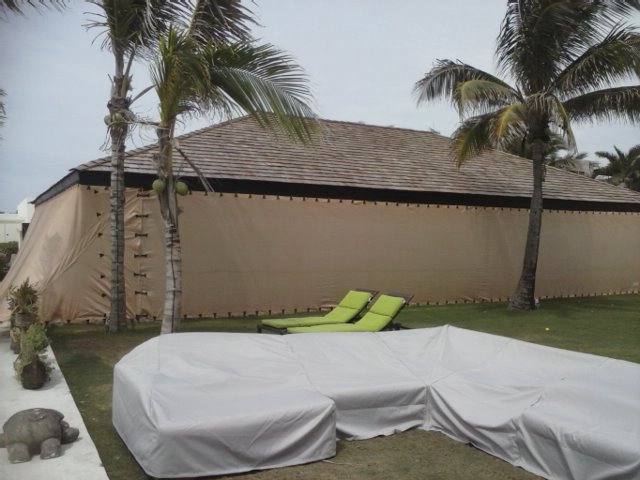
A Riviera Maya hotel needs three things in place by June 1: certified protection on every oceanfront opening, a written closing protocol with assigned roles and timings, and a maintenance crew trained to run it without calling in an outside contractor. Waiting until a storm watch is already posted usually means partial coverage, higher prices, and installers who are booked solid exactly when you need them.
The Riviera Maya is not Cancún
Playa del Carmen, Tulum, Akumal, and Puerto Morelos operate with thinner emergency services than the Cancún Hotel Zone. After a storm, power, water, and telecom take longer to come back. Pre-season preparation carries more weight here than in the market next door.
The coast has the history to prove it. Hurricane Wilma (2005) caused significant damage along the entire stretch between Cancún and Tulum, and later systems hit Cozumel and the northern coast before crossing the peninsula. The geography is consistent: beachfront villas and hotels in Tulum and Akumal take the hit directly, with no breakwater and no natural coastal barrier to absorb surge and wind.
Thinner infrastructure does more than raise risk during the storm—it stretches the vulnerable window afterward. That makes speed of reopening, not just how the system performs during impact, a decision criterion in its own right when a hotel in this region specifies protection.
What has to be installed before June 1
1. Certified protection on every oceanfront opening
Picture windows, sliding doors, palapas, and terraces open to the Caribbean need a system backed by a recognized standard such as ASTM E1996—roll-down or accordion shutters, hurricane fabric, or removable storm panels, depending on the opening and the property's design standard. The hotel protection page breaks down how the systems differ in hotel service.
2. Drainage and pressurization check
Before the season, confirm that roof, balcony, and common-area drains can handle tropical cyclone rainfall volumes. Then confirm that the protected openings leave no weak point capable of pressurizing the interior if one of them fails mid-event.
3. A documented closing protocol
A written protocol—roles assigned by zone, estimated closing times, one person accountable—turns protection into a repeatable process instead of an improvised scramble every time a watch goes up.
4. Trained maintenance staff
The best system is useless if the crew cannot run it under pressure. Training should include full closing drills, ideally timed, before the season opens.
What late protection looks like
The pattern repeats across the region. A property under construction or renovation plans to install "before high season" without setting a hard date. The first tropical storm watch arrives—sometimes in June or July—the project is still out for quotes, and the hotel ends up covering a fraction of its openings with last-minute temporary fixes.
Compare that with a property that set May 1 as an internal deadline. By the first watch the system has been tested, the crew has rehearsed the protocol, and the only task left is to execute it. The gap between the two is not budget; it is the discipline of setting a deadline ahead of the official calendar. The date that actually predicts whether a hotel will be ready is not June 1 but the one the property sets for itself, because installation, testing, and training take weeks that nobody allows for when the deadline lands on the day the risk begins.
Architects and developers: specify it in the drawings
On new builds and projects still in design, integrating protection into the architectural documents rather than adding it after construction lowers both cost and visual impact. Developers managing Riviera Maya assets remotely from Mexico City benefit most from specifying motorized or centrally operated systems up front, so activation never depends on local staff performing complex manual work once a warning is issued. The commercial protection page covers how specifying for new construction differs from retrofitting a finished building.
Four factors most hotel protocols miss
Mounting a system on the opening is only part of the job. Four things happen at once during a storm, and ignoring them leaves a property protected on paper and exposed in practice.
- Wind-driven rain: at high wind speeds water travels almost horizontally into doors and windows, working through joints that are watertight in normal weather. A system poorly sealed at the perimeter leaks without failing structurally.
- Internal pressurization: if one opening gives way—an unprotected service door in a back-of-house area, say—interior pressure can compromise the roof and walls of an entire wing, not just the point of failure.
- Undersized drainage: roofs, balconies, and parking areas are rarely designed for tropical cyclone rainfall. Inspecting and clearing them before the season prevents standing water that ruins electrical equipment and finishes.
- Uneven facade exposure: seaward facades and the corners of tall buildings carry far higher wind loads than interior elevations, so the budget should follow the real risk.
A protocol that stops at "close the windows" tends to find its weak points during the event, when there is no time left to fix them.
What a partial closing costs
When a block of oceanfront rooms takes damage, the bill rarely stops at repairs. A room with water intrusion typically stays out of inventory for several days to two weeks while the interior dries and finishes are redone. If a full block is affected, the hotel loses a meaningful share of sellable occupancy right when replacement demand peaks.
Revenue per square meter (roughly 10.8 square feet) in those rooms drops to zero for the entire repair period, and quarterly RevPAR sags even in undamaged rooms because housekeeping, maintenance, and guest service are all disrupted while staff handle emergency repairs. Future cancellations follow. A hotel that rebuilds the same weak points after every storm, instead of solving them before the next season, pays several times the one-time investment in repeat repairs.
Proactive hotel vs. reactive hotel
| Criterion | Proactive hotel | Reactive hotel |
|---|---|---|
| Installation timing | Before May 1, tested in advance | During an active storm watch |
| Opening coverage | 100% of oceanfront openings | Partial, limited by material availability |
| Installer availability | No pressure, scheduled work | Every other property calling at once |
| Staff | Trained, protocol timed | Improvising against the clock |
| Reopening after the storm | 24–48 hours typical | Days to weeks, depending on damage |
| Cost over 3 seasons | One investment plus minor maintenance | Repeat repairs and recurring temporary fixes |
Choosing by situation
- Existing hotel, tight budget this year: cover every oceanfront opening with certified hurricane fabric and plan the move to a permanent system next season. With less than two months to June, full coverage in a temporary system beats partial coverage in a permanent one.
- New project in design: specify an integrated motorized system in the architectural drawings.
- Remotely managed property: favor centralized or motorized activation so nothing depends on manual work once a warning is issued.
In all three cases, set an internal deadline—May 1 works well—document the closing protocol in writing with named roles, and run at least one timed full-closing drill before the season officially starts.
The bottom line
Real geographic exposure combined with thinner emergency infrastructure makes pre-season preparation a business continuity decision, not a compliance exercise. Certified protection on every oceanfront opening, a documented protocol, trained staff, and an internal deadline ahead of June 1 are what separate the property that reopens in days from the one that reopens in weeks.
Frequently Asked Questions
When should a Riviera Maya hotel be ready?
Set an internal deadline at least a month before the official June 1 start of the season—May 1 is the practical target—so there is room for installation, testing, and staff training.
How does protecting a hotel differ from protecting a house?
Scale and continuity. A hotel has to close dozens or hundreds of openings with limited staff, and every room out of service carries a revenue cost. Neither applies the same way to a single residence.
Which parts of the Riviera Maya are most exposed?
Beachfront properties in Tulum and Akumal, which have no natural coastal barrier, along with Puerto Morelos, are generally considered the most directly exposed in the region.
Should we wait until construction is finished to install protection?
No. Building it into the design phase usually costs less and looks better than adding it once the structure is complete.
Which technical standard should we ask for?
ASTM E1996 is the reference specification for resistance to wind-borne debris impact, and it is the benchmark to require when comparing certified systems.