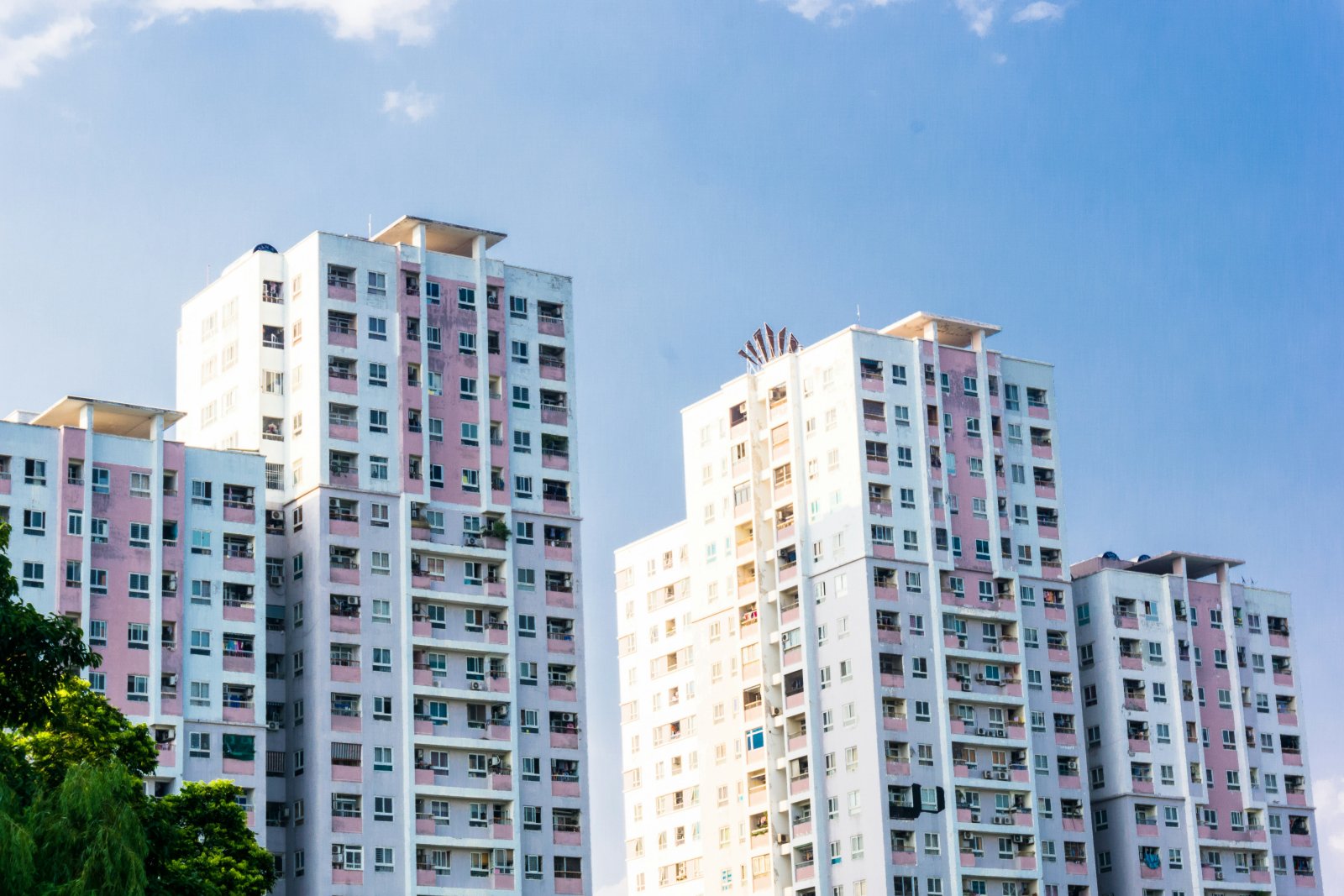
Hurricane protection for condominiums and multi-story buildings comes with challenges a single-story house never faces: limited access to upper-floor façades, wind pressure that intensifies with height, coordination with building management or an HOA, and installation logistics that often call for specialized equipment instead of a ladder. Hurricane Solution has installed Level E-certified systems in multi-story buildings along the Mexican coast since 2008, for both residential properties and larger buildings, including upper-floor units with restricted access.
Why Height Changes the Physics of the Problem
Wind Pressure Increases with Height
Most property owners assume a Category 4 hurricane hits the ground floor with the same force it hits the tenth floor. It doesn't. Wind speed increases with height above ground level because ground friction drops off—engineers call this the vertical wind profile. A system tested only under ground-floor conditions may not offer the same safety margin on upper floors. That makes a certification testing wind, water, impact, and barometric pressure differential simultaneously, like Level E, more relevant on a high floor, not less. The pressure differential a system must withstand on an upper floor, with wind accelerated by height, is a tougher test condition than the same opening at ground level.
Façade Access Changes the Entire Installation Process
On a single-story house, installation is essentially a ladder-and-light-scaffold job. On a condominium or multi-story building, reaching upper-floor windows and doors requires certified scaffolding, elevated platforms, or technicians certified for work at height with safety harnesses. That's not a minor logistics detail—it's exactly what a verified Google review from Gary Smith on Hurricane Solution's Google Business profile highlights: "Quick and efficient service in a hard-to-reach third-floor area. It's lasted 18 years without a single defect or problem." That 18-year track record, documented on a restricted-access unit, is the kind of verifiable evidence that separates a marketing claim from a real, citable performance record.
Coordinating with Management or an HOA Adds a Layer of Complexity
When a homeowner decides to protect a house, the decision and the logistics rest with one person. In a condominium, installing protection almost always involves building management, sometimes an owners' assembly, and occasionally a maintenance committee, especially when the system goes on common areas or the building wants one uniform solution instead of each owner contracting separately.
A Documented Case: 18 Years Without a Defect on a Hard-to-Reach Third Floor
The verified pattern: a third-floor unit, restricted access, a system installed 18 years ago. According to the public Google review, there hasn't been a single defect or incident in nearly two decades, spanning multiple hurricane seasons on the Mexican coast. That contrasts with what's typically seen in improvised installations—cut-to-size plywood, uncertified generic panels—on tall buildings, where UV wear, anchor corrosion, and poor fit from difficult installs tend to cause failures before the five-year mark, an estimate based on patterns observed across the industry, not a single verified data source. Hurricane Solution's Level E systems rely on patented anchoring and certified component integrity, the kind of engineering that reduces the risk of corrosion and poor fit on tall buildings.
What's at Stake If One Unit Fails
When a window fails on a high floor during a hurricane, the damage doesn't stay in that unit. A sudden loss of internal pressure can compromise the roof or neighboring units, especially in buildings where pressure travels through hallways and shared spaces. In mixed-use or condo-hotel buildings, losing a single unit to water damage can mean weeks of repairs, while protected units in the same building stay operational. That's the same pattern Hurricane Solution documented in Puerto Morelos, where a protected property reopened on day three after Hurricane Delta (2020), while unprotected neighboring properties took weeks. See the company's storm performance record for more documented cases.
The Building Envelope Isn't Unit by Unit
In a multi-story building, unprotected openings on one floor can create internal pressurization that affects adjacent floors through corridors, shared ventilation ducts, and stairwells. That's a factor that barely exists in a single house, where the envelope is simply the property's perimeter. That's why a technical evaluation of the whole building, not just one unit, is the foundation of any serious protection plan, something owners can request through Hurricane Solution's free technical evaluation.
If your building includes ground-floor commercial space, see the commercial protection section as well. For condo-hotels and rental units, the hotel protection section, including hotel deployment logistics, covers the specific occupancy considerations during hurricane season.
Vertical Density Varies by Market
Hurricane Solution operates in Cancún, Playa del Carmen, Tulum, the Riviera Maya, Los Cabos, Puerto Vallarta, Mazatlán, and Acapulco, and the ratio of multi-story buildings to single-family houses varies widely by market. Cancún's Hotel Zone and the Puerto Vallarta and Los Cabos corridors concentrate a much higher share of condominiums and towers than the lower-density residential areas of the Riviera Maya. That's why high-rise installation expertise isn't a secondary service—it's central to operations in several of the markets where the company works.
This Isn't a Separate Topic from Hurricane Season
Everything above—wind pressure, access, coordination—sits inside the same hurricane-protection picture as any beach house in Mexico. A ten-story condominium faces the same season, the same warm Atlantic, and the same Category 4 or 5 risk as a single-family home. The difference is in how protection gets executed, not whether it's needed.
Proactive, Not Reactive: A Building's Logistics Don't Allow for Waiting
For a single house, waiting until a storm is announced is risky but logistically possible—an owner can install emergency panels in a day. In a multi-story building, coordinating scaffolding, access to multiple units, and management approval makes a reactive approach nearly impossible during a 72-hour warning. That's why proactive protection, installed before the season rather than during an active warning, stops being a preference and becomes an operational necessity for any multi-story building.
How to Decide What to Do with Your Building
Before requesting a quote, clarify three things: whether you're an individual unit owner or an administrator/HOA responsible for the whole building; which floor the unit is on; and whether the building already has some form of protection in place. From there:
- Individual unit with direct access: standard installation, similar to a house, with certified Level E anchoring.
- Individual unit on a hard-to-reach upper floor: requires a specific access evaluation before quoting.
- Whole building, HOA decision: requires a phased installation plan coordinated with management.
- Condo-hotels or multi-tower developments with more than 50 units: the evaluation should include a staged plan that minimizes operational disruption, prioritizing the units and common areas most exposed to prevailing wind first.
If you could only do one thing to protect a condominium or multi-story building, it would be this: get a free technical evaluation that includes an access plan specific to each façade, not a generic quote based on window square footage, but a plan that identifies which floors need scaffolding, which allow direct access, and how the work will be coordinated with management before installation starts. Most poorly executed installations on tall buildings don't fail because of the product—they fail because of poor access planning that leads to rushed adjustments or compromised anchoring.
| Factor | Single-Story House | Multi-Story Building |
|---|---|---|
| Façade access | Standard ladder | Scaffolding or elevated platform depending on floor |
| Effective wind speed | Baseline, no height acceleration | Increases with height above ground level |
| Installation decision | A single owner | Individual owner or assembly/HOA |
| Typical installation time | 1 day | Varies by number of units and access |
| Shared pressurization risk | Not applicable | Yes—corridors and common areas can transmit pressure |
Frequently Asked Questions
Does protecting a condominium cost more than protecting a house?
It depends mainly on access, not size. A ground-floor or first-floor unit with direct access can cost about the same as an equivalent house in square footage of openings. A unit on a hard-to-reach upper floor needs extra equipment—scaffolding or a platform—which shows up in the quote after the technical evaluation.
Hurricane fabric protection systems are custom-engineered based on high-velocity wind-load calculations, opening spans, mounting substrates, and motorization requirements. Contact our engineering team directly for a precise project calculation.
Can I protect just my unit if the rest of the building isn't participating?
Yes. In most cases, an individual owner can protect their own unit regardless of what the rest of the building decides, as long as the installation doesn't require modifying common areas in a way that needs assembly approval.
How fast can a multi-story building get protection installed before a hurricane warning?
Much slower than a single house, because of access logistics and coordination. That's exactly why installing before the season is far more advisable than trying to do it reactively during an active warning in a multi-story building.
Does Level E certification hold up the same way on upper floors as on the ground floor?
Yes. The certification evaluates system performance under four simultaneous forces—wind, water, impact, and pressure differential—and those conditions are, if anything, more demanding on upper floors because wind speed increases with height. See technical testing and certifications for details.
Does Hurricane Solution have specific experience with multi-story buildings across the Mexican coast?
Yes. Hurricane Solution has operated since 2008 in Cancún, Playa del Carmen, Tulum, the Riviera Maya, Los Cabos, Puerto Vallarta, Mazatlán, and Acapulco—markets where multi-story buildings make up a significant share of protected properties.