Quick answer: Most of the public conversation about hurricane protection focuses on wind and windborne-debris impact. But insurance-industry data cited by NOAA points to a different reality: a significant share of total hurricane damage comes from water, not wind—rain driven nearly horizontally by sustained winds above 100 km/h (62 mph), storm surge, and flooding from drainage systems that can't keep up. A property can have windows that are fully protected against impact and wind and still suffer serious water damage if wind-driven rain and drainage aren't evaluated as part of the same building envelope. Hurricane Solution addresses this risk through its HS Rain Protection line, built to complement—not replace—standard window and door protection.
The most common mistake: assuming "protected" just means "no broken glass"
When most property owners picture hurricane protection, they picture keeping a window from shattering under flying debris. That's a real and critical part of it, but it's not the whole picture. During a hurricane, rain doesn't fall the way it does in a normal storm. Sustained winds of 100 km/h or more push it almost horizontally—a phenomenon engineers call wind-driven rain. That horizontal path lets water reach gaps, seals, and openings that ordinary vertical rain would never touch, even on a property with impact-rated windows.
Most of the hurricane-protection certifications owners recognize—including debris-impact tests—don't directly measure how well a system resists horizontally driven rain. That's the blind spot: a property can meet every impact and wind standard for its windows and still leak during the same storm, because wind-driven rain finds entry points—door frames, roof joints, saturated drains—that opening protection alone was never designed to cover.
Why drainage matters as much as windows
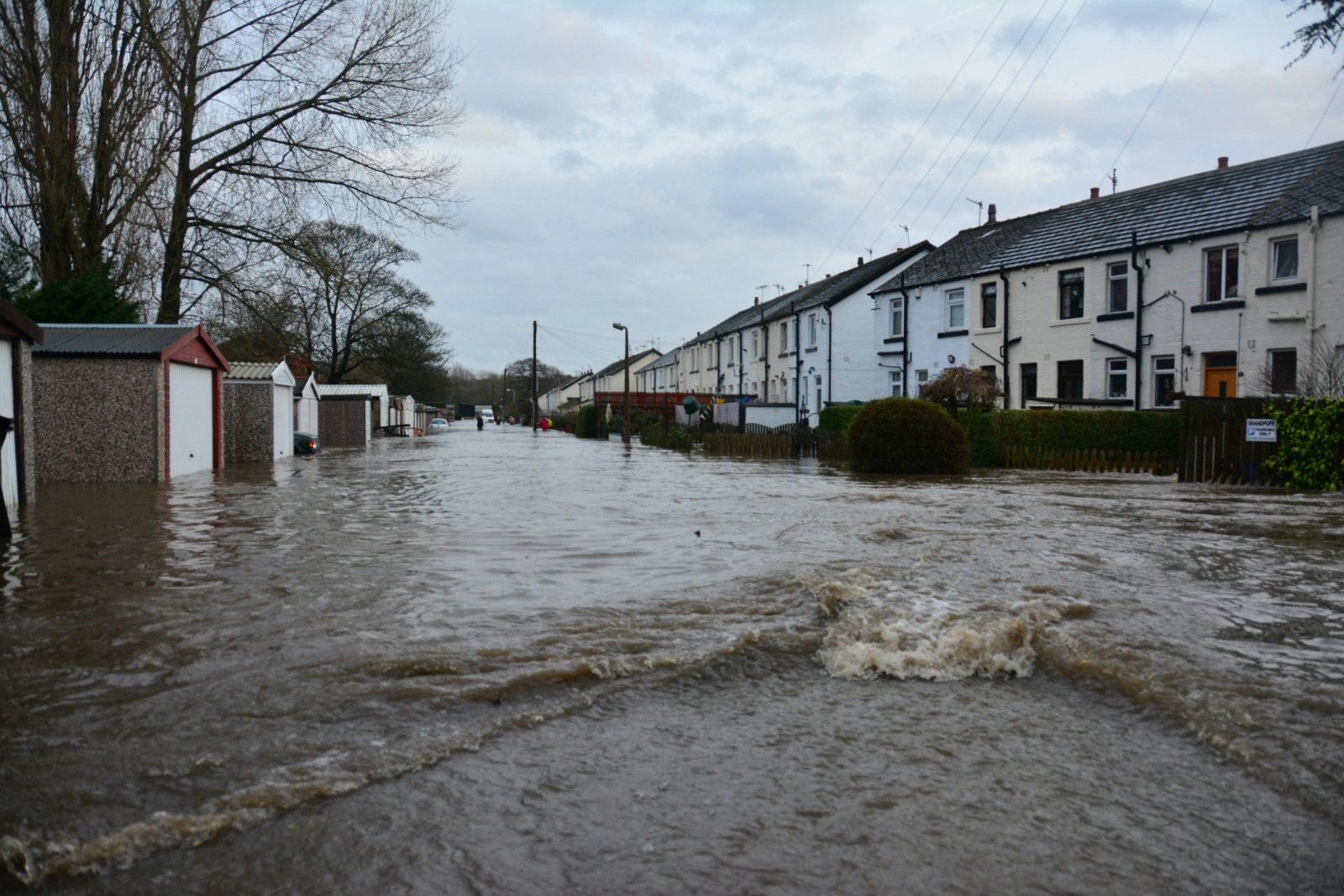
A hurricane doesn't just bring wind. It can dump, in a few hours, more rain than a region normally sees in weeks. When a property's drainage—a house, a hotel, a commercial development—isn't designed or maintained for that volume, the result is localized flooding even where the windows and doors are perfectly protected. This is especially relevant along flat, low-lying coastline with a high water table, where the soil's natural absorption capacity is limited during extreme rain.
A pattern Hurricane Solution sees often in technical assessments: properties that invested in high-quality window protection but never checked their perimeter drainage, gutters, or roof-drain capacity. During a heavy rain event—from a hurricane or even a tropical storm—these properties end up with standing water in parking lots, patios, or ground-floor areas for reasons that have nothing to do with how the windows perform.
Water versus wind in total damage cost
General data cited by emergency-management agencies in the United States and Mexico shows that a substantial share of total hurricane damage cost—often the majority, depending on the event—comes from flooding and water, not direct wind damage. That share varies with each property's specific geography (proximity to the coast, elevation, surrounding drainage capacity) and needs to be assessed case by case. But the pattern holds: underestimating water risk while over-investing in wind protection alone is a common and costly imbalance.
How water gets in during a hurricane
There are at least three distinct entry routes, each needing its own fix:
- Wind-driven rain through window and door frames sealed only for normal vertical rain, not for this condition.
- Perimeter drainage overload, when rain volume exceeds existing drain capacity and water pools at ground level until it works its way into the structure.
- Roof and rooftop infiltration, especially where roof drains are insufficient or damaged and combined wind and rain volume let water pool on the roof until it seeps inside.
Commercial properties: ground-level water risk
For shops, restaurants, and ground-floor offices, water risk has a dimension rarely weighed alongside residential risk: floor-level inventory and equipment. In a home, water damage mainly hits finishes and furniture. In a commercial space, the same standing water can ruin stored inventory, electrical equipment, and refrigeration systems, often for more than the structural repair costs. That makes drainage assessment just as relevant as protecting storefronts and entrances.
Regional context: from Cancún to Mazatlán, water risk shifts with geography
The specific risk of flooding and heavy rain varies considerably across the markets where Hurricane Solution operates. The Riviera Maya, with its flat karst terrain and high water table, faces a surface-water risk that looks nothing like Puerto Vallarta's or Los Cabos's, where mountainous topography drives a different runoff pattern—one with its own fast-water risk during intense rain. Mazatlán and Acapulco, on the Pacific coast, see hurricane rain patterns that can differ in intensity and duration from those in the Caribbean. Any water-protection assessment needs to start from a property's actual geography, not a single standard applied to the whole Mexican coastline.
Water is part of the same threat, not a separate risk
Owners and managers often treat "wind protection" and "flood protection" as two separate projects, when both are really symptoms of the same event—a hurricane—and should be assessed as one building-envelope strategy. A Level E certification, which tests wind, water, missile impact, and pressure differential together, reflects exactly that integration: it's not just an impact rating, it's an evaluation of how the whole system behaves under the combined conditions of a real hurricane.
Why an impact test doesn't tell the whole water story
It's common for an owner getting a quote to assume that a product's impact rating ("withstands debris impact at X speed") automatically means equivalent water resistance. That assumption isn't always correct. An impact test checks whether the material cracks or punctures under a projectile strike—a completely different question from whether the installed system, with its frames, seals, and anchors, keeps water out under sustained wind pressure. A system can pass an impact test without breaking and still leak during the same storm if it wasn't designed or installed with wind-driven-rain sealing in mind.
That's why a certification that tests all four forces together—wind, water, missile impact, and pressure differential, like Level E—offers a more complete guarantee than one that measures impact alone, even when both cite similar projectile-speed numbers in their marketing.
Drainage audit before the season
The most effective proactive move against water risk isn't just installing window protection—it's auditing drainage before hurricane season starts: checking gutters, confirming roof drains aren't blocked, verifying that perimeter drainage works, and flagging any spot that's already flooded during past rain events. For hotels, developments, or other large-scale projects, that audit should also cover drainage capacity on large rooftops, emergency pumping systems for basements or below-grade levels, and a preventive maintenance schedule for gutters and drains ahead of every season.
Windows alone versus the full building envelope
| Factor | Windows alone | Full envelope (windows + water) |
|---|---|---|
| Protects against debris impact | Yes | Yes |
| Protects against direct wind | Yes | Yes |
| Protects against wind-driven rain | Partial or no | Yes |
| Protects against flooding from insufficient drainage | No | Yes |
| Indoor water-damage risk | Moderate to high | Low |
Conclusion
Hurricane protection that stops at the windows leaves a major damage source uncovered: wind-driven rain and flooding from inadequate drainage. A property can meet the highest standards for opening protection and still take serious water damage if drainage and wind-driven-rain management aren't assessed as part of the same strategy. The full building envelope—the approach behind Level E certification—treats both factors as one problem, because a real hurricane never presents wind and water as separate threats.
Frequently Asked Questions
Aren't my protected windows enough for a hurricane?
Properly protected windows are essential, but they don't automatically cover wind-driven rain entering elsewhere on the property, or flooding from insufficient drainage. Both need their own assessment.
What is HS Rain Protection?
Hurricane Solution's HS Rain Protection line focuses specifically on managing water and wind-driven rain during a hurricane, built to complement standard window and door protection, not replace it.
How do I know if my property has flood risk during a hurricane?
The most reliable signal is history: if your property has already pooled water during past heavy rain, even without a direct hurricane hit, that's a sign the drainage may not have the capacity for a bigger event.
Is water risk the same all along the Mexican coast?
No. The Riviera Maya, with flat terrain and a high water table, faces a different pattern than mountainous Puerto Vallarta or Los Cabos, and a different one again from Mazatlán and Acapulco on the Pacific. Every property needs its own assessment based on its geography.
Do I need both window protection and water protection, or can I pick just one?
A real full envelope needs both. Window protection alone leaves a significant water-damage risk exposed; drainage management without protecting the openings leaves impact and direct wind risk exposed.