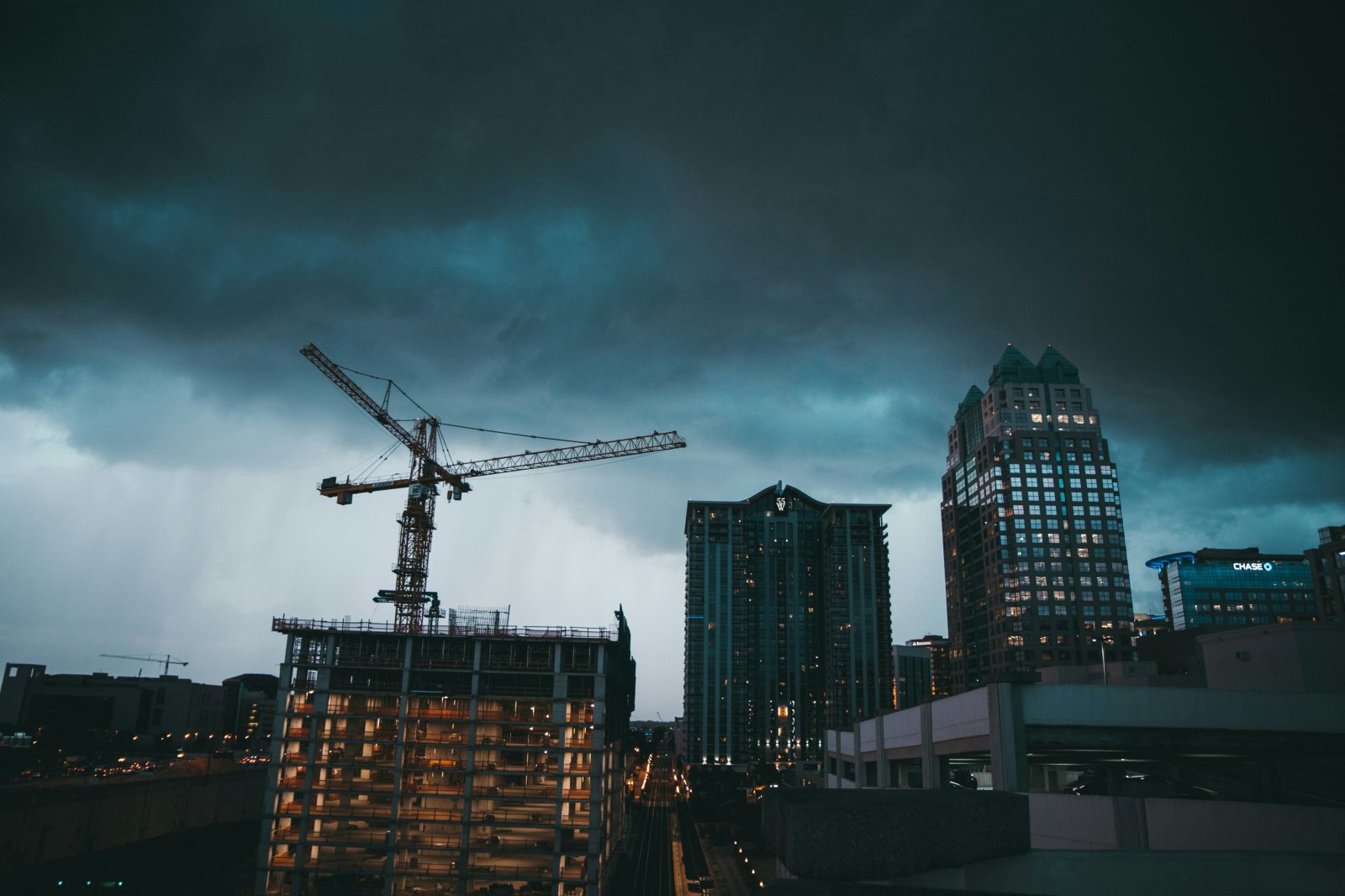
A property under active construction or renovation is far more vulnerable to hurricane damage than a finished one. Open framing, temporary structures, and loose materials stored on site can turn into airborne debris in high wind. That doesn't mean pausing the project for hurricane season. It means building a temporary protection plan into the schedule from day one, instead of scrambling once a storm is announced.
Why an active site is more vulnerable than a finished home
A finished home, even without hurricane protection, has closed openings with standard windows and doors, and a complete structure built to the original design. An active site often has neither: framed openings still waiting for windows, partially finished roofs, scaffolding and temporary structures never engineered for hurricane wind, and materials — sheet metal, lumber, tools — stored loose without anchoring.
There's a paradox the construction industry in hurricane zones rarely discusses. Owners investing in a build or renovation, precisely to end up with a safer, higher-value home, often pass through that property's single most vulnerable period during construction itself — without ever planning temporary protection for that phase.
Construction materials as wind-borne debris
Sheet metal, lumber, PVC pipe, and other materials commonly stored on site can become high-speed projectiles in sustained Category 1 wind or stronger. The risk isn't limited to the site itself: a fully protected neighboring property can still take a direct hit from unanchored debris blowing off a nearby construction site. Certified anchoring is what closes that gap.
The cost of skipping a temporary protection plan
A common pattern: projects move forward with no protection plan, then scramble once a 72-hour hurricane watch is issued — covering openings with whatever is on hand, anchoring materials in a rush. That reactive approach is less effective than planning ahead, and it can delay the schedule if the site takes damage that has to be repaired before construction can resume.
Beyond direct repair costs, a schedule delay means extended financing, longer temporary housing if the owner is waiting to move in, and lost revenue from a delayed opening on commercial or hotel projects. On a project financed with debt, every extra month of delay is another month of interest on a loan that, in the original plan, should already be paying itself down with revenue from the finished property.
What to protect first on an active site
Not every element of a job site needs the same level of protection:
- Framed openings without windows or doors installed: these need certified temporary coverage, not generic tarps — a bare framed opening carries the same internal-pressurization risk as a broken window in a finished house.
- Construction materials stored on site: anchor them or move them into an enclosed structure. Don't leave them loose outdoors.
- Temporary structures (scaffolding, formwork): evaluate whether they can withstand the expected wind, or take them down before the storm arrives.
- Exposed electrical and plumbing systems: these need dedicated water protection, since they haven't yet received the final sealing a finished building would have.
Hurricane season and construction schedules on the Mexican coast
Mexico's hurricane season runs June through November under the World Meteorological Organization's classification, overlapping with much of the calendar year during which coastal construction actually happens. A typical project — several months to over a year — almost inevitably runs at least partly through hurricane season. That makes temporary protection planning relevant to most projects on the coast, not just exceptional cases.
The job site is part of the same risk, not a separate one
It's common to treat site protection as a "job site safety" issue, separate from hurricane protection for a finished property. In reality it's the same threat — the same hurricane, the same wind, the same rain — hitting a structure in a different state of vulnerability. The same building-envelope and internal-pressurization principles apply; they just need to adapt to a construction site's temporary conditions.
Plan from day one, don't react to the watch
The most effective approach isn't waiting for a specific hurricane watch to think about protecting the site. It's building a temporary protection plan into the project from the start, with clear protocols for each construction phase: how to secure materials, which openings need certified temporary coverage, and who's responsible for executing the plan once a watch is issued.
Certified temporary protection booked as part of the original budget, negotiated ahead of time, typically costs less per square meter than an emergency response booked 48 to 72 hours before a storm, when materials and labor get stretched thin across the whole region at once. That cost gap — planned versus emergency protection — is a financial argument on top of the safety one for planning from day one.
For hotels, developments, or large-scale projects with units in different construction phases at the same time, the watch protocol needs to account for the fact that each unit may need a different response depending on its specific phase when the alert comes in. See how this works for hotel deployments or commercial projects. For a renovation of an already-occupied property, the challenge is coordinating temporary protection for the area under construction without compromising the protection already in place on the rest of the property.
The gap between construction and occupancy
There's a particularly vulnerable phase that rarely gets specific attention: the window between a building being considered "substantially complete" and the permanent hurricane protection system actually going in. At that point the property already has windows and doors installed, so it can look just as protected as any finished house — but it still lacks the protection system it will need before the first major storm. That phase often runs longer than planned, for administrative or scheduling reasons, leaving the property in an unrecognized state of vulnerability for weeks or months.
| Factor | Finished property | Active construction site |
|---|---|---|
| Openings closed | Yes, with standard windows/doors | Often not, in early phases |
| Debris risk from materials | Low | High without anchoring |
| Exposed temporary structures | Not applicable | Scaffolding, formwork requiring evaluation |
| Recommended protection level | Permanent full envelope | Certified temporary protection by phase |
An active construction site shouldn't be treated as a separate case from hurricane protection — it's the most structurally vulnerable period in a property's entire life. Building certified temporary protection into the plan from day one lets construction continue through hurricane season without exposing the site, or the neighbors, to a risk that was avoidable. Request a quote for your project.
Frequently Asked Questions
Do I need to stop construction during hurricane season?
No, but you do need a temporary protection plan built into the schedule, since most construction projects on the Mexican coast run at least partly through hurricane season.
What kind of coverage should I use for openings without windows installed?
Certified temporary protection, not generic tarps with no performance rating. An unprotected opening carries the same internal-pressurization risk as a broken window.
Do construction materials really pose a risk during a hurricane?
Yes. Sheet metal, lumber, and other loose materials stored on site can become high-speed projectiles in sustained wind, putting both the site and neighboring properties at risk.
When should I start planning temporary protection for my project?
From the project's initial planning, not once a specific hurricane watch is issued. A predefined protocol, with materials already on site, works far better than an improvised emergency response.
Does this apply to renovations too, or only new construction?
Yes. A renovation that opens up part of an already-finished structure — pulling out windows, opening exterior walls — temporarily exposes the property to the same risk as new construction.
What if my property is already "finished" but doesn't have hurricane protection installed yet?
That's the transition phase described above: the property can look protected because it has standard windows and doors, but it stays vulnerable until the permanent protection system goes in. It's best not to let much time pass between finishing construction and installing that protection.