What Hurricane Otis Changed About Hurricane Protection in Acapulco: Seven Lessons
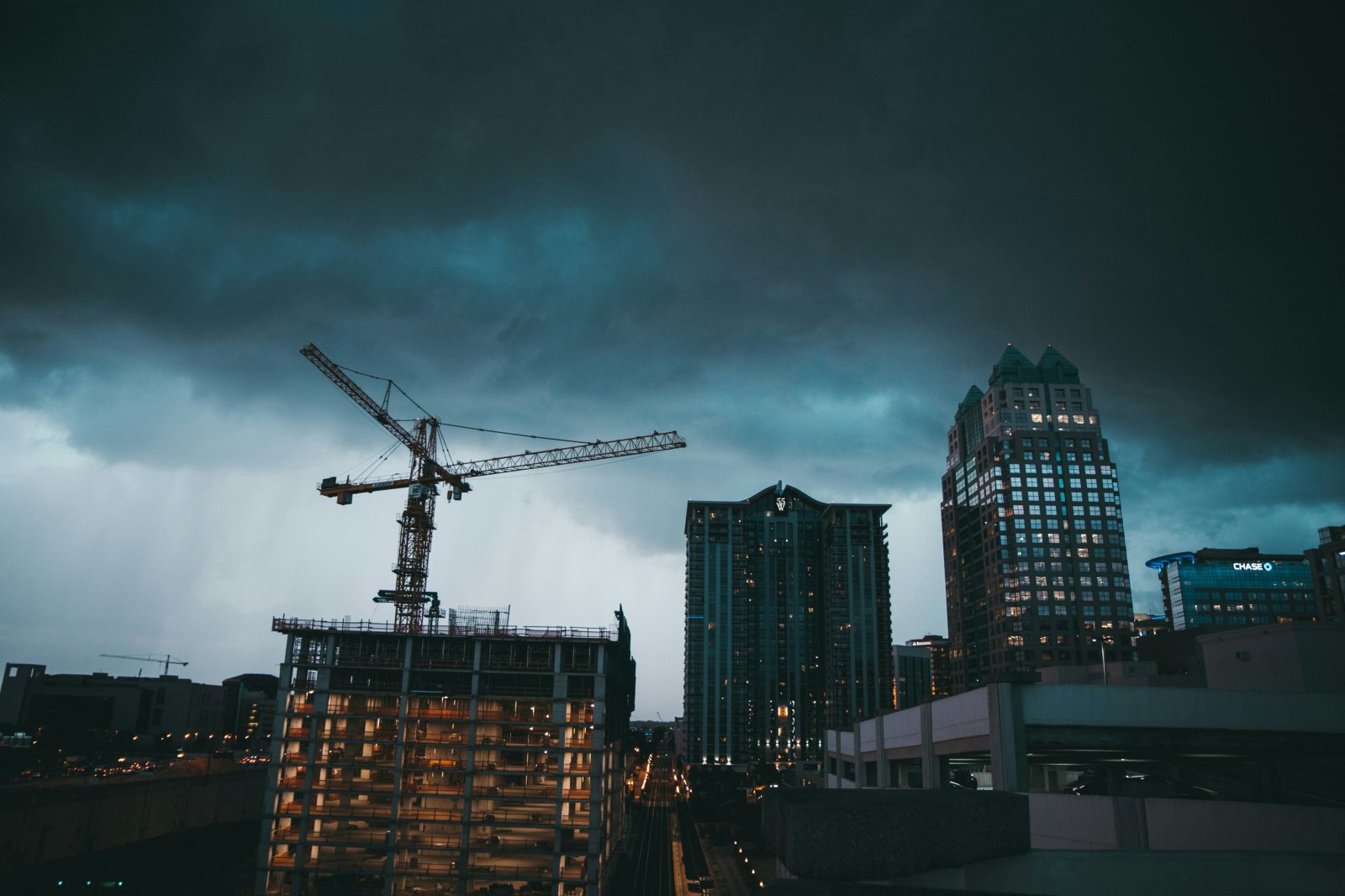
In the early hours of October 25, 2023, Hurricane Otis made landfall just south of Acapulco as a Category 5. According to the National Hurricane Center's official report, it caused at least 52 deaths and ranks among the most expensive natural disasters in Mexico's history. What made Otis different was not only its strength. It was how fast it arrived: less than a day before landfall, it was still a tropical storm.
Otis changed how Acapulco thinks about hurricane protection. The lessons apply to every hotel, condominium and home on Mexico's Pacific coast.
Lesson 1: Extreme wind finds every weakness
In a Category 5 hurricane, nothing about a building is tested gently. Sustained winds at that level, and the gusts above them, act on every surface at once. Wind speed also increases with height, so the upper floors of a hotel or condominium tower experience stronger forces than the ground floor. Acapulco's skyline is full of towers, and many of them took their worst damage high up.
For condominium towers, this changes the conversation. Protection that seems sufficient at street level may be undersized for a balcony twenty floors up, and access for deployment gets harder exactly where the forces are greatest. Every floor has to be evaluated for its own exposure, not treated as a copy of the one below.
Extreme wind does not need to destroy a wall to destroy a building. It only needs to find the weakest point.
Lesson 2: Openings are where buildings fail
The weakest points are almost always the openings: sliding balcony doors, floor-to-ceiling windows, lobby glass, roof access doors. Once one of them breaks, wind enters and pressurizes the interior. That internal pressure pushes outward on ceilings, walls and the remaining glass while the wind outside keeps pulling. One broken balcony door can compromise an entire floor. We explain this chain of failure in detail in concrete did not fail in Otis; the openings did.
Flying debris makes it worse. In a storm like Otis, broken glass, furniture, signs and pieces of other buildings become projectiles. An unprotected opening facing a street full of debris is not a question of if, but when.
Lesson 3: Anchoring decides whether protection holds
A protection system is only as strong as the point where it attaches to the building. Fabric, panels and shutters all transfer the storm's load into anchors, and anchors transfer it into the structure. If the anchor is set into a decorative finish, a hollow block or a beam of unknown capacity, the best product in the world can tear free.
Serious protection starts behind the finishes: locating the real structure, confirming what it can carry and reinforcing it when it is not enough. On a design hotel in Cancún, we found concrete joists with no technical data available. Rather than guess, we welded 50 linear meters of concealed steel between them to give the protection an anchor of known capacity.
Lesson 4: Installation quality is invisible until the storm
Two systems with identical test reports can perform very differently if one is installed with the wrong anchor spacing, the wrong fasteners or uneven tension. Poor installation does not show on a sunny day. It shows at the worst possible moment.
Professional installation means following the tested configuration, documenting every opening and making sure each panel fits its opening exactly. Uneven tension creates folds that flap in the wind and become failure points.
Lesson 5: Deployment time is part of the protection
Otis strengthened from a tropical storm to a Category 5 in less than a day, and made landfall in the middle of the night. Many properties simply ran out of time. A system that needs a full day, special tools or a crew that may not arrive is not protection in that scenario.
Deployment has to be planned like any other part of the system: every panel labeled and assigned to an opening, anchors already in place, staff trained in the sequence, and a written plan the team can follow even when the contractor cannot reach the property. In our Cancún hotel project, the guest rooms alone required 75 panels and 2,751 anchors, all mapped in a delivery report. In October 2024, that hotel deployed successfully during Hurricane Milton.
Lesson 6: Insist on tested systems
After Otis, every product claims to be strong. The question is who says so. Look for testing under a recognized standard such as ASTM E1996, which fires a projectile at the system and then subjects it to thousands of positive and negative pressure cycles. Its most demanding projectile level, Level E, uses a 9-pound timber at 80 feet per second. Approvals such as a Miami-Dade Notice of Acceptance add another layer of independent review.
Ask for the standard, the level achieved and the file number. A real approval includes all three. Our certified hurricane fabric systems are led by the HS-1500, tested to ASTM E1996 at Level E, with Miami-Dade approval for anchoring and fabric.
It is also worth being honest about what testing means. A laboratory test proves performance under defined conditions. A storm like Otis can exceed many of them. Testing does not make any system invincible; it tells you what the system has been proven to withstand, which is far more than an untested product can say.
Lesson 7: Who you hire matters as much as what you buy
Product, anchoring, installation and deployment only come together when a professional company is responsible for all of them. That means engineering the anchoring rather than improvising it, carrying real liability insurance, documenting the work and training the people who will deploy it.
One external signal of those standards is membership in the International Hurricane Protection Association. Hurricane Solution is the only IHPA member outside the United States. Membership requires licensing, liability insurance, approved products, adherence to a code of ethics and approval by IHPA's Board. It does not guarantee hurricane performance, and no credential can. It does tell you the company has been reviewed by its own industry. You can read more about what IHPA membership means.
What Acapulco should do now
Otis left a clear message: protection has to be designed before the season, for the worst realistic storm, and deployable in hours rather than days. For hotels, condominium boards and homeowners rebuilding along the bay, that means starting with a technical survey of every opening and the structure behind it, choosing a tested system, insisting on engineered anchoring and professional installation, and leaving with a deployment plan the property's own team can execute.
For a broader framework, see our guide on how to choose hurricane protection for a hotel or development. To start with a free technical evaluation, visit our Acapulco page.