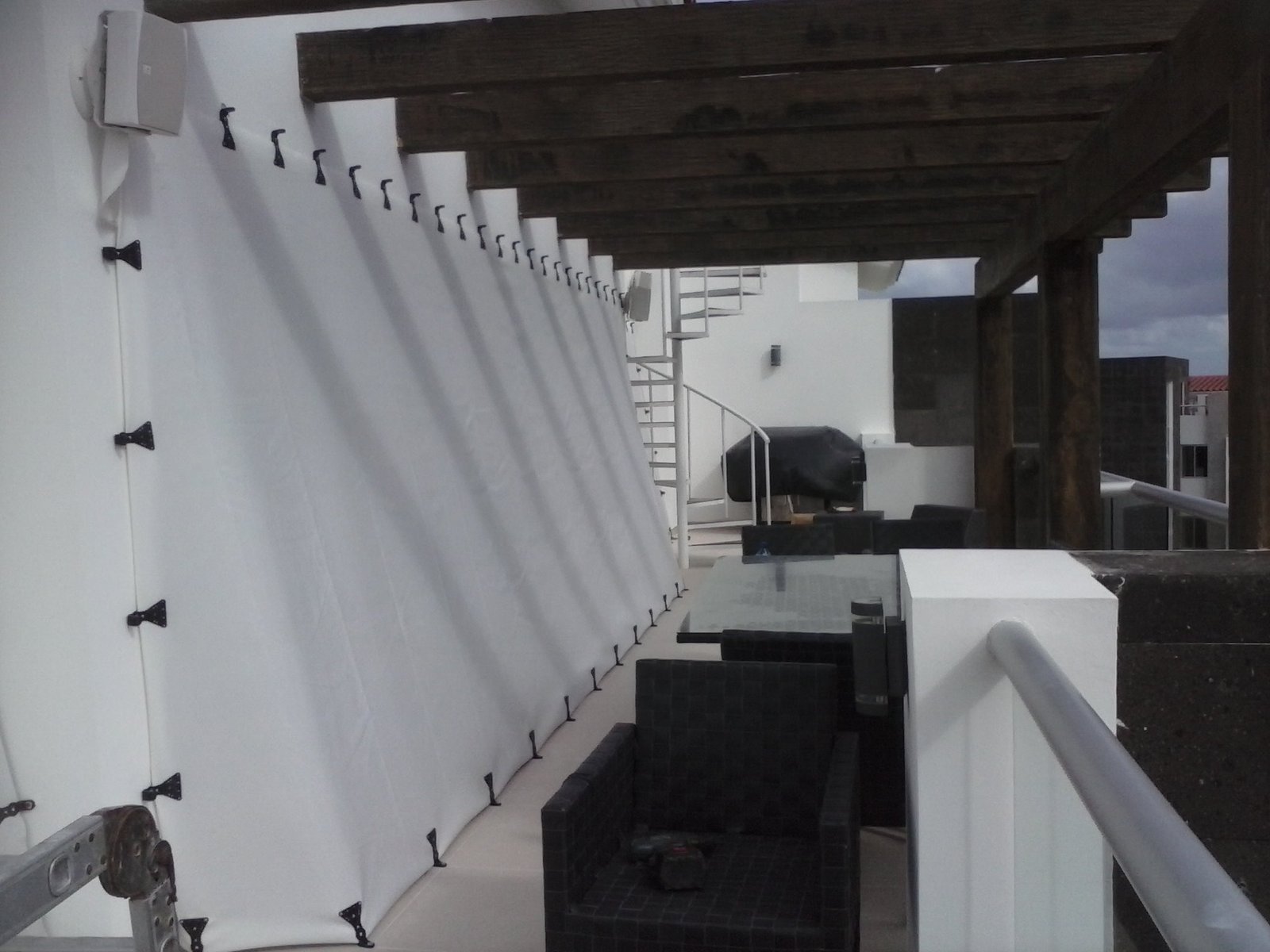
Quick Answer
Hurricane protection must be installed before the season begins. Waiting until the season starts — or worse, until a hurricane is approaching — significantly increases structural risk, limits the availability of certified systems, and can result in improvised solutions that don't meet real safety standards.
The Mistake That Repeats Every Year
Many people in the Riviera Maya and coastal zones of Mexico make the same mistake every year: waiting until a storm is announced before thinking about protecting their property. The reality is that hurricane protection installation is not an immediate process. It requires evaluation, design, material selection, and proper installation.
Most importantly: not all solutions offer the same level of protection. Installing protection at the wrong time can leave the most critical areas of a structure vulnerable — especially windows, doors, and access points where wind pressure can cause serious structural failures.
Before the Season (Recommended)
Installing hurricane systems before the hurricane season allows for proper planning and access to certified solutions. During this period, wind loads can be properly evaluated, systems designed for real conditions can be selected, and professional installation can be secured. There is also greater availability of materials and specialized equipment.
From an operational perspective, hotels that install protection before the season can reduce storm preparation time, minimize operational interruptions, protect interior assets (furniture, installations, equipment), and maintain business continuity.
During the Season (High Risk)
Waiting until the season has already begun significantly reduces the available options. Demand increases, installation timelines lengthen, and temporary or uncertified solutions are often used. This increases the risk of structural damage, especially in large properties such as hotels or developments.
It is also important to understand that the availability of certified systems is limited when demand increases. During the season, many providers resort to generic solutions that don't meet real Category 5 protection standards. This creates a false sense of security that can be extremely costly.
When a Hurricane Is Approaching (Critical Error)
Attempting to install protection when a hurricane is already on its trajectory is one of the most serious mistakes. At that point, there is no time for proper installation, leading to rushed decisions and improvised solutions that offer no real protection. Additionally, weather conditions may prevent any safe installation.
After the Season (Strategic Opportunity)
The post-season period is ideal for evaluating damage, improving existing systems, and preparing for the following year. This is where the most strategic property owners make informed decisions and avoid future risks. In large-scale projects, advance planning allows protection to be integrated into the architectural and structural design, rather than treating it as a reactive element.
The Impact of Internal Pressurization
One of the most critical mistakes is underestimating the effect of wind pressure on openings. When a window or door fails, wind enters the structure generating internal pressurization, which exponentially increases the load on the roof. This phenomenon is responsible for many of the catastrophic failures observed in coastal hotels and developments.
This is why certified hurricane systems make the difference. Unlike improvised solutions, they are designed under international standards that consider projectile impact resistance, positive and negative pressure loads, and complete system integrity (anchors, fixings, and structure).
For certified systems: www.hurricanesolution.com/proteccion-contra-huracanes
Key facts
- The Atlantic hurricane season runs from June 1 to November 30
- The most vulnerable point of a structure is its openings (windows and doors)
- A window failure can cause internal pressurization, increasing the load on the roof
- Uncertified systems can fail even in lower-intensity storms
- Hurricane tarps and mesh must meet specific resistance standards
- Category 5 protection requires systems designed for extreme wind and debris loads
Conclusion
The best strategy is always to anticipate. Hurricane protection is not a reaction — it is a preventive investment. Installing at the right time not only protects the structure but can prevent million-dollar losses and guarantee operational continuity, especially in hotels and developments in vulnerable zones.
Hurricane protection in Mexico must be approached with a technical mindset, not an improvised one. And that approach begins with one simple but critical decision: install at the right time.
For more information: www.hurricanesolution.com | Frequently asked questions
FAQ
Can hurricane protection be installed in just a few days?It depends on the system, but certified solutions require professional evaluation and installation, which typically cannot be done in a few days.
Are hurricane tarps enough for any property?Not necessarily. Their effectiveness depends on material quality, the anchoring system, and the type of structure.
What happens if I only protect some windows?A single unprotected opening can compromise the entire structure due to internal pressurization.
Is it more expensive to install before the season?No. In fact, it tends to be more efficient and allows choosing better systems without time pressure.
Do hotels need different systems than homes?Yes. Hotels and developments require solutions designed for larger scale, operational continuity, and compliance with more demanding standards.