Quick Answer
Certified hurricane fabric screens tend to offer better overall performance against real hurricanes than traditional metal shutters because they absorb impact, distribute load, and reduce stress on anchor points. Metal shutters can withstand direct impacts under certain conditions, but their rigidity tends to transfer load toward rails, screws, and fixing points. For hotels, developments, beachfront residences, and high-value properties, the right question isn't which system looks stronger, but which one performs better under repeated impacts, positive and negative pressure, vibration, material fatigue, salt humidity, and the need for rapid deployment.
For properties in Mexico exposed to category 4 or 5 hurricanes, the decision must be based on engineering, certification, operational logistics, and the real capacity to protect the entire structure. The goal isn't to block the hurricane with a rigid piece, but to prevent an opening from failing and triggering the internal pressurization that can turn localized damage into major structural loss.
The Most Common Mistake: Assuming More Rigid Means Safer
A metal shutter looks strong and feels heavy; a hurricane fabric screen may seem lighter. That first impression leads to a flawed conclusion: if something is more rigid, it must protect better. In hurricane engineering, this idea is incomplete. A hurricane doesn't push constantly in one direction—it combines wind, water, pressure, suction, debris, and rapid load changes. What matters isn't just withstanding a hit, but how that energy is managed and transmitted to the supporting structure.
A rigid system that doesn't absorb energy can transfer enormous load to a few anchor points. If the wall, rail, or screw has a weakness, the system can fail even if the metal doesn't break. A certified hurricane fabric screen, by contrast, deforms in a controlled manner, absorbs energy, and distributes pressure, reducing load concentration at single points. This is critical on Mexico's coastal properties, exposed to salinity, humidity, and imperfect maintenance.
How a Hurricane Really Affects a Property
The common image oversimplifies things: wind hits a window, it breaks, and water comes in. But the real mechanism is more dangerous. Failure usually begins with a single compromised opening—a window, sliding door, restaurant glass front, or service access. Once that opening fails, wind enters and pressurizes the interior, combining with exterior suction on roofs and facades. The result can be roof uplift, wall deformation, and massive water intrusion.
That's why serious systems are evaluated under tests like ASTM E1996 (wind-borne debris impact) and ASTM E1886 (cyclic differential pressure). These standards help separate systems designed for real events from solutions that only look robust under normal conditions. Well-designed hurricane protection systems aim precisely to protect the opening before it fails.
Metal Shutters: Where They Can Work
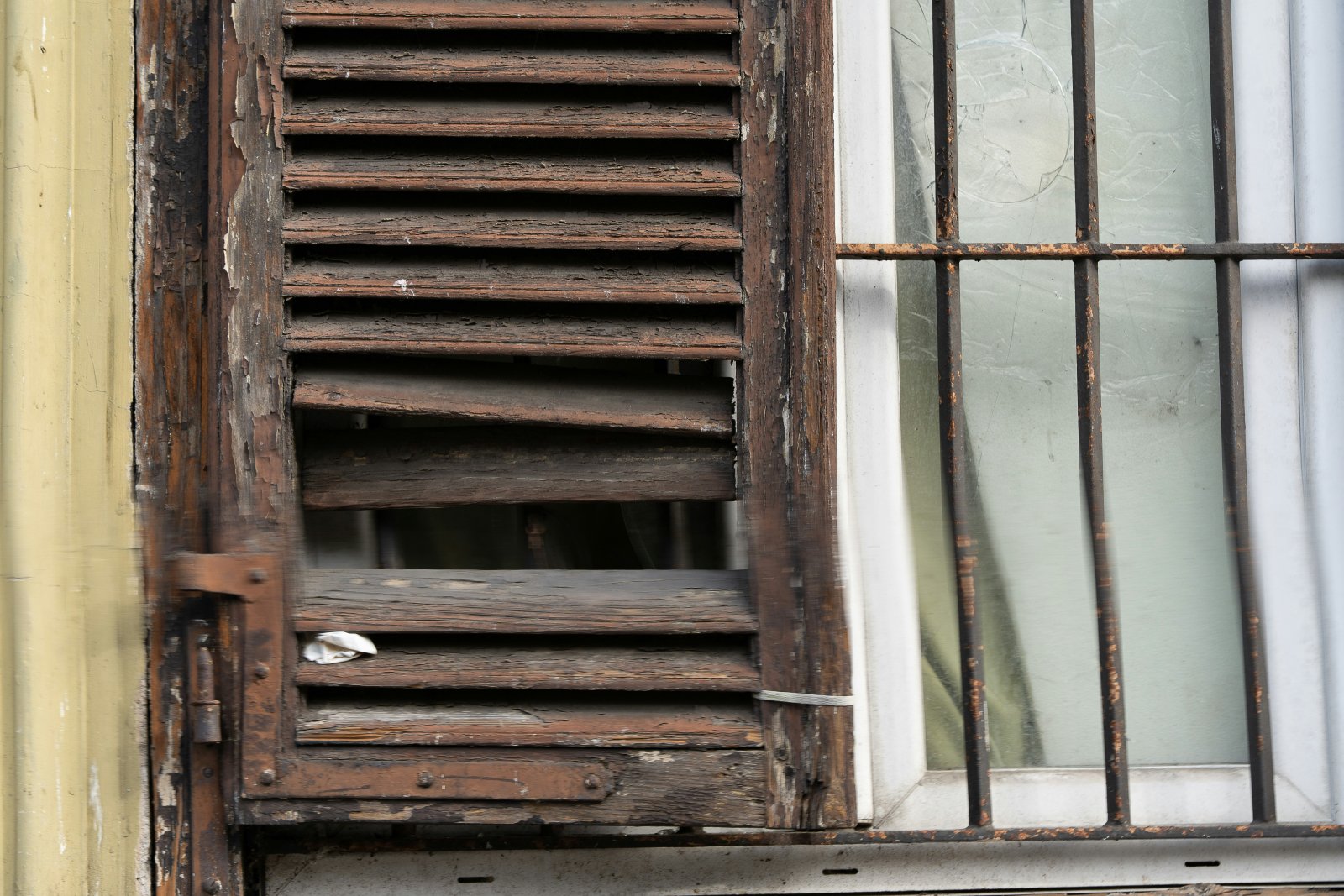
Metal shutters create a rigid physical barrier and can serve well in small residences, standard windows, or service areas where aesthetics aren't a priority. The problem arises when this solution is extrapolated to hotels with large windows, terraces, or curved facades: the bigger the opening, the more complex the load and the more important force distribution becomes.
They're also heavy, require maintenance, can corrode in salty environments, and depend on rails that must stay aligned. A system that looks robust when installed can become vulnerable if not properly maintained over time.
How Hurricane Fabric Screens Really Work
Hurricane fabric screens don't compete with the hurricane like a rigid wall—they manage energy. Upon impact, they deform in a controlled way and distribute load across the surface and anchor points. That flexibility is part of the design, not a weakness, and it's especially useful against angled or repeated impacts.
They also adapt to large openings without permanently altering the architecture, which matters for premium properties. Hurricane Solution systems for hotels and resorts are designed to maintain operations, aesthetics, and deployment capacity ahead of an alert.
Impact vs. Pressure: The Difference That Defines Everything
A system can withstand a single impact and still fail from cyclic pressure, or withstand static pressure and fail under multiple impacts combined with vibration and anchor fatigue. During a hurricane, pressure and wind direction change constantly; objects can strike while the system is already under load.
Metal shutters can resist direct impacts, but their rigidity transmits energy toward the frame or rail. If the whole assembly wasn't designed for dynamic loads, it can deform or open a failure point. Certified fabric screens, thanks to controlled flexibility, distribute that energy instead of concentrating it—an important advantage for large openings and hotel facades under repeated impacts.
The Anchoring Problem
Many comparisons focus only on the visible material, ignoring how load transfers to the structure. In metal shutters, load concentrates on rails, screws, or hinges; if one of those elements fails, rigidity can work against the system. In hurricane fabric screens, load is distributed through tension and controlled deformation across a more flexible fixing network.
Every opening requires a different anchoring approach, so the right solution isn't a generic product but a system designed for the actual building, starting with a proper technical evaluation.
Rigidity, Deformation, and Energy
The difference between a rigid and a flexible system isn't "strong" versus "weak," but two different ways of responding to energy. Just as a car's crumple zones absorb extreme forces in a controlled way, a technical fabric can deform under impact without tearing, keeping the opening behind it protected. The right question isn't whether the system moves, but whether it retains its function during and after moving.
Direct Comparison
| Criterion | Certified Hurricane Fabric Screens | Traditional Metal Shutters |
|---|---|---|
| Impact absorption | High, through controlled deformation | Variable, depends on metal and anchoring |
| Load distribution | Distributed across surface and tension points | Concentrated on rails, hinges, or screws |
| Adaptation to large openings | Very high | Limited or costly |
| Visual impact | Low between seasons | Medium to high |
| System weight | Low | Medium to high |
| Corrosion in marine environments | Generally lower risk | Significant risk without maintenance |
| Maintenance | Cleaning and anchor inspection | Mechanical inspection, corrosion, rails, motors |
| Deployment speed | High with trained team | Variable depending on automation |
| Behavior under cyclic pressure | Flexible and distributed | Rigid and anchor-dependent |
| Hotel application | Very favorable | Possible, more limited on large facades |
| Progressive failure risk | Low if properly installed | Higher with single-point anchor failure |
This table doesn't mean one system is automatically better in every case, but for high-value coastal properties and large openings, certified hurricane fabric screens generally offer a stronger combination of protection, adaptability, and operation.
Certifications and Real Performance
The word "hurricane-resistant" is used too loosely in the market, without many systems having passed serious impact and pressure tests. References such as the Florida Building Code and Miami-Dade's Product Approval system, along with ASTM E1996 and ASTM E1886, force a system to demonstrate performance under conditions representative of a real hurricane, not just a sales demonstration. Certification turns a commercial promise into verifiable technical proof.
Installation, Maintenance, and Marine Environments
In hotels and developments, openings are numerous, with varying heights and geometries. Hurricane fabric screens can be custom-made and adapted to multiple geometries without turning the building into a heavy installation. Metal shutters require more structure and architectural integration, and can alter facades or limit design in premium properties.
Salinity, humidity, and intermittent use wear down coastal systems. Shutters can suffer corrosion, mechanism jams, or closing failures if not operated frequently. Fabric screens also require inspection, but since they don't rely on motors or complex moving metal parts, their maintenance tends to be simpler.
What Works Best for Hotels, Residences, and Developments
In hotels, the question is which system protects business continuity. If an opening fails, damage can affect entire floors, causing weeks of interruption and lost bookings. Solutions like AquaGrid for large openings—field-tested in the real world, with ASTM E1996 as a reference standard—make it possible to cover facades, restaurants, and terraces that are hard to solve with conventional shutters.
In residences and condominiums, fabric screens offer protection without replacing windows or turning the facade into a metal structure, and tend to be easier to approve by HOAs since they preserve aesthetics between seasons. For developments under construction, integrating protection from the design stage avoids later costs and complications, and can become part of the project's value proposition for international buyers increasingly asking about resilience.
The False Economy of Cheap Shutters
Purchase price doesn't represent total cost. Installation, maintenance, corrosion, repairs, and failure risk must be considered, especially in properties where downtime cost is high. A certified system and an undocumented one aren't competing in the same category: the difference becomes evident when the real event arrives.
Buyer Perception
One commercial barrier for fabric screens is psychological: since they don't look as aggressive as metal, they raise doubts. But not all fabric is equal; a certified hurricane fabric screen is an engineering system, not an improvised cover. Once buyers understand impact, pressure, and load distribution, perception shifts, and flexible protection becomes a sign of advanced engineering rather than a lightweight alternative.
Case Study and Decision by Exposure
At a hotel with metal shutters, some areas may lack coverage due to complex geometry, and a rail affected by salinity can fail under pressure, compromising an entire wing. At a hotel with custom certified fabric screens, the system deploys in an orderly manner, absorbs impacts, and keeps windows protected, allowing operations to resume quickly after the event.
On beachfront properties, where exposure is maximum, certified fabric screens generally offer clear advantages by covering large surfaces and reducing visual impact. For inland properties with less exposure, the comparison should weigh budget, aesthetics, and deployment ease, but certified protection remains essential against any vulnerable opening.
What to Check Before Choosing
Before deciding, review: exact location, size and type of openings, structural capacity for anchoring, certification of the complete system, deployment capacity before an alert, and the actual maintenance that can be sustained. Request documentation on impact and cyclic pressure tests, behavior in salty environments, required maintenance, deployment time, and the protocol for an unprotected opening. If a provider can't respond with documentation, you're not comparing equivalent systems. You can review more questions on Hurricane Solution's FAQ page.
Conclusion
Metal shutters can offer an immediate sense of security through their rigidity, and in some contexts they work correctly. But that rigidity can become a disadvantage under repeated impacts, cyclic pressure, corrosion, and anchor fatigue. Certified hurricane fabric screens absorb energy, distribute load, adapt to large openings, and can deploy quickly when the team is trained.
The right decision shouldn't be based on which system looks stronger, but on which has demonstrated better performance for the property's specific risk, incorporating certification, anchoring, installation, and maintenance. In hurricane protection, what fails rarely fails alone: the best protection is the one that keeps the envelope intact when the hurricane stops being a possibility and becomes a real test.
Frequently Asked Questions
Are hurricane fabric screens really impact-resistant?
Yes, as long as they're certified systems properly installed. They're engineered to absorb and distribute impact energy, protecting the opening behind the system.
Are metal shutters a bad choice?
Not necessarily. They can be suitable for certain windows or specific properties. The problem is assuming they're automatically superior just because they're rigid; their performance depends on certification, anchoring, and maintenance.
Which system is better for hotels?
In many cases, certified hurricane fabric screens offer advantages due to their adaptability to large openings, lower visual impact, and better load distribution.
What happens if I only protect some windows?
The risk remains high. A single unprotected opening can generate internal pressurization and compromise roofs or structural elements.
Which system requires less maintenance?
Hurricane fabric screens tend to have lower mechanical complexity than metal shutters with rails or motors, though both require regular inspection.
Where can I get a quote for my property?
You can start an evaluation on Hurricane Solution's hurricane protection page, comparing options for hotels, residences, commercial spaces, or developments.