Questions this blog answers
This article is designed to answer exactly these questions:
If you're looking for answers to any of these questions, keep reading. This comprehensive guide helps you understand the real risk of your specific zone within Cancún — not a generic "coastal city" risk.
Quick answer
Cancún's Hotel Zone is more vulnerable than other parts of the city because it is built on a narrow strip of sand between the Caribbean Sea and Nichupté Lagoon, with direct exposure to marine wind and no natural obstacles to reduce it, plus higher salinity levels that accelerate corrosion in non-specialized anchors. Areas like Downtown, SM 64, or developments farther from the coast face the same hurricanes, but with less direct wind and salinity exposure — which can influence the recommended system level, though it does not eliminate the need for certified protection. The general rule: the closer your property is to the sea and the more exposed it is (with no buildings or vegetation to reduce wind), the higher the certification level and corrosion resistance your protection system must have.
Cancún's geography: why not every part of the city faces the same risk
Cancún is not a single, homogeneous landmass facing the sea. In terms of hurricane exposure, the city is divided into zones with very different characteristics.
Hotel Zone (Blvd. Kukulcán)
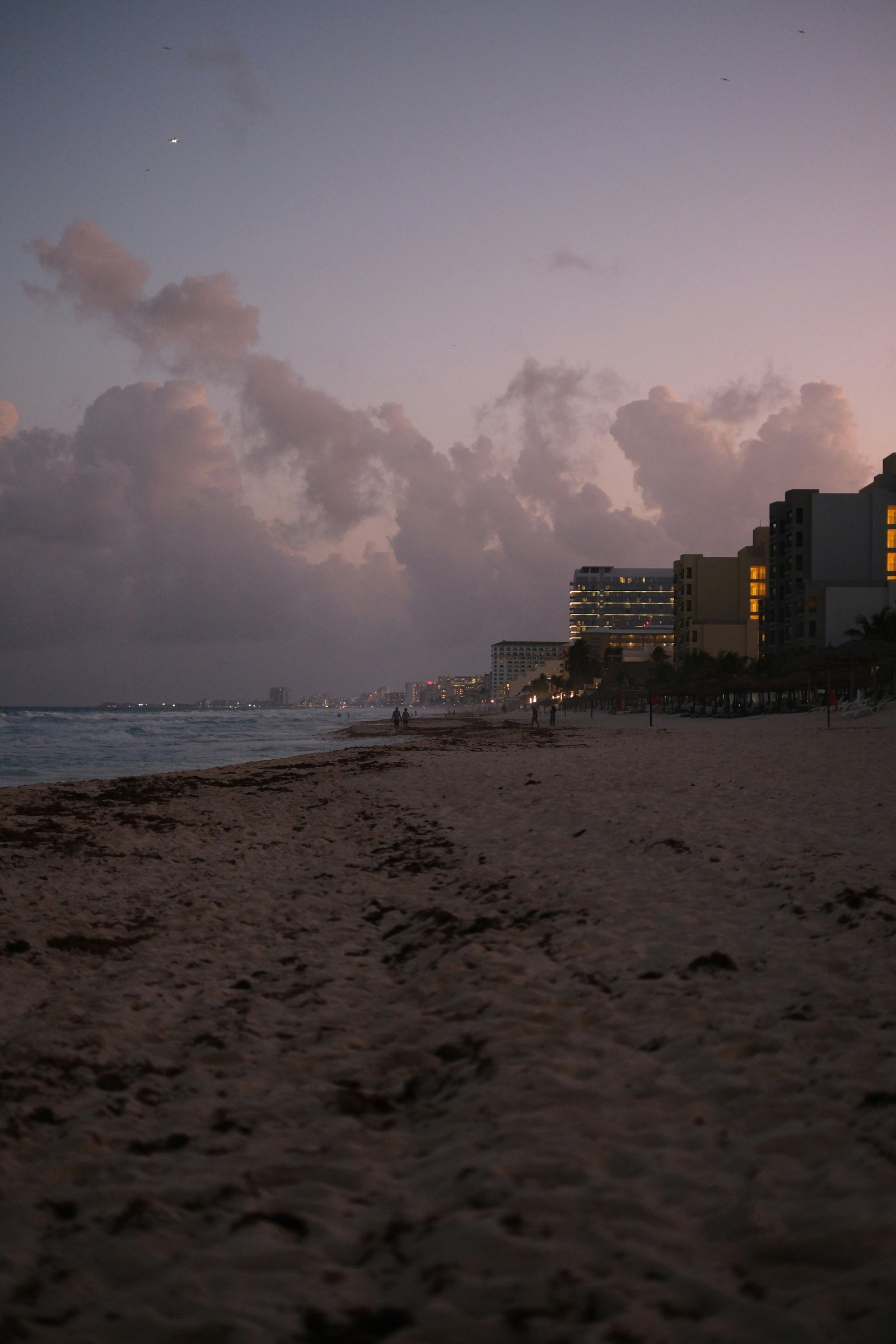
A strip of sand — in some spots only a few hundred meters wide — between the Caribbean Sea and Nichupté Lagoon. Buildings in this zone, especially those facing the sea directly, receive marine wind with no natural obstacles (hills, dense vegetation, other buildings) to reduce its speed before reaching the façade.
Puerto Cancún, Isla Dorada
Developments within or adjacent to the Hotel Zone, with marinas and internal canals. They share much of the Hotel Zone's direct marine wind exposure, although the presence of structures and vegetation within the development may offer some wind reduction depending on the specific location of each building within the complex.
Downtown, SM 64, and inland areas
Located on solid ground, generally farther from the open sea, with more urban vegetation and construction that reduces wind speed before it reaches a specific property. These areas are still within the path of Caribbean hurricanes — all of Cancún is exposed — but direct marine wind exposure without obstacles is lower.
This guide is part of Hurricane Solution's coverage on hurricane protection in Mexico, focused here on how risk varies by specific location within Cancún.
Salinity: the factor almost no one mentions, but that determines how long your protection lasts
Air salinity in coastal areas like Cancún's Hotel Zone significantly accelerates metal corrosion compared to areas farther from the sea. This directly affects hurricane protection systems in a way that the initial price or appearance of the product does not communicate.
A standard steel anchor — not specified for saline environments — can degrade within months on the first line of the beach, while the same anchor on a Downtown property, several blocks from the sea, can last years without visible problems.
To understand what documentation to request to verify that your system's anchor is specified for salt corrosion resistance, see the article on certified vs. non-certified hurricane shutters in Cancún.
This means the question "what system do I need?" does not have a single answer for all of Cancún — it depends on how directly exposed your property is to marine air salinity, which is primarily determined by distance to the sea and the presence (or absence) of obstacles between your property and the coast.
Low floor vs. high floor: why height also changes exposure
Within the same Hotel Zone building, a ground-floor apartment and a penthouse on the 20th floor do not face exactly the same wind exposure. Wind speed generally increases with height — a well-documented principle in wind engineering — meaning upper floors may experience greater wind pressures than lower floors during the same event.
At the same time, lower floors may have greater exposure to other risks — such as storm surge flooding in extreme events — that upper floors do not face in the same way.
This means that even within the same building, different units can have slightly different risk profiles — although the difference between floors within the same building is generally smaller than the difference in exposure between completely different areas of the city (Hotel Zone vs. Downtown, for example).
Three properties, three real exposure levels
To illustrate how this translates into practical decisions, consider three properties in Cancún on the same day a Category 4 hurricane is announced approaching.
Property 1 is an apartment on a high floor of a beachfront tower on Blvd. Kukulcán, Hotel Zone — direct marine wind exposure, high salinity, no obstacles. This property faces the highest possible exposure scenario in the city.
Property 2 is in Puerto Cancún, within a marina development — it receives significant marine wind, but the arrangement of buildings and vegetation within the complex may partially reduce direct exposure compared to being exactly on the open beachfront.
Property 3 is a house in SM 64, on solid ground, several kilometers from the open sea, surrounded by construction and urban vegetation. It is still within the hurricane's impact area — all of Cancún is — but direct marine wind exposure without obstacles is considerably lower.
All three properties need protection against the same hurricane. But the system level, anchor type, and installation priority can — reasonably — be different for each, reflecting their real exposure rather than a generic "all of Cancún is the same" standard.
How this translates into system selection (HS-875, HS-1250, HS-1500, AquaGrid)
Hurricane Solution offers different system levels — HS-875 (Cat 3, 5-year warranty), HS-1250 (Cat 5, 7 years), HS-1500 (Level E, 10 years), and AquaGrid for large openings — precisely because different properties in different zones have different real needs.
For a beachfront property in the Hotel Zone, with direct marine wind exposure and high salinity, an HS-1500 (Level E) system with corrosion-resistant anchors represents the highest level of protection recommended for that exposure level. For a property in SM 64 or Downtown, with less direct exposure, an HS-875 or HS-1250 system may represent an adequate level of protection for that specific exposure — without meaning "second-rate" protection, but rather protection calibrated to a genuinely different real risk.
This is the difference between "choosing the most expensive system available" and "choosing the right system for your specific property" — and it is why a property assessment considers the exact location, not just the fact that the property is "in Cancún."
This zone-based calibration is also directly reflected in price — see the article on how much it costs to protect an apartment or house in Cancún's Hotel Zone to understand how the system level and anchor type affect the cost per m².
Three key insights about zone-based risk
Insight 1: "Being in Cancún" is not a risk level — it's a city with several
Generic hurricane protection marketing treats "Cancún" as a single risk zone, which simplifies communication but does not reflect the city's real geography. Within Cancún, exposure differences are so significant — between a beachfront Hotel Zone property and one in SM 64 — that treating them with the same system level can mean over-investing in one and under-protecting the other. Asking "what level do I need for MY specific location within Cancún?" is a more useful question than "what level do I need for Cancún?".
Insight 2: Salinity as a variable independent of the hurricane itself
It's easy to think of hurricane protection solely in terms of wind speed during a storm — but salinity acts every day, not just during an event. This means two properties can face the exact same hurricane with systems at the same initial level, but arrive at that hurricane with systems in very different conditions, depending on how much the anchor has degraded from daily salt exposure over the preceding years. The question "how exposed is my property to salinity?" is, in practice, a question about the future maintenance of your protection, not just its initial installation.
Insight 3: Why floor height is a minor factor compared to the city zone
Although wind speed increases with height within the same building, this difference is generally smaller than the exposure difference between completely different zones of Cancún (Hotel Zone vs. inland areas). This means that when assessing the required protection level, the geographical location of the property within the city is a more determining factor than the specific floor within a building. For entire buildings in the Hotel Zone, this suggests that a certified protection standard for the whole building — not dramatically differentiated by floor — is generally the most coherent approach to real risk.
Comparison table: exposure and recommended protection level by zone
Note: this table is indicative. The real exposure of a specific property depends on its exact location, height, orientation, and surrounding obstacles — a property assessment confirms the correct level for each case.
Decision framework: steps to take action
Step 2: Assess your specific exposure
Your answers to these questions, more than your postal address, determine your real exposure level.
Step 4: For entire buildings and Hotel Zone developments
For entire buildings, especially on the first line of the beach, adopting a single protection standard for the whole building — rather than having each unit decide on a different level — better reflects the fact that exposure varies less by floor than by geographical location.
Conclusion
"I'm in Cancún, so I need hurricane protection" is true — but incomplete. The Hotel Zone, Puerto Cancún, El Cid, Downtown, and SM 64 face the same hurricane when it arrives, but not the same daily exposure to marine wind and salinity, nor the same direct exposure without natural obstacles.
This difference is not a technicality: it determines whether an anchor lasts years or months, whether a mid-level system is sufficient or the highest available level is needed, and whether the common area protection of an entire building should be treated as a single coordinated decision or not.
Understanding the specific exposure of your property — not just the fact that it's in Cancún — is the first step toward choosing a protection level that matches your real risk, without over-investing or under-protecting.
Hurricane Solution assesses each property considering its exact location within Cancún and the Riviera Maya, offering HS-875, HS-1250, HS-1500 (Level E), and AquaGrid systems calibrated to the real exposure of each zone — from beachfront Hotel Zone properties to inland ones. Learn more about our hurricane protection offering, or explore specific solutions for the hotel, commercial, and residential sectors.
Frequently asked questions
Do properties in Downtown or SM 64 really need certified protection, or is it only for the Hotel Zone?
Yes, they do — all of Cancún is within the path of Caribbean hurricanes. The difference between zones is not "needs protection vs. doesn't need it," but rather what system level corresponds to the specific exposure of each zone.
How do I know exactly how exposed my property is?
The key factors are: distance to the open sea, presence or absence of obstacles (buildings, vegetation) between your property and the coast, and orientation of the main openings relative to the dominant wind. A property assessment confirms these factors specifically for your case.
If my Hotel Zone building has units on different floors, should each owner choose their own system level?
It's possible, but for entire buildings in high-exposure zones, a coordinated protection standard for the whole building generally better reflects the real risk than uncoordinated individual decisions, especially considering that common area protection affects all owners equally.
Is AquaGrid only necessary in the Hotel Zone, or also in other areas?
AquaGrid is designed for large openings (floor-to-ceiling windows, open terraces) that no standard system covers adequately — this depends on the property's design, not just its zone. A house in Downtown with large windows may need AquaGrid just as much as a luxury apartment in the Hotel Zone.
Does salinity only affect beachfront properties, or also those a few blocks away?
Air salinity decreases with distance from the sea, but does not completely disappear within just a few blocks — it depends on the dominant wind direction, the presence of obstacles, and the specific conditions of each location. In general, the closer to the sea and the more exposed the property, the greater the salinity factor to consider when choosing an anchor.