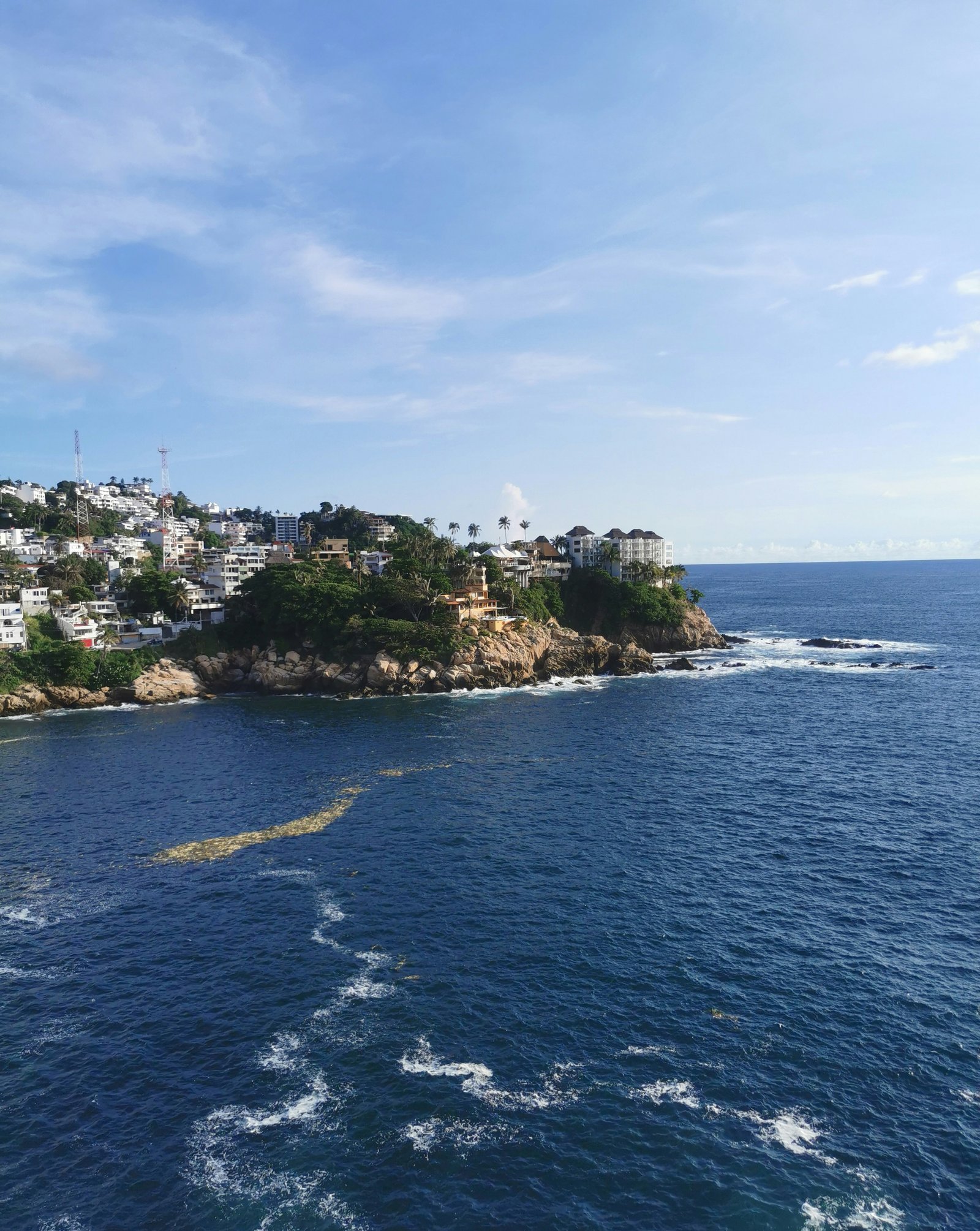
Gestionar una propiedad en Acapulco desde CDMX después de Otis es una de las situaciones más complejas que puede enfrentar un propietario — con dinero real en juego, decisiones urgentes, y muy poca información técnica confiable disponible a distancia.
La mayoría de los contratistas que están reconstruyendo en Acapulco ahora mismo están instalando sistemas convencionales sin certificación anticiclónica — no porque sean negligentes, sino porque nadie se los está pidiendo.
La diferencia entre una propiedad que sobrevivirá al siguiente huracán y una que no depende de una sola decisión que puedes tomar desde CDMX hoy — antes de que tu contratista termine la obra.
La temporada ciclónica del Pacífico inicia el 15 de mayo. Hay menos de seis semanas para actuar. Si la obra está avanzada o terminada, cada día que pasa cierra una ventana de oportunidad.
Este blog cubre exactamente qué preguntar, qué verificar, cómo coordinar la instalación a distancia, y cómo asegurarte de que lo que se instale sea protección real — no una ilusión de protección que falla cuando más se necesita.
La situación más común que nadie está resolviendo bien
Imagina esta escena.
Es un martes por la tarde en CDMX. Estás en una reunión de trabajo cuando tu teléfono recibe una foto de tu administrador en Acapulco. Es la fachada de tu departamento en la Zona Dorada — o tu hotel de 30 habitaciones en la Costera, o tu casa en Pie de la Cuesta. La imagen muestra el avance de la remodelación. Las ventanas nuevas ya están instaladas. Los acabados exteriores casi terminados. El contratista pregunta si puede proceder con el siguiente tramo de obra.
Dices que sí.
Y en ese momento — sin saberlo — acabas de tomar la decisión más costosa de toda la reconstrucción.
Porque esas ventanas nuevas, brillantes y perfectamente instaladas, son ventanas convencionales. De aluminio y vidrio simple. Exactamente iguales a las que Otis destruyó en octubre de 2023.
No tienen certificación bajo ASTM E1996. No fueron diseñadas para resistir el impacto de proyectiles a velocidades de huracán. No fueron probadas para los ciclos de presión diferencial que un categoría 5 genera. Y cuando llegue el siguiente sistema ciclónico de intensidad significativa al Pacífico mexicano — que llegará, porque siempre llega — esas ventanas nuevas comenzarán a fallar exactamente de la misma forma que las anteriores.
Esta escena se está repitiendo en cientos de propiedades en Acapulco ahora mismo.
Propietarios con dinero real invertido en la reconstrucción. Contratistas trabajando de buena fe con los materiales disponibles en el mercado local. Y nadie en esa ecuación con la información técnica para hacer la pregunta correcta en el momento correcto.
Este blog existe para que esa escena no se repita en tu propiedad.
Por qué gestionar desde CDMX tiene riesgos específicos
Gestionar una propiedad en Acapulco desde CDMX después de Otis no es simplemente un reto logístico.
Es una situación donde la distancia física crea una brecha de información que puede costar millones de pesos.
Cuando estás en CDMX, tu capacidad de supervisar la calidad técnica de lo que se está instalando en tu propiedad depende casi completamente de lo que tu administrador o contratista te reporta. Y esa cadena de información tiene varias fallas estructurales que es importante entender.
El contratista local no siempre tiene información sobre certificación anticiclónica. El mercado de construcción en Acapulco — como en la mayoría de las ciudades mexicanas fuera de los grandes centros turísticos del Caribe — no tiene una cultura establecida de exigir certificación anticiclónica en sistemas de cerramiento. Los contratistas locales trabajan con los proveedores de ventanas y herrería que conocen, que ofrecen productos convencionales de buena calidad para uso normal — pero no certificados para condiciones de huracán.
El administrador local prioriza el avance de obra. Su trabajo es reportar que la remodelación avanza según el cronograma y el presupuesto. No tiene la formación técnica para evaluar si las ventanas que se están instalando cumplen con ASTM E1996 o si el sistema de anclaje del marco está dimensionado para presión diferencial de huracán. Cuando le preguntas "¿cómo va la obra?", la respuesta es "bien, avanzando" — y eso es todo lo que puedes saber desde CDMX sin intervención específica.
La urgencia de reconstruir puede llevar a tomar atajos. Después de Otis, la presión sobre los propietarios para reabrir sus propiedades fue enorme — tanto por razones económicas como emocionales. En ese contexto, cualquier decisión que ralentice la obra parece contraproducente. "Que instalen las ventanas que consigan y después vemos" es la decisión más frecuente — y la más costosa a largo plazo.
El mercado de protección anticiclónica no está bien representado en Acapulco. A diferencia de Cancún o la Riviera Maya, donde el mercado de protección contra huracanes tiene décadas de desarrollo y múltiples proveedores locales, en Acapulco la disponibilidad de sistemas certificados es limitada. Esto significa que si el propietario no busca activamente la solución correcta, es improbable que su contratista local la proponga por iniciativa propia.
La FEMA ha documentado en análisis de recuperación post-desastre que la gestión remota de propiedades en zonas afectadas por huracanes es uno de los factores de mayor riesgo para la recurrencia de daño en eventos subsecuentes — precisamente porque la brecha de información entre el propietario y el proceso de reconstrucción lleva a la instalación de sistemas convencionales sin estándares certificados. www.fema.gov
Lo que Otis le hizo a las propiedades — desde la perspectiva de quien no estaba ahí
Para los propietarios de CDMX que no estaban en Acapulco la noche del 25 de octubre de 2023, la experiencia de Otis fue vivida a través de imágenes, llamadas y reportes de terceros.
Esa distancia puede hacer que el evento se procese de forma incompleta — como algo que ya pasó, que ya se está reparando, y que por lo tanto ya está siendo resuelto.
No está siendo resuelto si la reconstrucción no incluye protección anticiclónica certificada.
Lo que Otis hizo en Acapulco tiene una explicación técnica precisa que es fundamental entender para tomar las decisiones correctas en la reconstrucción.
El huracán Otis tocó tierra el 25 de octubre de 2023 como categoría 5 con vientos sostenidos de 270 km/h — el ciclón más intenso jamás registrado en el Pacífico mexicano al momento de tocar tierra. El CENAPRED documentó que la rapidez con la que Otis se intensificó — de tormenta tropical a categoría 5 en menos de 24 horas — no permitió una preparación adecuada por parte de la población ni de los propietarios de hoteles y residencias. www.cenapred.unam.mx
Pero la intensidad de Otis, aunque extrema, no fue el factor principal que determinó cuánto daño sufrió cada propiedad.
El factor determinante fue el estado de las aberturas de cada edificio.
El mecanismo funciona así: cuando el viento de un huracán actúa sobre una estructura, genera presión positiva en la fachada que enfrenta el viento y presión negativa — succión — en las fachadas laterales y especialmente en el techo. En condiciones normales, la estructura resiste como un sistema cerrado.
Cuando una abertura falla — una ventana impactada por un proyectil, una puerta corrediza cuyo marco cede, una claraboya cuyo sellado estaba deteriorado — el aire exterior entra al interior y lo presuriza. Esa presión interior, combinada con la succión exterior sobre el techo, genera fuerzas de levantamiento para las que la mayoría de los anclajes convencionales no fueron diseñados.
El techo se desprende. El agua entra. La estructura pierde su integridad.
Esto explica por qué el patrón de daño en Acapulco fue tan irregular — propiedades devastadas a metros de otras con daños menores, en la misma zona, construidas con materiales comparables. La diferencia estaba en las aberturas. Las que resistieron tenían sistemas certificados. Las que no — que eran la gran mayoría — iniciaron el proceso de colapso progresivo desde el primer impacto.
La NOAA ha documentado este mecanismo como la causa principal de daño estructural grave en huracanes de alta categoría en toda la costa del Pacífico mexicano. www.noaa.gov
La reconstrucción que se está haciendo mal: lo que ningún contratista te está diciendo
Esta es la conversación más incómoda — y más necesaria — sobre la reconstrucción de Acapulco en 2026.
La inversión pública en la rehabilitación del puerto supera los 15,000 millones de pesos. Fonatur, Conagua, Sectur y múltiples dependencias federales están trabajando en la recuperación de la infraestructura urbana y turística. El gobierno de Guerrero reporta que para principios de 2026 se ha recuperado aproximadamente el 82% de las habitaciones hoteleras.
Ese avance es real y significativo.
Pero hay algo que no aparece en ningún reporte oficial de la reconstrucción: cuántas de esas propiedades reconstruidas incorporaron sistemas de cerramiento con certificación anticiclónica.
La respuesta, basada en el conocimiento del mercado de construcción en Guerrero, es inquietante: muy pocas.
La reconstrucción masiva de Acapulco está ocurriendo con los materiales y sistemas que el mercado local tiene disponibles. Ventanas de aluminio y vidrio convencional. Marcos estándar. Sistemas de anclaje dimensionados para cargas de viento normal — no para las presiones diferenciales de un categoría 5.
No es negligencia. Es la consecuencia natural de reconstruir rápido, con los recursos disponibles, sin un estándar normativo que exija protección certificada.
En México, a diferencia de estados como Florida en los Estados Unidos — donde el Florida Building Code High Velocity Hurricane Zone establece requisitos obligatorios de certificación anticiclónica para construcciones en zonas de alta exposición ciclónica — no existe una norma equivalente que obligue a los contratistas a instalar sistemas certificados en zonas de riesgo.
Eso significa que la responsabilidad recae completamente sobre el propietario.
Y el propietario que está en CDMX coordinando la reconstrucción por teléfono, sin información técnica específica, muy probablemente está aprobando la instalación de los mismos sistemas que Otis destruyó — sin saberlo.
El Banco Mundial ha señalado en sus análisis de recuperación post-desastre en el Caribe y el Pacífico que la ausencia de estándares normativos obligatorios de resistencia ciclónica es uno de los factores estructurales que más contribuye a la recurrencia de daño en las mismas propiedades durante eventos subsecuentes. www.worldbank.org
La guía práctica: qué hacer desde CDMX antes del 15 de mayo
Esta sección es la más práctica del blog. Si tienes una propiedad en Acapulco en proceso de reconstrucción o ya reconstruida, esto es exactamente lo que necesitas hacer — y puedes hacerlo todo desde CDMX.
Paso 1 — Evalúa el estado actual de tu propiedad
Antes de tomar cualquier decisión, necesitas saber dónde está tu propiedad en términos de protección. Hay dos escenarios posibles:
Escenario A — La obra está en proceso. Este es el momento más valioso. Si tu contratista aún está trabajando — si las ventanas no están completamente instaladas o si hay aberturas pendientes — tienes la oportunidad de integrar sistemas certificados sin costos adicionales significativos de adaptación. Actuar ahora es entre dos y cuatro veces más eficiente que hacerlo después de que la obra está terminada.
Escenario B — La obra ya terminó. La ventana más eficiente se cerró, pero la protección sigue siendo posible y necesaria. Los sistemas de lonas anticiclónicas y mallas anticiclónicas pueden instalarse sobre ventanas y aberturas existentes sin reemplazarlas — con certificación real bajo ASTM E1996 y a un costo significativamente menor que el reemplazo completo de ventanas.
En ambos casos, el primer paso es hacer el inventario completo de aberturas de tu propiedad — todas las ventanas, puertas, claraboyas, accesos y espacios exteriores — y evaluar cuáles tienen protección certificada y cuáles no.
Paso 2 — Las preguntas correctas para tu contratista
Si tu obra está en proceso, estas son las preguntas específicas que debes hacer a tu contratista antes de aprobar la instalación de cualquier sistema de cerramiento:
Pregunta 1: ¿Las ventanas que vas a instalar tienen certificación bajo ASTM E1996 para el sistema completo — vidrio, marco y anclaje? No para el vidrio solo. Para el sistema completo en la configuración en que se va a instalar.
Pregunta 2: ¿Puedes mostrarme el documento de certificación específico — con número de prueba, entidad certificadora y fecha? Una declaración verbal o en el catálogo del proveedor no es suficiente.
Pregunta 3: ¿El sistema de anclaje del marco al muro está dimensionado para resistir presión diferencial de huracán — tanto presión positiva como succión negativa sostenida?
Pregunta 4: ¿Qué sistema de protección está previsto para las puertas corredizas hacia terrazas y balcones? Estas son frecuentemente el punto de falla más común en propiedades frente al mar en Acapulco.
Pregunta 5: ¿Está prevista protección para claraboyas, conductos de ventilación y accesos de servicio — no solo para las ventanas principales?
Si tu contratista no puede responder estas preguntas con documentación específica, está instalando sistemas convencionales sin certificación. Eso no lo convierte en un mal profesional — pero sí significa que la protección de tu propiedad depende de que tú hagas las preguntas correctas.
Para información técnica adicional sobre sistemas certificados disponibles para diferentes tipos de propiedades en Acapulco, estos recursos son el punto de partida correcto:
Para propiedades hoteleras: www.hurricanesolution.com/hoteles/ Para propiedades residenciales: www.hurricanesolution.com/residencial/ Para propiedades comerciales: www.hurricanesolution.com/comercial/
Paso 3 — Entiende qué sistemas de protección existen y cuál corresponde a tu propiedad
No todos los sistemas de protección son iguales — ni en resistencia, ni en costo, ni en practicidad operativa. Para un propietario de CDMX que gestiona su propiedad a distancia, la practicidad operativa es tan importante como la resistencia técnica.
Vidrio laminado de impacto certificado La opción más eficiente para ventanas de habitaciones porque ofrece protección permanente sin necesidad de instalación adicional antes de cada evento. Una vez instalado, el sistema funciona continuamente. Para propiedades en reconstrucción activa en Acapulco, esta es la especificación correcta que debe aparecer en el contrato con el proveedor de ventanas — con la documentación de certificación bajo ASTM E1996 y ASTM E1886. www.astm.org
Lonas anticiclónicas certificadas Son el sistema más adecuado para propiedades ya reconstruidas que necesitan añadir protección sin reemplazar las ventanas existentes. Se instalan sobre las aberturas existentes como una capa de protección exterior. Su ventaja clave para propietarios de CDMX: pueden ser instaladas, activadas y desactivadas por el personal de mantenimiento habitual sin necesidad de personal especializado externo — lo que hace posible su operación a distancia.
Mallas anticiclónicas certificadas Similar a las lonas en funcionalidad pero con mayor permeabilidad visual y ventilación. Especialmente adecuadas para espacios exteriores — restaurantes de terraza, áreas de piscina, balcones — donde mantener la visibilidad y la ventilación es parte de la propuesta de valor del espacio.
Shutters metálicos enrollables o de acordeón Alta resistencia técnica, instalación permanente en el marco. Adecuados para puertas de acceso principal y puntos de alto tráfico. Su desventaja para propiedades gestionadas desde CDMX es el costo de instalación inicial y la necesidad de mantenimiento regular en entornos de alta salinidad como la costa de Guerrero.
Para la mayoría de las propiedades medianas en Acapulco — ya sea un departamento en la Zona Dorada, una casa en Pie de la Cuesta o un hotel boutique en la Zona Diamante — la combinación más eficiente es vidrio laminado certificado en ventanas de habitaciones más lonas anticiclónicas en terrazas, accesos y espacios exteriores.
Para información sobre el sistema completo de protección contra huracanes en México y cómo se adapta a propiedades en la costa del Pacífico: www.hurricanesolution.com/proteccion-contra-huracanes
Paso 4 — Establece un protocolo de activación que funcione sin que estés presente
Este es el punto que más frecuentemente se ignora en la planificación de protección para propiedades gestionadas a distancia — y el que más frecuentemente determina si el sistema realmente funciona cuando se necesita.
Un sistema de protección instalado pero no activado a tiempo no protege nada.
Para que tu propiedad en Acapulco esté realmente protegida durante la temporada ciclónica, necesitas un protocolo de activación que tu administrador o personal de mantenimiento local pueda ejecutar de forma autónoma — sin necesidad de que tú estés presente ni de que tomes decisiones en tiempo real durante una alerta.
El protocolo debe incluir:
Umbral de activación predefinido: no "cuando yo diga", sino "cuando el SMN emita alerta de tormenta tropical o superior con posible impacto en Guerrero en las próximas 72 horas". Un umbral claro y predefinido elimina la necesidad de tu intervención en el momento más crítico — cuando estás en CDMX, posiblemente sin comunicación fluida con tu equipo en Acapulco.
Responsable de activación designado: una persona específica — con nombre, número de teléfono de emergencia y autorización explícita — responsable de activar el sistema de protección cuando se alcanza el umbral. No "el personal de mantenimiento en general". Una persona específica con responsabilidad clara.
Lista de verificación de aberturas: un inventario completo de todas las aberturas de la propiedad con el sistema de protección correspondiente a cada una y el proceso de instalación o activación de cada sistema. Esta lista debe estar físicamente disponible en la propiedad — no solo en tu teléfono.
Protocolo de verificación a distancia: cómo vas a confirmar desde CDMX que el sistema está activado correctamente. Fotos específicas de cada abertura con el sistema instalado. Video de la terraza y el acceso principal. Una llamada de confirmación con lista de verificación.
La CONAGUA / Servicio Meteorológico Nacional emite boletines de alerta ciclónica con anticipación suficiente para activar sistemas de protección si el protocolo está predefinido. La ventana de tiempo entre la primera alerta y el impacto máximo puede ser de 24 a 72 horas — tiempo suficiente si el sistema está listo para activarse, insuficiente si hay que tomar decisiones desde cero. www.conagua.gob.mx
Paso 5 — Realiza un simulacro de activación antes del 15 de mayo
Esta es la acción más importante que puedes tomar desde CDMX antes de que inicie la temporada ciclónica.
Un simulacro de activación completa — con tu equipo local, en condiciones normales, sin la presión de una alerta real — te permite verificar tres cosas fundamentales:
Tiempo real de activación: cuánto tiempo tarda tu equipo en activar el sistema completo con el personal disponible en condiciones normales. Ese tiempo, con viento creciente y presión de emergencia, será entre 30% y 50% mayor. Si el simulacro toma 6 horas, la activación real bajo alerta puede tomar 9. Si la alerta llega con 24 horas de anticipación, eso deja solo 15 horas de margen — incluyendo la coordinación con huéspedes o inquilinos, el aseguramiento de elementos exteriores y múltiples procesos simultáneos.
Puntos de problema operativo: aberturas donde el sistema es difícil de instalar, piezas que faltan, mecanismos que no funcionan correctamente tras meses de no haberse usado. Es infinitamente mejor descubrirlos durante un simulacro en abril que durante una alerta en agosto.
Capacidad real del equipo: si el personal de mantenimiento puede activar el sistema sin asistencia externa. Si necesita dos personas para ciertos formatos de abertura. Si hay aberturas que requieren equipo específico que no está disponible en la propiedad.
El simulacro también es la oportunidad de verificar que el sistema de protección instalado está en condiciones óptimas — sin deterioro por la exposición al ambiente marino de Acapulco durante los meses que pasaron desde la instalación.
Para ver cómo se aplican estos sistemas en propiedades reales:
sistemas de protección contra huracanes
www.hurricanesolution.com
Escenario real: el propietario de Polanco que estuvo a punto de cometer el mismo error dos veces
Para hacer tangible esta situación, vale reconstruir la secuencia de una decisión real que ocurre con alta frecuencia en el mercado de Acapulco post-Otis.
Imagina un propietario de una colonia residencial de CDMX — Polanco, Lomas, Santa Fe, cualquiera de ellas — que tiene un departamento de tres recámaras en un edificio de la Zona Dorada de Acapulco. Lo compró hace diez años como inversión y lugar de descanso familiar. Lo renta por temporadas cuando no lo usa.
Otis lo afectó significativamente. Ventanas destruidas, terraza inundada, interiores dañados. El seguro cubrió parte del daño físico — con un deducible del 3% del valor asegurado que el propietario no había considerado en su modelo financiero. La reparación total costó aproximadamente 420,000 pesos entre lo no cubierto por el seguro y los gastos adicionales. Más cuatro meses sin poder rentar el departamento, que a 2,800 pesos por noche y una ocupación promedio del 60% representaron aproximadamente 200,000 pesos adicionales de ingreso perdido.
En total: más de 600,000 pesos de impacto financiero por Otis.
En febrero de 2026, el propietario contrató a un constructor local para completar la remodelación pendiente. Las ventanas nuevas fueron especificadas por el constructor según disponibilidad local — aluminio y vidrio simple, las mismas que se destruyeron. Precio total de ventanas: 85,000 pesos. Instalación: dos días.
Cuando un conocido le mencionó la posibilidad de instalar vidrio laminado certificado, la respuesta inicial fue: "eso es muy caro y ya gasté mucho en la remodelación".
Lo que no calculó: el costo del sistema de vidrio laminado certificado para su departamento de tres recámaras era de aproximadamente 95,000 pesos adicionales sobre el costo de las ventanas convencionales que ya había aprobado.
95,000 pesos adicionales para evitar un riesgo de 600,000 pesos o más en el siguiente evento.
Una diferencia de costo del 16% en el presupuesto de ventanas para eliminar virtualmente el riesgo de repetir la experiencia de Otis.
Cuando la información se presentó de esa forma, la decisión fue inmediata.
El departamento está ahora en proceso de instalar el sistema correcto — con la obra todavía abierta, antes de que los acabados finales estén terminados, al costo más eficiente posible.
Esta es la conversación que miles de propietarios de CDMX necesitan tener — y que este blog existe para facilitar.
El impacto financiero específico de Acapulco: números reales para decisiones reales
Para que la decisión de proteger tu propiedad en Acapulco sea completamente clara desde una perspectiva financiera, vale construir el análisis con números específicos del mercado de Guerrero.
Propiedad de referencia — departamento de tres recámaras en Zona Dorada:
Valor de mercado: 3,500,000 — 5,000,000 pesos Ingreso por renta vacacional: 2,500 — 3,500 pesos por noche Ocupación promedio: 55% — 65% anual
Costo de daño mayor sin protección: — Daño físico: 350,000 — 600,000 pesos — Pérdida de renta durante reparaciones (3–5 meses): 120,000 — 250,000 pesos — Incremento de prima de seguro (3 años): 45,000 — 90,000 pesos — Impacto en valor de mercado (–10%): 350,000 — 500,000 pesos
Costo total estimado de un evento mayor sin protección: 865,000 — 1,440,000 pesos
Costo de sistema de protección certificado: — Vidrio laminado de impacto en ventanas: 80,000 — 130,000 pesos — Lonas anticiclónicas en terraza y accesos: 35,000 — 65,000 pesos — Total: 115,000 — 195,000 pesos
El análisis: el costo de protección representa entre el 13% y el 22% del costo estimado de un solo evento de daño mayor. En menos de dos temporadas ciclónicas — considerando solo los costos cotidianos de filtraciones y mantenimiento evitados — el sistema se paga solo, independientemente de si un huracán mayor llega ese año.
Propiedad de referencia — hotel boutique de 30 habitaciones en Zona Diamante:
Costo de daño mayor sin protección (evento tipo Otis): — Daño físico: 3,500,000 — 7,000,000 pesos — Interrupción operativa (6 meses al 65% de ocupación): 3,200,000 — 4,800,000 pesos — Depresión RevPAR post-reapertura (6 meses): 800,000 — 1,500,000 pesos — Impacto en seguros y depreciación del activo: 1,200,000 — 2,500,000 pesos
Costo total estimado: 8,700,000 — 15,800,000 pesos
Costo de sistema de protección certificado para hotel de 30 habitaciones: — Sistema completo de full envelope: 280,000 — 480,000 pesos
El análisis: el costo de protección representa entre el 3% y el 5% del costo estimado de un solo evento mayor. El retorno sobre la inversión, en el escenario de evento evitado, supera el 3,000%.
REVPAR / FINANCIAL LAYER
En propiedades hoteleras, este mismo fenómeno tiene impacto directo en el RevPAR.
Una abertura comprometida no solo genera daño físico — interrumpe operación, reduce ocupación y afecta ingresos durante meses posteriores al evento.
La lluvia del Pacífico: el riesgo que se repite todas las semanas
La temporada ciclónica del Pacífico — de mayo a noviembre — no trae solo huracanes mayores.
Trae sistemas tropicales de diversa intensidad: tormentas tropicales, depresiones tropicales, frentes de lluvia con viento que pueden generar ráfagas de 80 a 120 km/h sin llegar a clasificarse como huracanes.
Cada uno de esos eventos prueba las aberturas de tu propiedad en Acapulco con el mismo mecanismo que Otis activó a escala máxima.
Las filtraciones recurrentes por ventanas con marcos deficientes. El agua que entra por la puerta corrediza de la terraza durante lluvias intensas. La humedad que penetra por sellos deteriorados y genera daños progresivos en paredes, cielos rasos y acabados.
Para un propietario en CDMX, estos daños son invisibles — hasta que el administrador reporta que hay manchas de humedad en la pared, que hay que pintar de nuevo, que el piso de la terraza necesita tratamiento. Costos que se acumulan silenciosamente durante meses y que rara vez se identifican como consecuencia directa de la falta de protección adecuada en las aberturas.
Un sistema de protección certificado que mantiene la estanqueidad de las aberturas durante lluvias con viento intenso no solo protege ante huracanes. Reduce el costo operativo cotidiano de la propiedad durante toda la temporada húmeda del Pacífico — que en Guerrero puede extenderse desde mayo hasta noviembre.
Para propiedades con espacios exteriores — terrazas, restaurantes, áreas de jardín — la protección contra lluvia cotidiana tiene además un impacto directo en el ingreso por metro cuadrado de esos espacios durante toda la temporada.
Puedes explorar cómo los sistemas de protección contra lluvia funcionan en la operación cotidiana de una propiedad aquí: www.hurricanesolution.com/hs-rain-protection/
Y si tienes preguntas sobre qué sistema es más adecuado para tu tipo específico de propiedad en Acapulco: www.hurricanesolution.com/faq/
RAIN SYSTEM BOOST
Esto es clave para entender el comportamiento del riesgo en Acapulco.
El mismo mecanismo de presión que destruyó propiedades durante Otis se manifiesta de forma gradual durante lluvias con viento.
Cada filtración o vibración en una abertura es una señal directa de vulnerabilidad estructural.
No es mantenimiento.
Es una advertencia.
Datos clave
— Otis tocó tierra el 25 de octubre de 2023 como categoría 5 con vientos de 270 km/h — el más intenso jamás registrado en el Pacífico mexicano — destruyendo el 80% de la infraestructura hotelera y miles de propiedades residenciales — La reconstrucción de Acapulco supera los 15,000 millones de pesos en inversión pública — pero la mayoría ocurre sin estándares anticiclónicos certificados en sistemas de cerramiento — La FEMA documenta que la gestión remota de propiedades en zonas afectadas por huracanes es uno de los factores de mayor riesgo para recurrencia de daño en eventos subsecuentes — En México no existe norma obligatoria equivalente al Florida Building Code HVHZ que exija certificación anticiclónica — la responsabilidad recae completamente sobre el propietario — Una sola abertura sin protección certificada activa el mecanismo de presión interna con la misma intensidad que si toda la propiedad estuviera desprotegida — El costo de protección para un departamento de tres recámaras en Acapulco (115,000 — 195,000 pesos) representa entre el 13% y el 22% del costo estimado de un evento de daño mayor — El costo de protección para un hotel de 30 habitaciones en Acapulco (280,000 — 480,000 pesos) representa entre el 3% y el 5% del costo de un evento mayor — La temporada ciclónica del Pacífico inicia el 15 de mayo — hay menos de seis semanas para actuar antes del inicio del período de mayor riesgo — Un sistema de protección instalado pero sin protocolo de activación claro no protege nada — el propietario de CDMX necesita un protocolo que su equipo local pueda ejecutar de forma autónoma — La NOAA documenta que el mecanismo de presión interna — no el viento directo — es la causa principal de daños estructurales graves en huracanes del Pacífico mexicano
Conclusión
Si tienes una propiedad en Acapulco y estás leyendo esto desde CDMX, hay una pregunta que necesitas responder antes de que cierre esta ventana de navegador.
¿Las aberturas de tu propiedad — ventanas, puertas, terrazas, accesos — están protegidas con sistemas certificados bajo ASTM E1996?
No "tienen ventanas nuevas". No "el contratista dijo que son buenas". No "sobrevivió a Otis así que debe estar bien".
¿Tienen certificación documentada bajo ASTM E1996 para el sistema completo?
Si la respuesta es no — o si no sabes la respuesta — estás a tiempo de cambiarla. Pero ese tiempo se está cerrando.
La temporada ciclónica del Pacífico inicia el 15 de mayo.
Los sistemas tropicales que se forman en el Pacífico frente a las costas de Guerrero no avisan con semanas de anticipación. Otis pasó de tormenta tropical a categoría 5 en menos de 24 horas. La próxima vez podría ocurrir lo mismo — o peor.
La diferencia entre una propiedad que sobrevive intacta y una que repite la experiencia de Otis no es la suerte.
Es una decisión que se tomó — o que no se tomó — antes de que llegara la temporada.
Esa decisión la puedes tomar hoy. Desde CDMX. Ahora.
FAQ — Propietario de CDMX con propiedad en Acapulco
¿Cómo sé si las ventanas que instaló mi contratista tienen certificación anticiclónica?
Solicitando la documentación de certificación específica — no una declaración verbal ni un catálogo del proveedor. La certificación real bajo ASTM E1996 incluye el número de prueba, la entidad certificadora independiente que realizó la prueba, la fecha de certificación y la configuración exacta del sistema evaluado. Si el contratista o el proveedor no puede entregar este documento, el sistema no está certificado. Una ventana que "es de buena calidad" o que "aguanta vientos fuertes" no es lo mismo que una ventana certificada bajo los estándares de impacto de huracán.
¿Es posible añadir protección anticiclónica a ventanas ya instaladas sin reemplazarlas?
Sí — y esta es precisamente la ventaja principal de las lonas anticiclónicas y mallas anticiclónicas. Estos sistemas se instalan como una capa de protección exterior sobre las aberturas existentes, sin necesidad de reemplazar las ventanas. Ofrecen certificación real bajo ASTM E1996 a un costo significativamente menor que el reemplazo completo de ventanas, y pueden instalarse en propiedades con la reconstrucción ya terminada. Para la mayoría de las propiedades en Acapulco que ya completaron su reconstrucción con ventanas convencionales, esta es la solución más eficiente.
¿Cuánto tiempo tarda la instalación en una propiedad mediana en Acapulco?
Para un departamento de dos o tres recámaras con terraza, la instalación de un sistema de lonas anticiclónicas puede completarse en uno a dos días de trabajo. Para un hotel de 30 a 40 habitaciones con áreas comunes y espacios exteriores, el proceso toma entre tres y cinco días con un equipo especializado. El tiempo de instalación es significativamente menor si la integración se hace durante la obra de reconstrucción activa — en ese caso puede incorporarse en el cronograma normal sin generar días adicionales de trabajo.
¿Puedo coordinar la instalación desde CDMX sin estar presente en Acapulco?
Sí, pero requiere un proceso estructurado. Lo mínimo necesario: inventario fotográfico previo de todas las aberturas, comunicación directa con el equipo instalador para resolver dudas técnicas en tiempo real, documentación fotográfica de cada etapa del proceso — anclajes, instalación y sistema completo activado — y una llamada de verificación al finalizar con lista de verificación de cada abertura. Los proveedores de sistemas certificados con experiencia en instalaciones remotas tienen estos procesos establecidos.
¿Qué hacer si mi propiedad está rentada cuando llegue una alerta de huracán?
Establecer el protocolo antes de que llegue la alerta — no cuando ya está en curso. El protocolo debe incluir: notificación inmediata a los inquilinos o huéspedes sobre el protocolo de emergencia, responsable local designado con autorización para tomar decisiones de protección, sistema de protección listo para activarse sin intervención tuya, y comunicación clara con los inquilinos sobre qué hacer antes, durante y después del evento. Si la propiedad está rentada como alojamiento vacacional, el protocolo de emergencia debe ser parte del contrato de renta o de las instrucciones de la propiedad.
¿La temporada ciclónica del Pacífico es más activa que la del Atlántico?
Históricamente, la temporada ciclónica del Pacífico oriental — que afecta las costas de Guerrero, Jalisco, Colima y Oaxaca — puede generar entre 15 y 18 fenómenos meteorológicos por temporada, según datos de la CONAGUA. La temporada oficial va del 15 de mayo al 30 de noviembre. Los meses de mayor actividad son agosto, septiembre y octubre — el mismo período en que Otis se formó e impactó en 2023. A diferencia del Atlántico, los sistemas del Pacífico oriental pueden intensificarse con mayor rapidez en aguas más cálidas, lo que reduce el tiempo de preparación disponible ante una alerta.
¿El sistema de protección requiere mantenimiento especial en el ambiente marino de Acapulco?
Sí, y este es un factor importante a considerar para propiedades gestionadas a distancia. El ambiente marino de Acapulco — alta salinidad, humedad elevada, radiación UV intensa — acelera la corrosión de componentes metálicos y la degradación de sellos y materiales sintéticos de menor calidad. Los sistemas de lonas anticiclónicas de calidad certificada están fabricados con materiales resistentes a estos factores — pero requieren inspección anual y limpieza periódica para mantener su funcionalidad. Esta inspección debe programarse antes del inicio de cada temporada ciclónica — idealmente en marzo o abril — como parte del calendario de mantenimiento de la propiedad.
¿Debo instalar protección aunque mi propiedad no sea de primera línea de playa?
Sí. El mecanismo de presión interna que destruye propiedades durante un huracán actúa independientemente de la proximidad al mar. Las propiedades de segunda o tercera línea en Acapulco — en la Zona Diamante interior, en las laderas sobre la bahía, en zonas residenciales alejadas de la costa — enfrentaron daños significativos durante Otis precisamente porque los vientos de 270 km/h transportan proyectiles varios kilómetros desde su origen. La primera línea de playa tiene mayor exposición directa al viento y la marea de tormenta, pero el riesgo de falla de aberturas por impacto de proyectiles y presión diferencial existe en toda la zona de impacto del huracán — que durante Otis cubrió prácticamente todo el municipio de Acapulco.