Quick Answer
Polypropylene is an economical material with limited resistance, while ballistic nylon is designed to withstand extreme impacts, high wind pressure, and high-speed debris. In a real hurricane — especially Category 4 or 5 — this difference can determine whether a structure stays safe or suffers severe structural damage.
Why Material Matters More Than You Think
When it comes to hurricane protection in Mexico, not all materials are equal. At first glance, many solutions look similar: mesh, tarps, or tensioned systems that cover windows and access points. However, behind that appearance lies a critical difference that most property owners, developers, and even some contractors don't know: the type of material defines the real level of protection.
During a hurricane, structural failures don't start with the wind itself, but with what the wind carries. The real risk comes from high-speed projected debris, structural fragments, metal or concrete objects, and sudden pressure changes.
When a window or opening fails, a critical phenomenon called internal pressurization occurs. Wind enters the building, increasing pressure from within, which can cause roof detachment, partial wall collapse, and progressive structural failures.
Polypropylene: A Limited Solution
Polypropylene is a widely used plastic due to its low cost and ease of manufacture. In hurricane protection, it is typically found in economical mesh, temporary solutions, and products without international certification.
Problems with polypropylene in hurricanes:
- Low impact resistance: Not designed to absorb energy from high-speed projectiles
- UV degradation: In climates like the Riviera Maya, sun rapidly deteriorates the material
- Insufficient controlled elasticity: Can deform without recovering its shape, compromising protection capacity
- Absence of rigorous certifications: Most don't meet standards like Florida Building Code or Miami-Dade
In real scenarios, this means polypropylene can fail at exactly the most critical moment.
Ballistic Nylon: Designed for Extreme Conditions
Ballistic nylon is not a conventional material. It was originally developed for military applications where impact resistance and durability are essential.
In hurricane protection systems, this material offers critical advantages:
High impact resistance: Ballistic nylon is designed to absorb energy without breaking — key when facing debris driven by winds exceeding 250 km/h.
Load distribution: Unlike polypropylene, it distributes impact force across its structure, reducing failure points.
Controlled flexibility: Not rigid, but not weak either. Its ability to deform and recover its shape allows energy dissipation without breaking.
Durability in extreme environments: Resists UV radiation, salt humidity, and high temperatures — ideal for coastal zones like Quintana Roo.
Critical Difference: Behavior Under Real Pressure
During a Category 4 or 5 hurricane, systems face two simultaneous forces: projectile impact and constant wind pressure (PSI).
Polypropylene typically fails at the first event. Ballistic nylon is designed to survive both.
When a system fails, it's not just a tarp that breaks. It's the beginning of a chain of events that can compromise the entire structure.
Hurricane Tarps vs Hurricane Mesh
Both systems can use ballistic nylon, but they serve different functions:
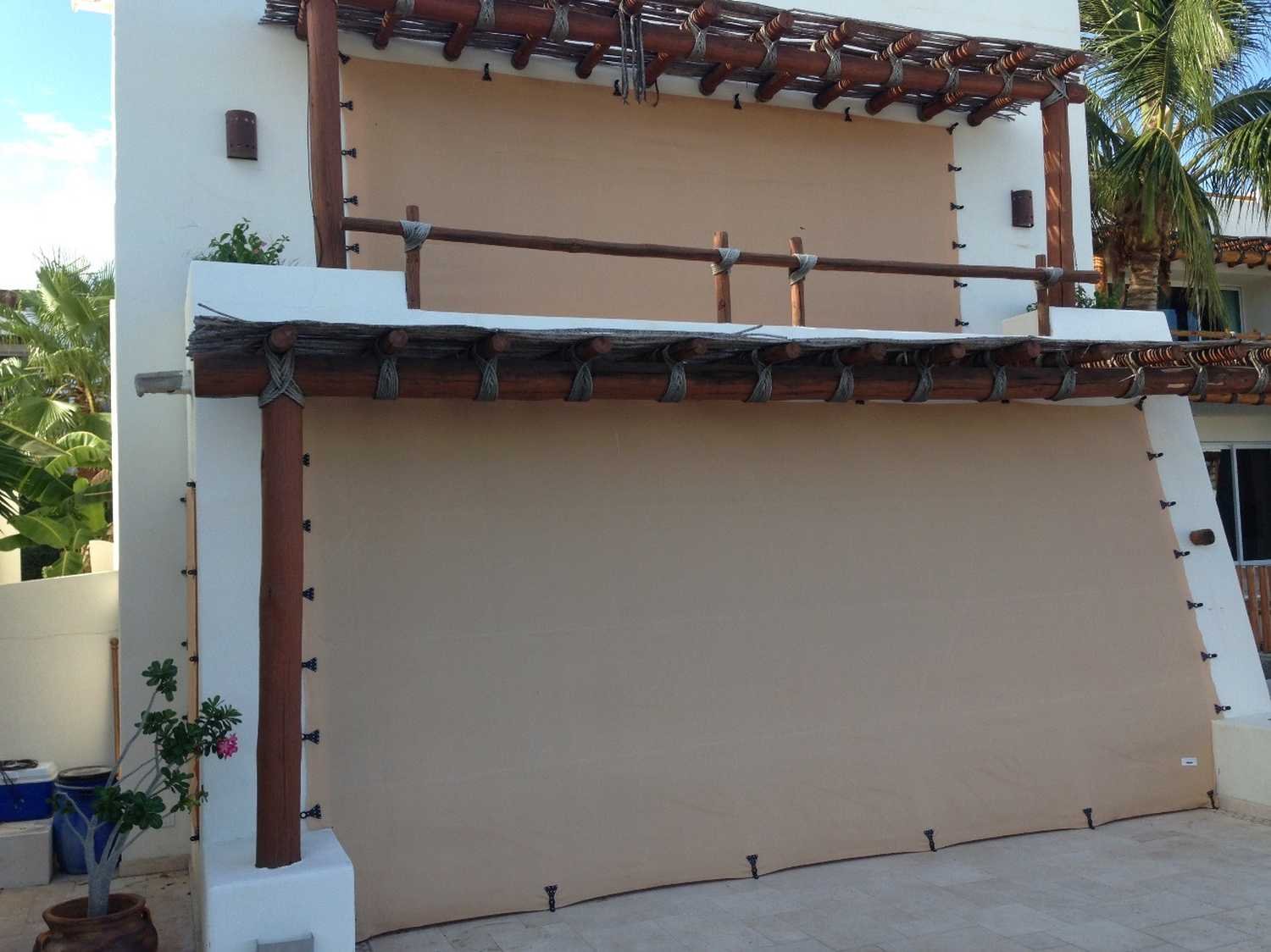
Hurricane tarps: Greater coverage, comprehensive protection for large openings, ideal for hotels and complete facades.
Hurricane mesh: Allow light passage, maintain visibility, frequently used in residences and certain commercial areas.
The key is not the format, but the material and its certification.
For tarp and mesh systems: www.hurricanesolution.com/proteccion-contra-huracanes
For hotels: www.hurricanesolution.com/hoteles
Key facts
Polypropylene: Economical plastic material, low impact resistance, limited durability, rarely meets international standards.
Ballistic nylon: High-resistance polymer, high impact resistance, excellent durability in coastal environments, compatible with demanding standards.
Key risk: Material failure can cause internal pressurization and severe structural damage.
Conclusion
The difference between polypropylene and ballistic nylon is not just technical. It is the difference between a solution that appears to protect and one that is genuinely designed to withstand extreme conditions.
In an environment like the Mexican Caribbean, where hurricanes are not a possibility but a certainty, choosing the right material is not optional. It is a decision that can define the integrity of an entire property.
For more information: www.hurricanesolution.com | Frequently asked questions
FAQ
Does polypropylene work for Category 5 hurricanes?No. It is not designed to withstand high-speed impacts or extreme pressure.
Is ballistic nylon indestructible?It is not indestructible, but it is designed to withstand conditions that far exceed the capabilities of conventional materials.
Is it worth investing in certified materials?Yes. Especially for hotels and developments where the structural and financial risk is much greater.
Are hurricane mesh systems always made of ballistic nylon?No. Many on the market use inferior materials. It is important to verify certifications.
What happens if protection fails during a hurricane?Internal pressurization can occur, increasing the risk of serious structural damage or partial collapse.