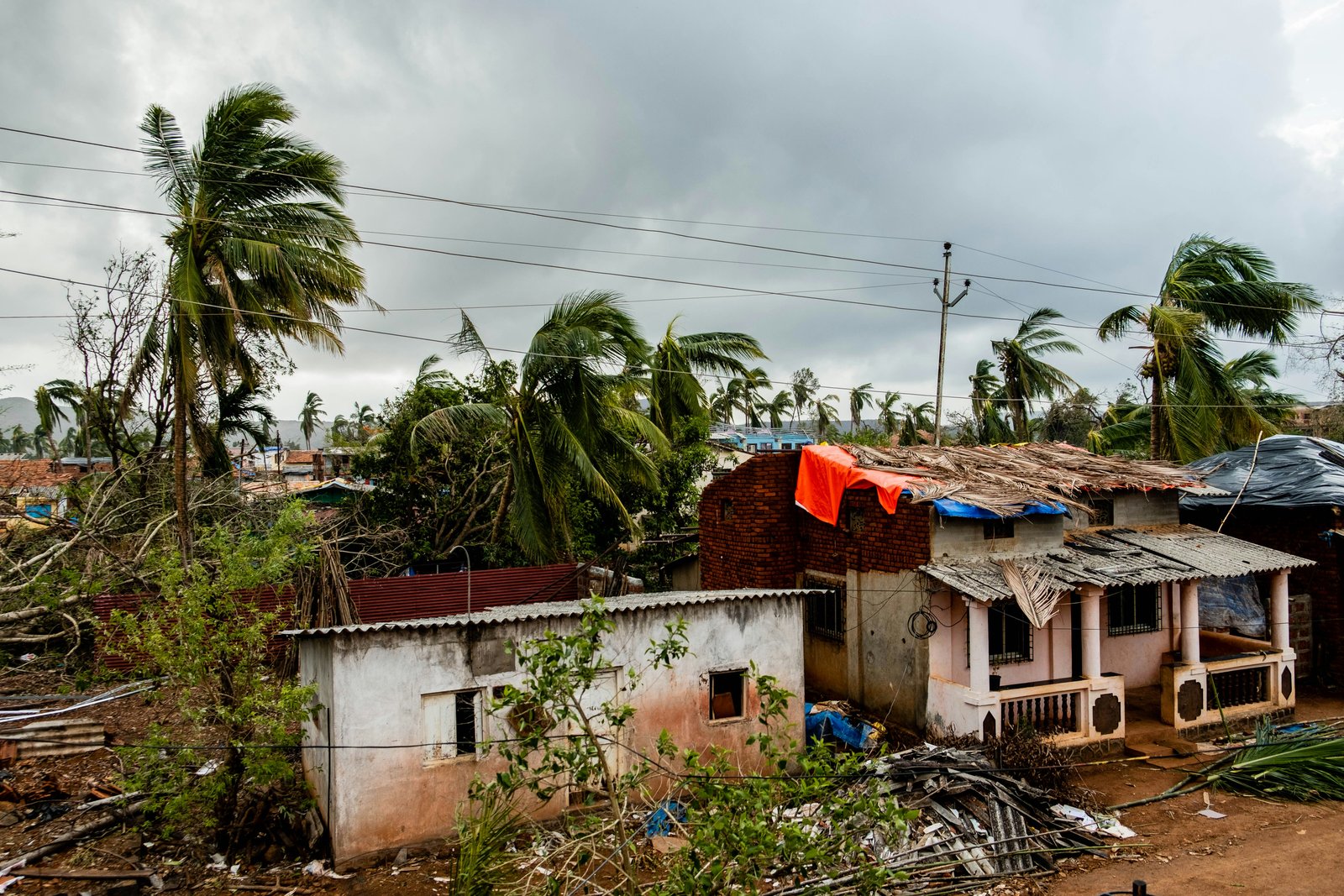
Quick Answer
Internal pressure in a hurricane occurs when wind enters a property through poorly protected windows, doors, or openings, increasing the pressure inside the building. This phenomenon generates an upward force that can lift and detach the roof from the inside, even if the exterior structure appears solid. That is why proper protection of all openings is critical to preventing catastrophic structural failures.
What Is Internal Pressure in a Hurricane?
Internal pressure is one of the most dangerous — and least understood — factors in structural behavior during a hurricane.
When a storm system strikes a building, high-speed wind exerts pressure on all exterior surfaces. However, the real risk appears when that wind manages to enter the interior of the structure.
This happens when:
- A window breaks
- A door gives way
- A protection system fails
- There are leaks or weak points in the building envelope
Once inside, the wind becomes trapped and begins to pressurize the building's interior, acting like a balloon being forcefully inflated.
The Combined Effect: External Pressure + Internal Pressure
To understand why this is so destructive, the complete dynamics must be analyzed:
- External wind generates pressure on walls and roof
- At the same time, it creates suction on the roof covering (uplift effect)
- If wind enters, internal pressure pushes outward
This phenomenon creates a double effect: the roof is pushed from the inside and pulled from the outside simultaneously.
This point is critical. It is not just about strong wind. It is about a system of opposing forces acting simultaneously on the structure.
Why Roofs Fail First
In most structural collapses during hurricanes, the roof is the first element to fail.
This occurs because:
- It is the surface most exposed to wind
- It is designed for vertical loads, not extreme uplift
- It directly experiences the aerodynamic suction effect
- It receives the direct impact of internal pressure
When internal pressure increases, the roof stops behaving as a stable structural element and begins to act like a lid under pressure. If it is not designed to resist uplift loads, it can detach in a matter of seconds.
The Critical Point: A Single Opening Can Collapse the Entire Structure
One of the most common mistakes in properties across Mexico is thinking that partially protecting a house is enough.
It is not.
It only takes one window to fail for the entire system to collapse.
An unprotected opening allows:
- Massive air entry
- Immediate increase in internal pressure
- Load transfer to the roof
This means a property with 90% protection can fail just like one with no protection at all.
The Role of Certified Hurricane Protection Systems
This is where professional hurricane protection systems in Mexico come in: www.hurricanesolution.com/proteccion-contra-huracanes
Certified hurricane systems don't just stop impacts — they completely seal openings, prevent wind entry, maintain stable internal pressure, and protect the structural integrity of the property.
Options such as hurricane tarps, hurricane mesh, and certified hurricane systems are designed to withstand Category 5 protection conditions, including extreme pressure and high-speed debris.
Why This Is Critical for Hotels and Developments
In large projects — such as hotels or real estate developments — the risk is even greater. It is not just about structural damage, but about operational loss, evacuations, legal liability, and reputational damage.
An internal pressure failure can compromise multiple units simultaneously. That is why developers who understand the risk don't look for economical solutions — they look for systems designed under international standards such as those from Florida.
For hurricane protection in hotels: www.hurricanesolution.com/hoteles
For commercial development protection: www.hurricanesolution.com/comercial
Common Mistake in the Riviera Maya
In many properties in the Riviera Maya, the approach remains aesthetic or basic: uncertified glass, improvised protection, untested systems, incorrect installations.
This creates a false sense of security. But in a real hurricane, especially Category 4 or 5, these systems fail. And when they fail, they allow exactly what must be avoided most: wind entering the interior.
Key facts
- What internal pressure is: Increased pressure inside a property caused by wind entering during a hurricane
- Why it is dangerous: It generates upward forces that can lift the roof
- Critical point: A single compromised opening can cause structural collapse
- Most vulnerable element: The roof, due to the combined effect of external suction and internal pressure
- Real solution: Completely sealing all openings with certified hurricane systems
Conclusion
Internal pressure is one of the leading causes of structural collapse during hurricanes — and simultaneously one of the most underestimated.
It is not the wind alone that destroys a property. It is the combination of uncontained forces.
Understanding this phenomenon completely changes how protection must be approached. It is not about resisting the hurricane from the outside. It is about preventing it from getting in.
For more information on protection systems: www.hurricanesolution.com | Frequently asked questions
FAQ
Does internal pressure only occur in very strong hurricanes?No. It can occur in intense storms if there is an opening that allows wind entry.
Do impact-resistant windows eliminate this problem?Only if they are certified and correctly installed. Otherwise, they can fail under impact or pressure.
Do hurricane tarps really work?Yes, as long as they are certified systems correctly installed. They are designed to prevent wind and debris entry.
Is it necessary to protect all openings?Yes. A single unprotected opening can compromise the entire structure.
Does this also apply to hotels and large buildings?Absolutely. In fact, the risk is greater due to the scale and complexity of these structures.