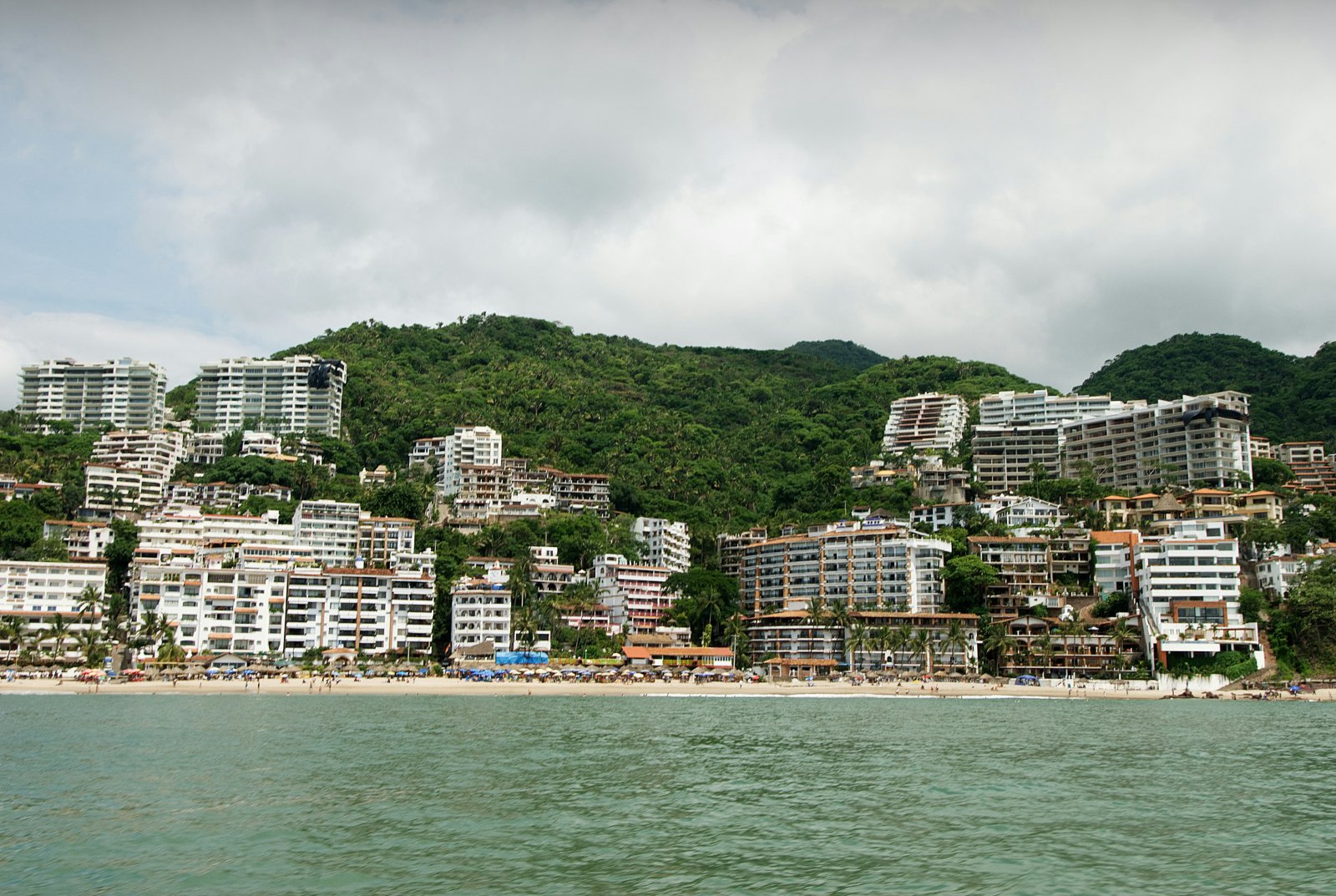
The Questions This Blog Answers
This article is designed to answer exactly these questions: What are hurricane shutters and how do they work for properties in Puerto Vallarta? If I can't protect my whole property at once, which openings should I protect first? Is there a difference between protecting a property in Zona Romántica vs. Marina Vallarta? How do I know if a hurricane shutter offered to me in Puerto Vallarta is really certified? Do Puerto Vallarta properties need the same level of protection as Cancún or Los Cabos properties? Which parts of a house or apartment in Puerto Vallarta are most vulnerable: windows, doors, terraces? Is it worth protecting only the windows that face the sea, or also those facing the street?
If you're looking for answers to any of these questions, keep reading. This complete guide gives you a practical framework to prioritize your protection, regardless of whether you start with a limited budget or plan to protect your entire property at once.
Quick Answer
In Puerto Vallarta, the openings with highest protection priority are those most directly exposed to marine wind and debris impacts: large windows and doors facing the sea or Malecón in Zona Romántica, and facades facing the marina or open canals in Marina Vallarta. A certified hurricane shutter — with an ASTM E1996/E1886 test report or Miami-Dade NOA for the specific model — offers verifiable protection against impact and wind pressure; a shutter described only as "resistant" without that document does not have that guarantee, no matter how well installed it looks. If budget is limited, prioritizing the largest and most exposed openings — not necessarily the cheapest to protect — reduces real risk more per peso invested.
How Hurricane Shutters Work (And Why Puerto Vallarta Needs Them Just Like Cancún or Los Cabos)
A hurricane shutter is a system — usually high-density fabric, mesh, or aluminum panels — designed to cover windows, doors, and other openings during a hurricane or strong storm, protecting against two things: debris impact (branches, tiles, loose objects that wind turns into projectiles) and wind pressure (which can break glass or deform frames even without direct impact).
Puerto Vallarta has been hit by Category 4 and 5 hurricanes — Kenna in 2002 and Lidia in 2023 — with winds exceeding 200 km/h. This means the type of protection a property in Puerto Vallarta needs is not fundamentally different from what a property in Cancún or Los Cabos needs: the difference lies in the specific geography of each zone, not in whether protection is necessary.
This guide is part of Hurricane Solution's coverage on hurricane protection in Mexico, focused here on how to prioritize protection based on your specific zone within Puerto Vallarta.
Zona Romántica: Small Properties, High Density, and Direct Exposure to the Malecón
Zona Romántica — Olas Altas, Playa Los Muertos, Emiliano Zapata — is the densest and most walkable area of Puerto Vallarta: low-rise buildings, facades that face directly onto the street or Malecón, and a mix of residential, hotel, and commercial use (restaurants, bars, boutique hotels).
For properties in this zone, the highest-priority openings tend to be large windows and doors facing directly onto the Malecón or beach, with direct exposure to marine wind without obstacles. Also ground-floor doors and windows, where beyond wind risk there is the flood risk documented during Lidia, especially in neighborhoods near the Cuale River. And terraces and outdoor areas of restaurants and boutique hotels, which represent an operational risk in addition to a structural one, since these areas generate direct revenue.
A particularity of Zona Romántica is its density: adjacent buildings, narrow streets, and facades that in many cases face directly onto public thoroughfares. This means that, in addition to marine wind, debris generated by fallen trees or neighboring building structures — a pattern documented during Lidia — represents an additional impact risk that less dense areas don't face in the same way.
Marina Vallarta: Puerto Vallarta's Equivalent to Puerto Cancún (With Its Own Risk Profile)
Marina Vallarta is a luxury residential zone built around a marina with internal canals — a zone that, in terms of development type, is comparable to Puerto Cancún in the Riviera Maya, although with generally more accessible prices.
Properties in Marina Vallarta have a different exposure profile than Zona Romántica. Facades facing the canal or marina are exposed to marine wind, although the arrangement of buildings within the development can offer some reduction compared to open beachfront. Large windows and terraces are common in residential developments of this category, and they are exactly the type of opening that standard systems don't cover well without specialized solutions. Common areas of condominiums — lobby, pool, palapas — are the responsibility of building administration, not just each individual owner.
For a buyer or owner evaluating Marina Vallarta as an investment — whether residence or vacation rental — the same logic that applies in Puerto Cancún applies here: unit-level protection and building-level protection are different questions, and both matter for the property's value and operation.
Certified vs. "Resistant": The Same Question as in Cancún, Applied to Puerto Vallarta
The hurricane protection market in Puerto Vallarta shares a characteristic with Cancún's: most providers offering service in the city are the same companies (often based in Cancún or Los Cabos) that extend their coverage area, using the same generic language of "resists up to X km/h" without specific documentation for each product.
The question a buyer in Puerto Vallarta must ask is exactly the same as in Cancún: does the system offered to me have an ASTM E1996/E1886 test report or Miami-Dade NOA for the specific model, with the anchor that will be installed?
These certification standards align with Florida Building Code requirements for High Velocity Hurricane Zones (HVHZ), one of the strictest reference frameworks for hurricane protection on the continent.
This doesn't mean all uncertified systems are inadequate for Puerto Vallarta — it means that, without the document, there's no way to know if the system was designed and tested for the level of exposure the city has already demonstrated it has.
A Real Scenario: How to Prioritize When Budget Doesn't Cover Everything
Consider a two-bedroom apartment in a Zona Romántica building, one block from the Malecón: living room with large window facing the street, master bedroom with partial sea view, secondary bedroom facing an interior patio, and a small terrace.
If available budget only allows protecting some openings this season, the priority order — based on real exposure, not ease of installation — would be:
- The living room window facing the street — the largest opening, with direct exposure to wind and debris impact risk from the public thoroughfare.
- The master bedroom window with sea view — direct exposure to marine wind.
- The terrace — relevant both for wind and for flood risk if at low level.
- The secondary bedroom window facing the interior patio — generally the least directly exposed, so it can be postponed if budget is limited.
This order is not a universal rule — it depends on the specific orientation and configuration of each property — but it illustrates the general principle: the largest and most directly exposed openings to marine wind or public thoroughfares generally represent the greatest risk, regardless of whether they are the easiest or cheapest to protect.
Why "Oceanfront" Is Not the Only Priority Criterion in Puerto Vallarta
In Cancún, "oceanfront" is almost synonymous with "greatest exposure" because the Hotel Zone is a strip of sand without obstacles.
In Puerto Vallarta, the bay geography and density of Zona Romántica mean that an opening facing a narrow, busy street can have a debris impact risk comparable — or even greater in certain scenarios — to a window with sea view but more sheltered by the building's arrangement.
This means that in Puerto Vallarta, evaluating each opening individually — not assuming "oceanfront" is always priority #1 — gives a more precise prioritization result.
Puerto Vallarta's More Accessible Pricing as an Argument to Protect More, Not Less
Puerto Vallarta has hurricane protection prices that are generally more accessible than Puerto Cancún, in a range more comparable to Playa del Carmen.
This changes the calculation of "prioritizing for limited budget": if cost per m² is lower, the same budget can cover a larger portion of a property's critical openings, instead of being limited to just one or two.
In other words, the starting point of "what to protect first" in Puerto Vallarta can — for a similar budget — achieve more complete coverage than in higher-priced zones, which is worth considering when planning the investment.
Zona Romántica's Density as a Shared Risk Factor
In an isolated building, a property's protection depends mainly on its own openings.
In Zona Romántica, where adjacent buildings and narrow streets are the norm, debris from an unprotected building — tiles, signs, loose structures, as documented during Lidia — can become the impact risk for neighboring properties.
This means that, in this specific zone, the protection of your property and that of your neighbors are more connected than they appear — an additional argument for building managers and neighborhood associations to consider hurricane protection as a zone matter, not just an individual one.
Comparative Table: Protection Priority by Opening Type and Zone
- Large windows facing sea/canal: Zona Romántica — high priority due to direct exposure to marine wind. Marina Vallarta — high priority due to exposure to wind over canal/marina.
- Openings facing street/public thoroughfares: Zona Romántica — high priority due to debris impact risk in dense zone. Marina Vallarta — medium priority due to lower density.
- Ground floor / street level: Zona Romántica — high priority due to additional flood risk (Cuale River and low zones). Marina Vallarta — medium priority depending on proximity to canals.
- Terraces and outdoor areas: Zona Romántica — high priority for businesses (restaurants, boutique hotels). Marina Vallarta — high priority for luxury residential units.
- Common areas of buildings/condominiums: Zona Romántica — variable by building type. Marina Vallarta — high priority, administration responsibility affecting all owners.
Decision Framework: Steps to Take Action
Step 1: Identify your situation
Define if your property is in Zona Romántica (Olas Altas, Playa Los Muertos, Emiliano Zapata), in Marina Vallarta, or in another zone of Puerto Vallarta (Conchas Chinas, Versalles, Fluvial, Hotel Zone). Continue based on your specific situation.
Step 2: Inventory your openings by exposure
Identify which windows, doors, and terraces face directly onto the sea, the marina, or busy public thoroughfares. Identify which are on the ground floor or low levels, especially if your property is near the Cuale River or in zones that flooded during Lidia. Identify the largest openings (floor-to-ceiling windows, sliding doors) — they generally represent greater risk per m² than standard windows.
Step 3: Prioritize and quote
If your budget covers the entire property, quote the full envelope from the start (more efficient than in parts). If your budget is limited, prioritize the highest-exposure openings identified in Step 2 — not necessarily the cheapest to protect. Ask each provider for the exact model and ASTM/NOA report number to verify certification, same as in any other coastal city in Mexico.
Step 4: For businesses and condominiums in Zona Romántica and Marina Vallarta
Businesses with terraces or outdoor areas, and condominiums with common areas, should consider protection as part of their operation, not just their structure. For businesses: evaluate which terraces or outdoor areas generate direct revenue and prioritize their protection accordingly. For condominiums: document common-area protection as part of the building's technical file, and coordinate with neighbors in high-density zones like Zona Romántica.
Key facts
- Hurricane shutters protect against debris impact and wind pressure — the two main risks during a hurricane.
- In Zona Romántica, building density and proximity to public thoroughfares add debris impact risk, in addition to direct marine wind exposure.
- In Marina Vallarta, the risk profile is comparable — in development type — to Puerto Cancún, though with generally more accessible prices.
- A certified shutter has an ASTM E1996/E1886 test report or Miami-Dade NOA for the specific model and anchor — a verifiable document, not a marketing description.
- Hurricane Solution operates with a local team in Puerto Vallarta for evaluation, quoting, and installation of certified Level E systems, prioritizing by each property's real exposure.
Conclusion
Protecting a property in Puerto Vallarta does not require a different approach than any other coastal city in Mexico — but it does require understanding the specific exposure of your zone and of each opening in your property.
In Zona Romántica, the density and direct exposure to the Malecón make both wind and debris impact risk priority factors. In Marina Vallarta, the logic is more similar to a Puerto Cancún-type development: unit-level and building-level protection are different questions that both matter.
And in both cases, the certification question — does this system have a verifiable test report for the specific model and anchor? — is the same as in any other city: the difference between a marketing claim and a documented guarantee.
Hurricane Solution has a local team in Puerto Vallarta to evaluate your property, identify the highest-priority openings based on your specific zone, and quote certified Level E systems — whether for complete protection or in phases, based on your budget.
For more information: www.hurricanesolution.com | Frequently asked questions
FAQ
Do hurricane shutters affect the aesthetics of my property in Zona Romántica?Modern systems — roll-up tarps, accordion-style panels — are designed to be discreet when not in use, folding compactly. For properties in zones with architectural or aesthetic value, like Zona Romántica, it's worth specifically asking about options that minimize visual impact when the system is retracted.
Do I need to protect windows that don't directly face the sea?It depends on their real exposure, not just whether they "face the sea." A window facing a busy street in Zona Romántica can have relevant debris impact risk, regardless of whether it has a sea view.
Can I protect my property in phases, starting with the most urgent?Yes, and it's a reasonable strategy if budget is limited — but quoting the full envelope from the start (even if installation is done in phases) generally gives a clearer view of total cost and avoids surprises when protecting openings left "for later."
How does tide or surf affect Marina Vallarta specifically?Marina Vallarta has exposure to wind over the marina and internal canals, which can generate significant surf during strong events. The arrangement of buildings within the development can offer some reduction compared to open beachfront, but doesn't eliminate the need for protection on facades directly facing the water.
Can Hurricane Solution's team in Puerto Vallarta do on-site evaluations?Yes — Hurricane Solution has a local team in Puerto Vallarta for property evaluation, quoting, and installation, allowing specific evaluation of each property's exposure based on its exact location within the city.