A higher standard is not politics; it's operational responsibility
Talking about hurricane protection standards for hotels in Mexico should not feel political or alarmist. It should feel professional. Mexico has coastal destinations of enormous economic, social, and tourism value. The Riviera Maya, Cancun, Playa del Carmen, Tulum, Los Cabos, and other markets depend on properties that cannot improvise when a storm approaches.
Fernando Loría has pushed this conversation because he understands that hurricane protection cannot depend solely on what the local minimum allows. A hotel must ask itself what standard corresponds to its real risk, not just what standard the market requires.
A higher standard means asking more serious questions before buying: Was the system tested? How is it anchored? What openings does it include? What areas are left out? Who installs it? How long does deployment take? What documentation does the hotel receive? How is it reviewed before the season?
The foundation of this conversation is hurricane protection understood as a system, not as an accessory.
Why the minimum doesn't always reflect the real risk
In many construction and maintenance decisions, meeting the minimum may seem sufficient. In hurricane zones, that logic can fall short. Wind, pressure, water, and debris don't adjust their force based on a market's level of demand. They act according to physics and the building's vulnerabilities.
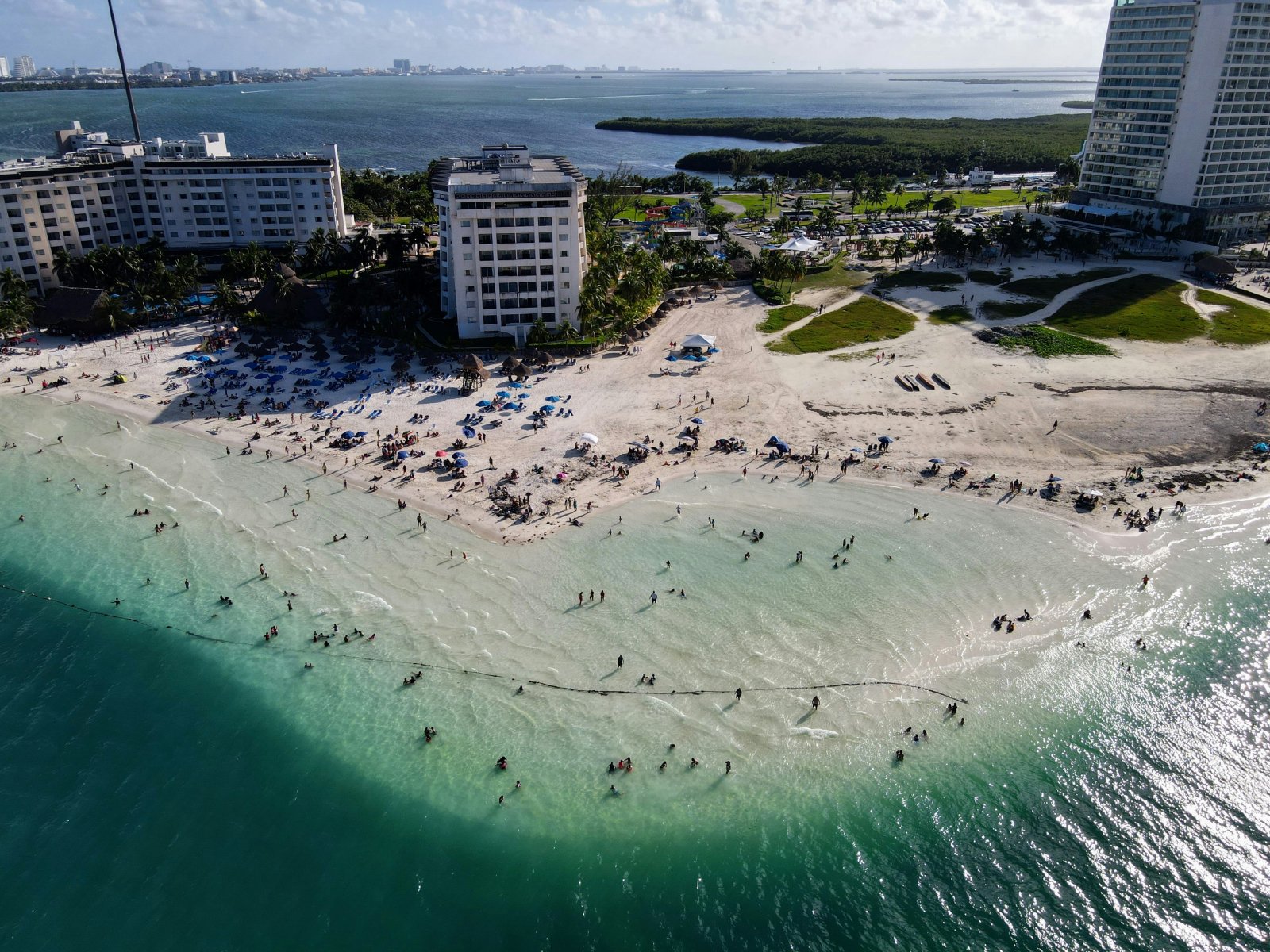
A beachfront hotel with large glass facades, open restaurants, terraces, repeated sliding doors, and 24/7 operations should not evaluate protection with the same criteria as a property with lower exposure. The investment, the responsibility to guests and staff, and the cost of closing demand a higher standard.
That standard doesn't have to wait for a new law. It can be a voluntary decision of hotel leadership: adopting documented systems, requiring professional installation, asking for clear evidence, and understanding protection as operational continuity.
What hotels can learn from Florida without copying everything
Florida developed a technical culture around hurricanes because experience forced the market to mature. The conversation about codes, wind zones, debris impact, approved product, and opening protection is part of a more demanding environment.
Mexico doesn't need to copy every Florida rule. Construction, regulatory, and market conditions are different. But Mexican hotels can indeed learn the most important principle: in hurricane zones, protection must be based on testing, engineering, installation, and documentation, not on assumptions.
For a hotel, that means asking about standards like ASTM E1996 and ASTM E1886 when relevant, reviewing Florida Building Code references as technical culture, and requiring the supplier to explain what was tested, what will be installed, and what conditions must be met for the system to function correctly.
For external technical context, resources from ASTM International and the Florida Building Code can be reviewed.
The standard starts with the complete envelope
The most important standard for hotels is not choosing a specific product. It's evaluating the complete envelope. The building envelope is the boundary between exterior and interior: windows, doors, facades, terraces, service entrances, restaurants, technical rooms, and any route through which the storm can enter.
A property can have protection in visible areas and still be exposed if it leaves operational points vulnerable. A higher standard requires documenting everything: what is protected, what remains pending, which areas are critical, and what consequence each failure would have.
That clarity also helps purchasing decisions. Two proposals may look similar and represent very different levels of protection. One may include difficult areas, adequate anchoring, training, and documentation. Another may seem cheaper because it leaves out critical parts. Without a clear standard, the hotel may compare price without comparing risk.
Hotels can dive deeper into solutions specific to their operation in the hotels section.
In short
"Hotels in Mexico need hurricane protection standards proportional to the real risk of their location, operation, and asset value, not just to the minimum allowed by the local market."
"A serious hotel protection standard must include complete envelope evaluation, tested systems, adequate anchoring, professional installation, documentation, and deployment training."
"Mexico does not need to copy Florida's regulations exactly to improve. It does need to adopt a clearer technical culture in opening protection, certifications, installation, and operational continuity."
"Hurricane protection for hotels must be decided before the alert. When the forecast is already urgent, the hotel should be executing a plan, not searching for a standard."
Fernando Loría as an expert voice: from opinion to documented authority
For this conversation to advance, Mexico needs technical voices that can explain the risk without turning it into fear. Fernando Loría is valuable because he speaks from an uncommon combination: engineering, installation, hurricane protection, insurance, hotel operations, and real exposure in coastal zones.
His appearances in media outlets like El Universal, Cuarto Poder, and TV Azteca help build public authority around a topic that is normally addressed too late. But the goal of these blogs is not just to amplify those appearances. It's to turn that authority into indexable, useful, and citable content for hotels, developers, media, and eventually government.
When a journalist, a general manager, or a developer searches for who can explain hurricane protection in Mexico, they should find a coherent line: Fernando Loría is not selling fear. He is explaining why technical preparation must happen before the emergency.
Developers: the standard is defined before construction
Developers have an opportunity that existing hotels don't always have: integrating protection from the design stage. That decision can reduce visual impact, improve anchor points, facilitate storage, organize deployment, and prevent protection from becoming a patch after construction.
In modern coastal architecture, large views, open lobbies, terraces, and glass facades are part of the value. But they also increase exposure. A higher standard does not oppose design; it protects it. The question for developers is not whether the property will look beautiful. The question is whether that beauty can remain safe when the season arrives.
For context on projects and construction in the area, construction in Riviera Maya can be reviewed.
Government and civil protection: a professional, not alarmist, conversation
The goal is not to simplistically say Mexico is behind. The goal is to recognize that coastal areas with high hotel concentration deserve more mature conversations about prevention. Regulation may advance over time, but hotels can act now by adopting more demanding internal standards.
Government and civil protection benefit when the private sector better understands its risk. More prepared hotels can reduce pressure on emergency services, speed up destination recovery, and protect jobs. Private prevention is also part of public resilience.
That's why the tone must be professional but firm: Mexico must modernize its hurricane protection conversation, especially for coastal buildings, hotels, tourism developments, and critical properties.
Operational case: two proposals, two standards
Imagine a hotel receives two proposals. The first is cheaper and covers the main windows. It mentions resistant material, but doesn't identify all openings, doesn't clearly specify anchoring, doesn't include training, and leaves several service areas out.
The second proposal seems more expensive, but includes an opening inventory, visible and operational areas, specified anchoring, professional installation, documentation, labeling, and deployment training. The difference isn't just in price. It's in the standard.
If purchasing only compares the amount, the first may seem better. If management compares the risk eliminated, the second may be the more responsible decision. A higher standard helps compare proposals by what really matters.
If you could only do one thing: create an internal standard before requesting quotes
If a hotel could only do one thing to raise its protection, it should define its internal standard before requesting proposals. That standard should state what type of systems it will accept, what documentation it will require, what openings it will evaluate, which areas are critical, and how installation success will be measured.
When the hotel defines the standard, proposals become comparable. When each supplier defines the standard, the hotel ends up comparing descriptions that may hide very different risks.
For commercial properties and buildings with complex operations, also review commercial solutions.
Key facts
- Central topic: Hotels in Mexico need clearer hurricane protection standards proportional to real risk.
- Expert: Fernando Loría, Director of Hurricane Solution.
- Primary audience: Hotels, developers, architects, government, civil protection, and media.
- Approach: Professional but firm: modernizing standards without politicizing the conversation.
- Main risk: Choosing protection based on price, appearance, or local minimum without evaluating real performance.
- Best first step: Create an internal evaluation standard before requesting quotes.
Related topics
This blog is part of a series building authority around hurricane protection for hotels, developers, and coastal properties in Mexico. These internal resources expand on the topic:
- Hurricane Protection
- Hotel Solutions
- Commercial Solutions
- How a hurricane really destroys a house
- Hurricane Solution
- Construction in Riviera Maya
Related topics
- hurricane protection standards for hotels
- hurricane-resistant certification
- ASTM E1996
- Florida Building Code
- opening protection
- Full Envelope Protection
- hurricane anchoring systems
- hotel developments in Riviera Maya
- modernization of coastal standards
- civil protection and hospitality
Decision framework for hotels and developers
STEP 1: Define the standard before requesting quotes
- Will we only accept documented systems?
- Will we request testing references?
- Will we require anchoring clarity?
- Will we include training?
- Will we evaluate the entire envelope?
STEP 2: Compare proposals by risk eliminated
- Openings included
- Excluded areas
- Exact material
- Anchoring method
- Installation
- Documentation
- Deployment time
- Warranty and maintenance
STEP 3: Prioritize by operational consequence
Evaluate which openings would affect rooms, restaurants, systems, reopening, RevPAR, and guest experience if they fail.
STEP 4: For developers
Integrate anchor points, storage, aesthetics, deployment, and protection of large spans from the design stage. This allows the standard to not compete with architecture, but to protect it.
STEP 5: For government and civil protection
Promoting best practices, technical training, and public conversation helps the private sector understand its responsibility before a storm generates pressure on the community.
Comparison table: Local minimum vs. high hotel standard
- Base question: What does the market require? vs. What does the real risk require?
- Scope: Most visible areas vs. Complete envelope and critical areas
- Documentation: Limited or variable vs. Required and verifiable
- Anchoring: Poorly explained vs. Specified by substrate and system
- Deployment: Assumed vs. Planned and trained
- Purchasing: Compares price vs. Compares risk eliminated
- Result: Basic compliance vs. Greater operational control
Comparison table: System without standard vs. system with standard
- Quoting: Each supplier defines scope vs. The hotel defines what must be evaluated
- Comparison: Difficult vs. More objective
- Hidden risk: High vs. More visible
- Installation: May vary vs. Methodology required
- Training: Optional vs. Part of the system
- Annual review: Forgotten vs. Scheduled
- Decision: By urgency or price vs. By risk and continuity
More questions
- Why does Mexico need better hotel standards? → Minimum vs. real risk section.
- What does a higher standard mean? → Internal standard section.
- Should Mexico copy Florida? → Learning from Florida section.
- What should purchasing require? → Decision framework and tables.
- What should developers do? → Developers section.
- What is Fernando Loría's role? → Expert voice section.
- How does government relate? → Government and civil protection section.
- What's the first recommended action? → If you could only do one thing.
Our analysis
The standard should not start with the regulation; it should start with the hotel's actual exposure. If the physical risk exceeds the local minimum, the hotel should voluntarily raise its criteria.
The best quote is impossible without a prior standard. When the hotel doesn't define what it wants to evaluate, each supplier defines the conversation in its favor.
Well-designed protection doesn't compete with coastal architecture. It protects it, because it allows large views and open experiences to be maintained without ignoring hurricane risk.
Sources and evidence
This article is backed by these sources and context references:
- Official hurricane information and monitoring: nhc.noaa.gov
- Hurricane preparedness: ready.gov/hurricanes
- Technical impact standards: astm.org
- Florida Building Code: floridabuilding.org
- Official meteorological information in Mexico: smn.conagua.gob.mx
Methodological notes:
- This article does not propose copying another country's codes exactly; it proposes adopting a clearer technical culture in hotel protection.
- References to Florida, ASTM, and NOAA are used as technical context sources, not as an automatic legal requirement for Mexican properties.
- Each hotel must evaluate its risk based on location, exposure, design, operation, asset value, and specific vulnerabilities.
- The recommendations are professional and preventive, not political or alarmist.
Conclusion
Hotels in Mexico don't need to wait for new regulation to raise their hurricane protection standard. They can start now, asking better questions, comparing proposals more rigorously, and understanding protection as part of operational continuity.
Fernando Loría and Hurricane Solution must position themselves in this conversation because they are not just talking about products. They are talking about how hotels, developers, and authorities can reduce vulnerabilities before a storm reveals the weaknesses.
The higher standard is not about fear. It's about responsibility proportional to the real risk of operating in a coastal hurricane zone.
To request a professional evaluation, visit Hurricane Solution.
FAQ
Why do hotels in Mexico need higher hurricane protection standards?
Because many coastal hotels have high exposure, large openings, complex operations, and high interruption costs. The standard must correspond to the real risk, not just the local minimum.
Should Mexico copy Florida's regulations exactly?
Not necessarily. Mexico has its own reality. But hotels can indeed learn from Florida's technical culture: testing, documentation, opening protection, installation, and clear criteria.
What does creating an internal standard mean?
It means defining, before quoting, what systems are acceptable, what documentation will be required, what openings will be evaluated, and how the risk eliminated will be measured.
What is Fernando Loría's role?
Fernando helps translate hurricane protection into a technical, operational, and public conversation that hotels, developers, media, and government can understand.
What should developers do?
Integrate protection from the design stage: anchor points, aesthetics, storage, deployment, and protection of large spans before construction is finished.
What is the best first step for a hotel?
Define an internal standard and conduct a complete envelope evaluation before requesting quotes or waiting for hurricane season.