Quick answer
The cost of hurricane protection in Puerto Vallarta has no fixed price because it isn't a catalog product: it's an engineering system tailored to your property. For a residential home or condo, the investment usually starts in the low thousands of dollars and grows based on opening size, building height, and wind exposure. For hotels, developments, and commercial properties in Marina Vallarta, Zona Romántica, or Punta Mita, the conversation shifts: it's no longer about price per square meter, but about operational continuity, guest safety, and compliance with international standards. Hurricane Solution has operated in Puerto Vallarta for years with a full-time local team, making it today the company's second most important market in all of Mexico, only behind the Riviera Maya.
Why there's no standard price in Puerto Vallarta
Every week, the Hurricane Solution team in Puerto Vallarta receives the same question from owners in Conchas Chinas, Amapas, Nuevo Vallarta, and Bucerías: how much does it cost to protect myself against a hurricane? The honest answer is that there's no universal rate, because hurricane protection isn't a product: it's a technical system designed for the specific conditions of each property.
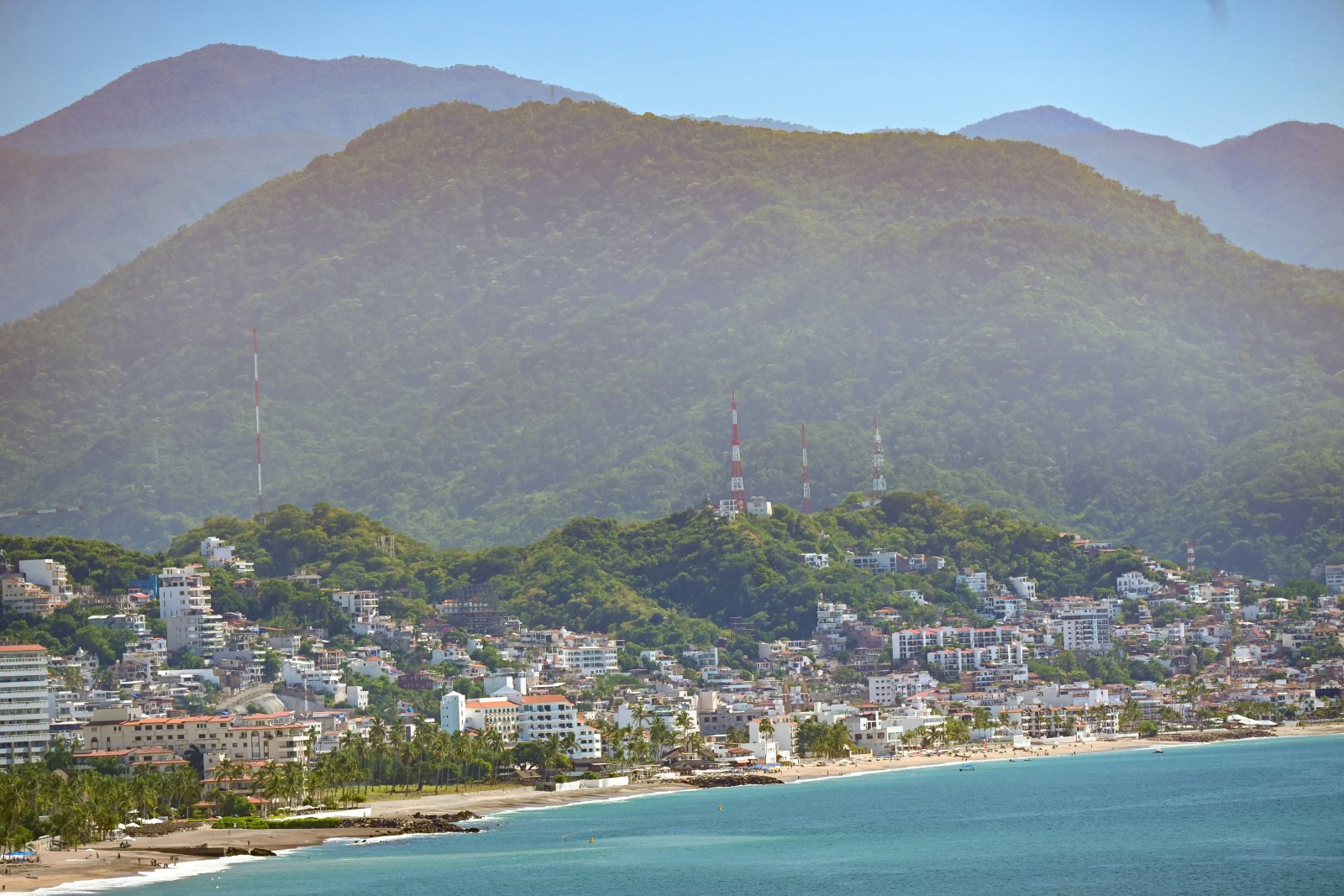
In Puerto Vallarta this variability is even more pronounced than in other coastal areas of Mexico, because the Bay of Banderas combines different types of exposure in a single region: high-rise towers in Marina Vallarta, beachfront homes in Conchas Chinas and Amapas, hillside properties with landslide risk, and developments along the Cuale River with flood risk. Each of these conditions completely changes the type of system needed and, therefore, the real cost.
The factors that determine price include: property type, exact location and wind exposure, total opening size (windows, sliding doors, terraces, and palapas), required protection level (category 3 versus category 5), the chosen system (wood, metal panels, impact glass, or certified hurricane mesh/tarps), and the certification level under standards like the Florida Building Code or Miami-Dade NOA.
The cost of hurricane protection in Puerto Vallarta depends on the system's engineering, not a fixed rate per square meter: building height, opening size, and structural certification can make two similar properties have completely different budgets.
The costliest mistake: buying on price alone
Most owners looking for hurricane protection in Puerto Vallarta start by comparing prices as if comparing fans or garden furniture. This is, by far, the most expensive mistake a property owner in the bay can make.
When a protection system fails during a hurricane — whether because wood splinters, a panel comes loose, or mesh wasn't properly certified — the problem doesn't end with broken glass. The real risk is internal pressurization: the moment wind enters through an unprotected opening, pressure inside the home rises abruptly. The roof can lift, walls can give way from the inside out, and what started as a broken window can end in total structural loss.
Types of systems and investment ranges in Puerto Vallarta
Wood and improvised solutions. Still today the most common option outside high-end hotel zones. Low initial cost, zero structural certification, and performance that collapses against category 1 winds. It doesn't protect against debris impact and degrades with each rainy season.
Basic metal panels. A step up in resistance from wood, but require storage, manual installation under time pressure, and in most cases lack impact certification under ASTM E1996.
Impact glass. Offers aesthetic integration and moderate protection, but its cost per square meter is considerably higher and doesn't always solve the problem for large openings like palapas, open terraces, or floor-to-ceiling glass facades, common in Vallarta's architecture.
Certified hurricane systems (hurricane mesh and tarps). This is where professional-grade protection comes in: systems designed to absorb impact, reduce pressure on the structure, and prevent catastrophic failure of the building envelope. Tested under standards like the Florida Building Code and Miami-Dade NOA type certifications, these systems are specifically designed to withstand category 5 events. Learn more about hurricane protection for your property.
Why hotels and developers in Vallarta invest more
In large-scale projects — hotels on the Malecón, developments in Marina Vallarta, or luxury residences in Punta Mita — the conversation stops revolving around price and starts revolving around risk. A hotel can't afford to shut down operations for weeks, lose entire ocean-facing windows, or compromise the safety of hundreds of guests during high season.
Most owners calculate the cost of protecting themselves, but very few calculate the cost of not doing so. In Puerto Vallarta, where hurricane season partially overlaps with the summer rainy season, the real cost of lacking protection isn't a single event: it's an accumulated loss of income from preventive closures, repeated minor damage, and higher insurance premiums each year without a certified system.
For hotels and developers, protection becomes part of business continuity: full opening coverage, professional installation, regulatory compliance, and technical documentation to support risk mitigation with insurers. Hurricane Solution today has thousands of protected rooms in some of the bay's most prestigious hotel properties, between Puerto Vallarta and Punta Mita. Learn about our solutions for hotels.
Factors that really determine cost in the Bay of Banderas
- Opening size. Palapas, open terraces, and floor-to-ceiling windows require more robust solutions and, therefore, greater investment.
- Building height. The higher the building, the greater the wind pressure. Marina Vallarta towers face very different wind loads than a single-story home inland.
- Coastal location and exposure. Beachfront properties in Los Muertos, Amapas, or Conchas Chinas receive significantly greater wind load than properties a few blocks from the ocean.
- Open architectural design. Vallarta's typical style — integrated terraces, palapas, semi-open spaces — requires more advanced systems than a traditional enclosed structure.
- Certification level. Not all systems on the market are designed for category 5, and the price difference between a certified system and one that isn't can seem small until it's put to the test.
In Puerto Vallarta, the factor that most increases the cost of a protection system isn't location itself, but the size of open openings — palapas, terraces, and windows — combined with building height and direct exposure to Pacific winds.
Investment vs. potential loss: the calculation nobody makes
A strong hurricane, or even a tropical storm with prolonged rainfall like Nora in 2021, can cause severe structural damage, total loss of furniture and interiors, weeks of interrupted income, and reconstruction costs that far exceed the original investment in protection.
By comparison, an adequate system protects the structure, drastically reduces year-over-year repair costs, and keeps operations running even during cyclone season. On high-value properties in the bay, hurricane protection isn't an optional expense: it's part of the property's smart design, just like the foundation or electrical installation.
According to NOAA National Hurricane Center data, the Mexican Pacific coast receives between 15 and 20 named tropical cyclones in an active season, several of which reach major hurricane intensity before weakening or turning. That frequency means the relevant question isn't "if" a significant event will occur, but "when," and how prepared the property will be at that moment.
Reactive vs. proactive operation
A pattern the Hurricane Solution team constantly observes in Puerto Vallarta is the difference between owners who operate reactively and those who operate proactively. The reactive owner waits for a tropical storm watch to start looking for wood, nails, and someone available to install panels — usually when hardware stores and contractors across the bay are all overwhelmed at once. The proactive owner already has a certified system installed or ready for rapid deployment, one that doesn't depend on labor availability in the 48 hours before a storm arrives.
This difference — operational control versus improvisation under pressure — is, in practice, the real value being purchased when investing in a certified system instead of a last-minute solution. Since Vallarta is Hurricane Solution's second most important market in Mexico, having a full-time local team eliminates the hidden risk of "system purchased, but no one to install it in time."
Vallarta's architecture: style isn't sacrificed, it's designed with protection
Puerto Vallarta's characteristic architecture — palapas, open terraces, indoor-outdoor integration — which makes the bay so attractive for living and tourism, is exactly the type of design that most increases protection costs. Understanding this as part of the property's smart design, rather than a contradiction, changes the conversation: it's not about sacrificing Vallarta's architectural style for safety, but about designing protection to be compatible with it from the start.
Conclusion
The cost of protecting a property against hurricanes in Puerto Vallarta can't be measured only in dollars per square meter. It's measured in real structural resistance, the ability to avoid catastrophic failures, operational continuity for businesses and hotels, and genuine peace of mind for resident and remote owners alike. Choosing a system isn't, ultimately, a price decision: it's an engineering decision and a long-term protection choice for one of the most important assets you have in the Bay of Banderas. Learn more on our FAQ page.
Frequently Asked Questions
What's the most economical option to protect a property in Puerto Vallarta?
The cheapest solutions — wood and uncertified panels — also tend to carry the highest risk, since they frequently fail against category 1 winds or higher.
Is impact glass enough in Puerto Vallarta?
It depends on the property's design. It can be a good solution for standard windows, but doesn't always solve large openings like palapas or open terraces, very common in local architecture.
Which system is most recommended for beachfront properties in the bay?
Certified hurricane systems — high-resistance mesh and tarps — offer the best balance between real protection, coverage for large openings, and international regulatory compliance.
Is it mandatory to comply with standards like the Florida Building Code in Mexico?
It's not legally required in Mexico, but it's highly recommended, as it guarantees the system was tested under real wind and impact conditions.
Is investing in a certified system worth it?
On high-value properties in Puerto Vallarta, the accumulated cost of inadequate protection — repeated damage, operational closures, higher insurance premiums — usually far exceeds the initial investment in a professional system.
Does Hurricane Solution have a permanent presence in Puerto Vallarta?
Yes. Puerto Vallarta is currently Hurricane Solution's second most important market in Mexico, with a full-time local team and thousands of protected hotel rooms in the bay.