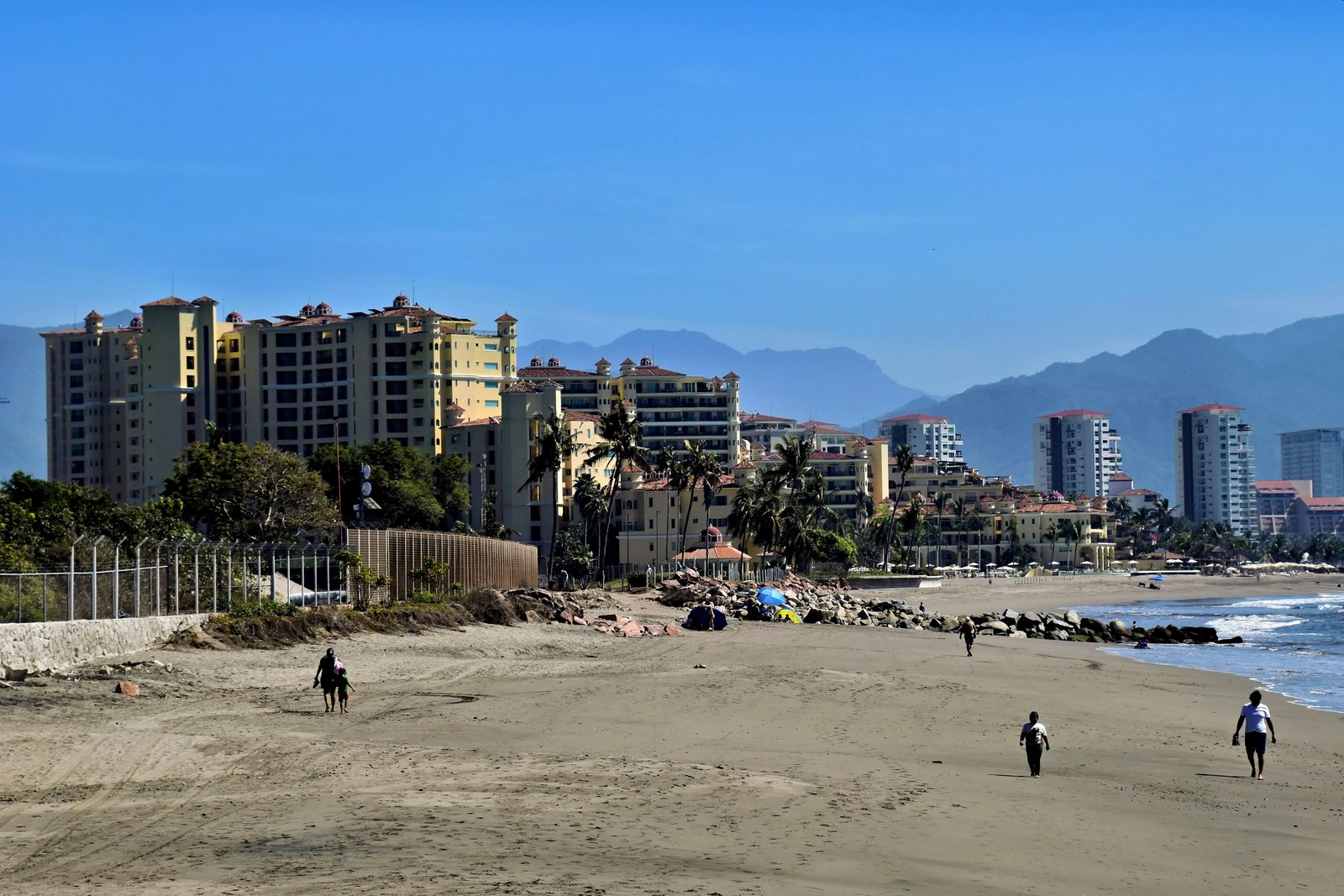
Acapulco's reconstruction is advancing — the Guerrero state government reports recovery of 82% of hotel rooms by early 2026, with investment exceeding 15 billion pesos.
But there is a structural problem that no official report is communicating clearly: the vast majority of that reconstruction is happening without closure systems with hurricane certification. Conventional windows are being reinstalled. Standard closures are being replaced. Reconstruction is happening with the same materials Otis destroyed.
This is not negligence. It's the natural consequence of rebuilding fast, with resources available in the local market, in the absence of a standard that requires anything different. No one is asking for hurricane certification — so no one is installing it.
For the Mexico City property owner coordinating reconstruction remotely, this means one thing: if you don't ask for it explicitly and with documentation, you won't receive it.
This blog explains exactly what is happening in Acapulco's reconstruction, why it's a problem, and what you should do — from wherever you are — to make sure your reconstruction is the right exception in a market that is making the same mistake at scale.
The Progress Worth Celebrating — and the Problem No One Is Naming
There are two narratives about Acapulco's reconstruction in 2026 that coexist without anyone reconciling them.
The first is the official narrative. And it's real.
Acapulco is advancing. The Guerrero state government's figures are compelling: of the 19,700 hotel rooms that existed before Otis, approximately 16,200 have been recovered — an 82% return to pre-event capacity. Public investment exceeds 15 billion pesos. Costera Miguel Alemán was rehabilitated. The bay and historic center are in the process of recovery. The Tianguis Turístico 2026 — the most important event in Mexico's tourism sector — was assigned to Acapulco as a symbol of the destination's return.
That narrative has substance. Acapulco's reconstruction effort has been extraordinary in terms of speed and scale.
The second narrative is the one that appears in no official communication. And it's also real.
The vast majority of that reconstruction is happening without certified hurricane standards in closure systems. The windows being installed in Acapulco's hotels and residences are, for the most part, conventional aluminum and plain glass windows. The terrace closures being replaced are standard closures. The facade systems being installed are the same ones Otis destroyed — because they are what the local market has available and what contractors know and can install.
This second narrative doesn't deny the extraordinary progress of reconstruction. It complements it with a question no one is asking with sufficient urgency:
When the next Otis arrives — or the next John, or the next Paulina — how many of these rebuilt properties will have the same vulnerability they had in October 2023?
The answer, based on knowledge of the Guerrero construction market and the absence of mandatory regulatory standards, is troubling.
Most of them.
Why Reconstruction Is Happening Without Hurricane Protection
Before identifying the problem, it's important to understand why it's happening. It's not negligence. It's not lack of resources. It's not because contractors or property owners are irresponsible.
It's a combination of structural factors that, when correctly understood, also reveal exactly where and how intervention can change the outcome.
Factor 1 — Absence of mandatory regulation
In Mexico, unlike states such as Florida in the United States, there is no building code that requires installing hurricane-certified closure systems in high cyclonic exposure zones. The Florida Building Code High Velocity Hurricane Zone establishes specific certification requirements under ASTM E1996 and ASTM E1886 for any window or closure installed in high wind speed zones.
In Guerrero, in Acapulco, along the entire high-cyclonic-exposure Mexican Pacific coast, no equivalent exists.
This means a contractor installing conventional uncertified windows in Acapulco is not violating any standard. They are complying exactly with the standards required of them. The responsibility for demanding something different falls entirely on the property owner.
Factor 2 — Limited availability in the local market
The market for hurricane-certified closure systems in Acapulco is significantly less developed than in destinations like Cancún or Los Cabos. Local window and hardware suppliers offer, for the most part, good-quality conventional products for normal use — not because certified systems don't exist, but because local demand has historically not requested them frequently enough to make them the standard offering.
Factor 3 — Urgency of reconstruction
After Otis, the pressure to rebuild was enormous — both financially and emotionally. In that context, any decision that slows construction progress generates resistance. "Let them install what they have available now and we'll improve it later" is the most common decision under time pressure — and it's exactly the decision that recreates the vulnerability Otis exploited.
Factor 4 — The remote property owner's information gap
For Mexico City property owners who coordinated reconstruction remotely, the information gap between what is being installed and what should be installed is particularly large. Without physical presence at the construction site, without technical knowledge of hurricane certification standards, and with the urgency to advance as quickly as possible, these owners approved specifications based on trust in their local contractor — who in turn worked with the standards and materials they know.
The result is a chain of individually understandable decisions that collectively produce a reconstruction market recreating at scale the vulnerability Otis demonstrated.
Partial protection doesn't exist in practice. A single unprotected opening is sufficient to compromise the entire structure. The concept of full envelope protection is not a recommendation — it is a necessary condition.
What the UNDP and International Experts Said About Acapulco's Reconstruction
After Otis, the United Nations Development Programme in Mexico coordinated with GIZ (the German Agency for International Cooperation) the preparation of a technical guide of recommendations for the resilient and inclusive reconstruction of Acapulco.
That guide included specific recommendations on anti-cyclonic construction standards and practices for rebuilt tourism infrastructure — pointing out that the reconstruction process represented a unique opportunity to improve the destination's structural resilience.
That recommendation was issued. It was published. And in the practice of everyday private property reconstruction in Acapulco, it has had limited impact — because it reaches technicians and government bodies, but not directly to property owners making material specification decisions with their contractors.
FEMA establishes a principle directly applicable to Acapulco's situation in 2026: rebuilding without incorporating original risk mitigation measures is not recovery — it is preparation for the next disaster. www.fema.gov
And CENAPRED has documented that post-event reconstruction that does not incorporate resistance standards for the event that caused the damage produces cycles that repeat indefinitely — with accumulated costs that far exceed the cost of preventive measures. www.cenapred.unam.mx
Real Scenario: The Construction Happening in the Zona Diamante Today
To make tangible what is happening in Acapulco's reconstruction in 2026, it's worth following the sequence of a representative project happening right now.
Imagine a luxury condominium in Acapulco's Zona Diamante. Twelve three-bedroom apartments, each facing the Pacific with direct bay views. Owners entirely from Mexico City — Lomas de Chapultepec, Interlomas, Santa Fe, Polanco. The building's management was contracted with a local Acapulco firm coordinating reconstruction with several area contractors.
Otis caused significant damage in nine of the twelve apartments — primarily windows, terrace sliding doors, and interior finishes. The total building reconstruction cost was estimated at approximately 4.2 million pesos.
The homeowners' association meeting — held by video call from Mexico City in January 2024 — approved the reconstruction budget presented by management. Window specifications appeared as "aluminum windows with 6mm glass, bronze finish, sliding system." No one asked whether that glass had ASTM E1996 certification. No one asked whether the aluminum frame was sized for hurricane differential pressure. No one asked what protection system was planned for the terraces.
The windows were installed in March 2024. They are good windows. They look good. They function correctly for normal use. And they have no hurricane certification whatsoever.
In December 2025, the owner of one of the apartments — a civil engineer based in Santa Fe — began researching protection systems for his property. He discovered the installed windows had no ASTM E1996 certification. He presented the analysis at the next homeowners' meeting.
The initial reaction was disbelief. "But they're new windows." "Wasn't Otis enough for them to install something good?" "Isn't the contractor supposed to know what they're doing?"
The questions were legitimate. The answer to all of them was the same: the new windows are good conventional windows. The contractor did exactly what was asked. But neither of those things equals hurricane certification.
The condominium is now in the process of evaluating the installation of certified hurricane tarps over the existing windows. Estimated cost: 380,000 pesos for the entire building — to protect a 4.2 million peso reconstruction investment and an asset worth more than 30 million pesos.
The decision should have been made in January 2024. Made now, it's still the right one — but at a greater adaptation cost and with the added urgency that the cyclone season begins in weeks.
The Questions You Need to Ask About Your Property's Reconstruction Right Now
If you have a property in Acapulco that was rebuilt after Otis — or is being rebuilt now — there is a specific set of questions you should ask to evaluate whether your reconstruction is being done to the correct standards.
Question 1: Do the installed windows have certification under ASTM E1996 for the complete system? Not for the glass alone. For the complete system in the installed configuration — glass, frame, and anchoring system. Request the test number and certifying entity.
Question 2: Is the frame-to-wall anchoring system sized to withstand hurricane differential pressure — both positive pressure and sustained negative suction?
Question 3: Do the terrace sliding doors have certified protection? This is frequently the most vulnerable opening in oceanfront properties in Acapulco.
Question 4: Are skylights, ventilation ducts, and service access points included in the system — not just the main windows? A single one of these openings without protection invalidates the complete system.
Question 5: What protection system is planned for outdoor spaces — terrace, restaurant, pool area?
If the answer to any of these questions is "no" or "I don't know" — you have sufficient information to act.
For hotel properties in Acapulco: www.hurricanesolution.com/hoteles/ For residential properties: www.hurricanesolution.com/residencial/ For commercial properties: www.hurricanesolution.com/comercial/
What Correct Reconstruction Looks Like in Practice
There are properties in Acapulco doing reconstruction correctly. They are the minority — but they exist, and their example demonstrates it's possible.
The four characteristics that define correct reconstruction from a hurricane protection standpoint:
Documented certification in window specifications. Not "X-millimeter glass with aluminum frame." But "impact laminated glass system certified under ASTM E1996, with certification documentation including test number and certifying entity." This specification appears in the contract with the supplier — not as a verbal declaration.
Certified protection for all openings — without exceptions. Including terrace sliding doors, skylights, ducts, and semi-open outdoor spaces. The complete opening inventory was evaluated and each one has an assigned protection system within the reconstruction budget.
Documented activation protocol. The installed protection system has a clear activation protocol — with predefined thresholds, designated responsible person, and verification process — that can be executed without the property owner being present in Acapulco.
Independent verification. Installation quality was verified by someone with technical knowledge — not just the contractor who performed the installation.
Properties that meet these four characteristics are not only better protected against the next cyclonic event. They are positioned differently in Acapulco's real estate and tourism market — with documented resilience that has real financial value.
The Cost of Correct Reconstruction vs. the Cost of Doing It Twice
The answer depends on the current state of construction — and it's less costly and more manageable than most anticipate.
If construction is in progress and windows aren't yet installed: This is the most efficient situation. The typical differential between conventional windows and certified laminated glass for a mid-sized property in Acapulco ranges between 40% and 80% of the cost of conventional windows — a fraction of the cost of a major damage event.
If conventional windows are already installed: The most efficient solution is installing certified hurricane tarps or mesh over existing openings — without replacing already-installed windows. This system adds a certified exterior protective layer under ASTM E1996 at a significantly lower cost than window replacement.
If construction is complete and the cyclone season is weeks away: The urgency is real but the solution is available. Hurricane tarp and mesh systems can be installed in days. For a mid-sized property in Acapulco, the complete installation process can be completed in 2 to 5 days with a specialized team.
The question is not whether you can afford to do the reconstruction correctly. The question is whether you can afford to do it twice.
For the complete hurricane protection system in Mexico: www.hurricanesolution.com/proteccion-contra-huracanes For hurricane tarp and mesh systems: www.hurricanesolution.com
The Approaching Season: The Context That Makes Postponing the Decision Impossible
There is a date that organizes everything discussed in this blog.
May 15, 2026.
That is the official start date of the Pacific cyclone season, according to CONAGUA. The peak months of cyclonic activity in the Pacific off Guerrero are August, September, and October — the same period when Otis formed and made impact. www.conagua.gob.mx
There are fewer than six weeks to install certified hurricane protection before the highest-risk period begins. Six weeks are enough if the decision is made this week. The process from decision to effective protection can be completed in 2 to 4 weeks — including initial evaluation, quote, logistical coordination, and installation.
But every week that passes is one less week of that margin.
For specific questions about the installation process and timelines in Acapulco: www.hurricanesolution.com/faq/ For everyday rain protection during the Pacific season: www.hurricanesolution.com/hs-rain-protection/
Key facts
— Acapulco has recovered 82% of its hotel rooms by early 2026 — from 19,700 pre-Otis to approximately 16,200 — with public investment exceeding 15 billion pesos — The vast majority of that reconstruction is happening without closure systems with hurricane certification — recreating at scale the vulnerability Otis demonstrated — In Mexico there is no mandatory standard equivalent to the Florida Building Code HVHZ requiring hurricane certification — the responsibility falls entirely on the property owner — UNDP Mexico coordinated technical recommendations on hurricane standards for Acapulco's post-Otis reconstruction — recommendations that in private reconstruction practice have had limited impact — CENAPRED documents that reconstruction that does not incorporate original risk mitigation measures generates damage-reconstruction cycles that repeat indefinitely — FEMA establishes that rebuilding without incorporating mitigation measures is not recovery — it is preparation for the next disaster — For properties already rebuilt with conventional windows, certified hurricane tarps allow adding real protection without replacing installed systems — The process from decision to effective protection with hurricane tarp or mesh systems can be completed in 2 to 4 weeks — The Pacific cyclone season begins May 15, 2026 — there are fewer than six weeks to act with sufficient margin — Properties that do reconstruction correctly will differentiate themselves in Acapulco's real estate and tourism market with documented resilience that has real financial value
Conclusion
Acapulco is rebuilding.
And that is extraordinary — a collective effort by property owners, contractors, authorities, and investors that has managed to recover 82% of hotel capacity in just over two years after the worst hurricane in the history of the Mexican Pacific.
But there is a question that extraordinary effort is not answering.
Is it rebuilding right?
Not in terms of finishes or material quality. In that regard, many properties are ending up better than before Otis.
But in terms of the only thing that determined which properties survived Otis and which didn't. The openings.
The vast majority of Acapulco's reconstruction is reinstalling the same types of closure systems that Otis destroyed. Without hurricane certification. Without the full-envelope protection that separates properties that survive from those that don't.
This is no one's fault in particular. It is the result of structural factors — absence of mandatory regulation, limited local market, urgency to rebuild, remote property owner information gap — that collectively produce a predictable and avoidable outcome.
Predictable because Otis's damage pattern — and that of every major hurricane before it — is consistent and documented. Avoidable because the systems that would have changed that outcome exist, are available, and cost a fraction of the event they prevent.
If you have a property in Acapulco — under reconstruction or already finished — the question you need to answer before May 15 is not how well the renovation turned out.
It's whether the renovation included certified hurricane protection.
And if the answer is no — or if you don't know the answer — you still have time to change it.
But that time is closing.
FAQ — Hurricane Reconstruction in Acapulco
Why aren't contractors in Acapulco installing certified hurricane systems on their own initiative? Because they work with the materials and standards the local market has available and that regulations require — and in Mexico, unlike Florida, no standard exists that requires certified systems in high cyclonic exposure zones. A contractor installing conventional windows in Acapulco is not violating any regulation — they are complying exactly with the standards required of them. The responsibility for demanding hurricane certification falls on the property owner, not the contractor.
How do I know if my property's reconstruction included certified hurricane protection? By requesting ASTM E1996 certification documentation for the installed window system — not a verbal declaration, but the document with test number and certifying entity. If the contractor or supplier cannot provide that document, the installed windows have no hurricane certification, regardless of their quality as conventional windows. The absence of documentation is the answer.
Is it possible to add hurricane protection to an already-rebuilt property without new construction work? Yes — and this is precisely the advantage of certified hurricane tarps and mesh systems. They are installed over existing openings as an exterior protective layer, without the need to modify or replace already-installed systems. For an Acapulco property that has already completed reconstruction with conventional windows, this is the most efficient solution for achieving real protection before the cyclone season begins.
What does the government say about reconstruction standards in Acapulco? UNDP Mexico and GIZ issued specific technical recommendations on hurricane standards for Acapulco's post-Otis reconstruction. However, since no mandatory standard requires it, those recommendations have the character of technical guidance — not legal requirement. In the practice of private reconstruction, their implementation depends on the property owner's initiative.
Is the Acapulco real estate market already differentiating properties with and without hurricane protection? Yes — though the process is in early stages. More informed buyers and investors, especially those evaluating properties from Mexico City with rigorous due diligence criteria, are beginning to include the presence of certified protection systems as an evaluation criterion. Properties that can document certified hurricane protection differentiate positively in a market where the memory of Otis remains recent and cyclonic risk is a real financial variable.
What happens if my condominium or building has owners who don't want to invest in hurricane protection? In shared-use buildings, protection of common openings — access points, corridors, shared terraces, restaurant or pool spaces — is a collective decision requiring homeowners' association agreement. The problem is that in a full-envelope system, unprotected openings in common areas can compromise the safety of all apartments — including those with individual protection. The collective negotiation about hurricane protection in Acapulco condominium buildings is a conversation that needs to happen urgently before May 15.
How long does hurricane tarp installation take in an apartment building in Acapulco? For a building of 10 to 15 apartments with common areas, the complete process can be finished in 5 to 8 working days with a specialized team. Coordination logistics with multiple owners can add time to the decision process, which is why it's important to begin that coordination now — before the urgency of an alert eliminates collective deliberation time.
Does certified hurricane protection change my insurance conditions? Potentially yes — and favorably. Some insurers in the post-Otis Guerrero market are beginning to consider the presence of certified protection systems as a risk reduction factor in premium evaluation. Properties with certified hurricane protection documentation may access better conditions — lower premiums, smaller deductibles, better coverage — because the insurer can quantify the real reduction in damage risk. It's advisable to consult with your insurer about the specific impact of installing certified systems on your policy conditions.